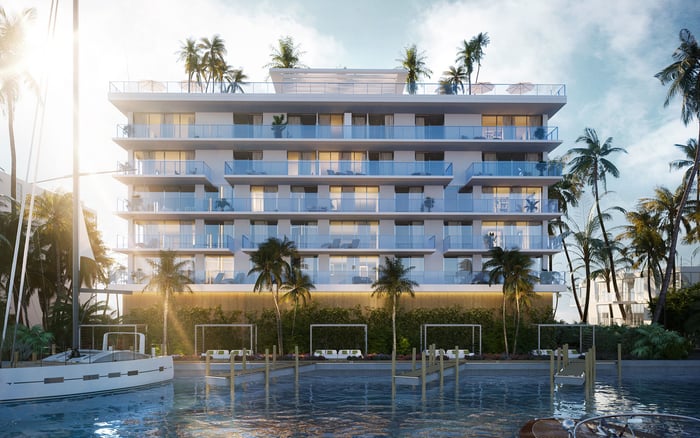
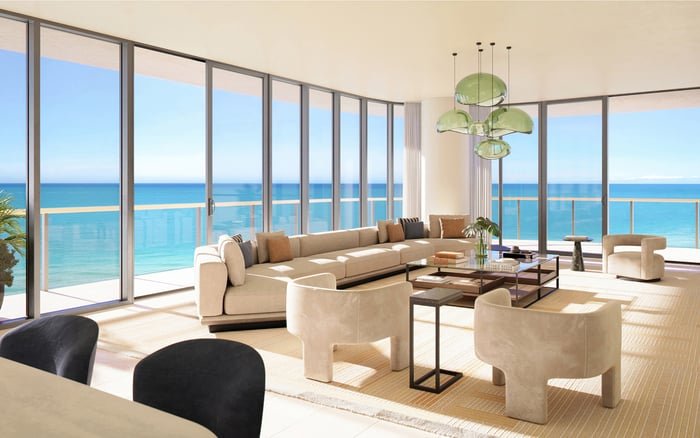
A buyer-oriented underwriting guide to privacy, security technology, and guest screening when comparing Waldorf Astoria Residences Pompano Beach with Vita at Grove Isle.

In the ultra-luxury condominium market, privacy is no longer a passive benefit attached to a beautiful lobby, a calm arrival court, or a recognizable brand. It is an asset attribute and, in some cases, a resale variable. For buyers comparing Waldorf Astoria Residences Pompano Beach and Vita at Grove Isle, the most important questions extend beyond finishes, views, amenities, and service tone. The sharper diligence is operational: who can enter, how they are screened, where they can circulate, what technology records their movement, and whether the rules are formal enough to protect residents without making daily life feel institutional.
Waldorf Astoria Residences Pompano Beach should be evaluated as a branded luxury residential project in Broward, with the privileges and obligations that come with a hospitality name. Vita at Grove Isle, by contrast, is often considered through the lens of a more private Grove Isle experience in Coconut Grove. That contrast is useful only if buyers resist assumptions. Branded service does not automatically equal better privacy, and boutique scale does not automatically equal stronger access control. The right fit for a specific family may be the property whose condominium materials, staff training, and physical design most closely match the resident’s actual risk profile.
At Waldorf Astoria Residences Pompano Beach, underwriting begins with the branded-residence operating model. A hotel-style service culture can raise expectations for recognition, arrival assistance, vendor coordination, and effortless hospitality. It can also heighten the need for clear boundaries between warm service and unnecessary exposure. Buyers should ask how privacy is managed during ordinary days, not only during polished sales presentations.
The core questions are practical. Is the lobby visible or shielded? Are elevators configured to preserve separation between residents, guests, staff, and service providers? How do residents reach amenities, parking, valet, package rooms, and back-of-house areas? Are there public-facing zones that could blur with resident-only spaces? These details determine whether a residence feels genuinely private or simply expensive.
For Vita at Grove Isle, buyers may place more weight on the promise of seclusion because of the Grove Isle context and privacy expectations associated with the address. That expectation should be translated into diligence. A private-feeling setting still requires written procedures for visitors, vendors, deliveries, and service personnel. Coconut Grove cachet is meaningful, but it is not a substitute for reviewing the operating rules that govern access.
Security technology can enhance value, but only when its use is transparent and disciplined. Buyers should request specifics on camera systems, digital entry credentials, visitor management platforms, package handling, vendor access tools, and after-hours procedures. The question is not whether a project is marketed as secure. The question is whether its security apparatus is thoughtfully designed for a high-net-worth residential environment.
For Waldorf Astoria Residences Pompano Beach, diligence should distinguish luxury service language from condominium-level protocols that can be documented. A buyer should understand post coverage, staffing patterns, escalation procedures, and how the property handles exceptions. Does a late-night guest follow the same pathway as a daytime contractor? Are delivery personnel confined to a service route? Can staff override access systems, and if so, who audits that authority?
Family-office buyers should also examine data governance. Guest logs, digital credentials, surveillance footage, and access records can create confidentiality concerns. The presence of technology is not automatically positive if retention policies are vague, if too many people can view sensitive records, or if the system creates a detailed map of a resident’s private life. Security should reduce risk, not become a new repository of personal exposure.
At Vita at Grove Isle, the same questions apply, especially because privacy expectations may be high. Smaller or more secluded properties can still face vulnerabilities if procedures are informal. A guard gate, a quiet approach, or a selective resident base may create comfort, but buyers should test whether technology and staffing support that feeling consistently.
Guest screening is one of the most underappreciated components of luxury underwriting. The best systems are neither casual nor theatrical. They are formalized, consistently enforced, and compatible with resident privacy. That balance matters. A property that screens guests too loosely may compromise residents. A property that screens too visibly may make owners feel observed in their own home.
For Waldorf Astoria Residences Pompano Beach, buyers should examine how residents pre-clear guests, how last-minute visitors are handled, how vendors are identified, and how repeat service providers are credentialed. Package handling deserves equal attention because deliveries can become a daily access-control pressure point. After-hours protocols are also critical, particularly for second-home owners, principals with rotating staff, and households that host frequently.
For Vita at Grove Isle, buyers should ask whether guest procedures support the privacy promise of the setting. How are rideshare arrivals, private drivers, contractors, household employees, and event guests handled? Are logs retained? Are residents able to preserve discretion while still complying with building rules? The better answer is rarely a vague assurance. It is a written system that can be reviewed before purchase.
Investment underwriting in this segment should treat privacy, security technology, and guest screening as residence-level value drivers. Ultra-luxury buyers may discount properties where access control feels ambiguous, overly public, or dependent on personalities rather than rules. A magnificent residence can lose some of its appeal if the arrival sequence exposes owners, if service corridors are confusing, or if guests and vendors move through resident areas without clear separation.
That is particularly important for branded residences. The brand can elevate confidence, service expectations, and global recognition, but it can also invite a broader hospitality mindset. At Waldorf Astoria Residences Pompano Beach, buyers should underwrite whether the brand experience is translated into residential privacy rather than hotel-like visibility. The strongest outcome is not merely attentive staff. It is attentive staff operating within disciplined boundaries.
For Vita at Grove Isle, the underwriting question is different but equally exacting. If the buyer is paying for privacy through scale, setting, and perceived scarcity, the operating documents should reinforce that thesis. A private setting with informal screening may be less defensible than a more public-facing property with rigorous systems. In either case, privacy must be evidenced, not assumed.
A serious buyer should request the condominium rules, access-control procedures, staffing framework, visitor policies, vendor protocols, package procedures, camera and surveillance policies, data-retention standards, and after-hours escalation rules. The review should include physical circulation as well as technology. Walk the arrival sequence. Study elevator access. Ask how staff, residents, guests, vendors, and service providers enter and move through the property.
The most useful comparison between Waldorf Astoria Residences Pompano Beach and Vita at Grove Isle is not a simple question of which is more private. It is which property offers the privacy model that best matches the buyer’s life. A public figure, a family office, a seasonal owner, and a host-oriented household may each require a different answer.
Is privacy really an underwriting issue for luxury condos? Yes. In the ultra-luxury tier, privacy affects daily comfort, perceived exclusivity, and potential resale demand.
How should buyers evaluate Waldorf Astoria Residences Pompano Beach? Treat it as a branded residential project and test how its service model translates into documented privacy controls.
How should buyers evaluate Vita at Grove Isle? Consider the privacy expectations associated with its Grove Isle context, then verify them through rules, staffing, and access procedures.
What is the main security question to ask? Ask how residents, guests, staff, vendors, and service providers enter, move through, and exit the property.
Does more technology always mean better security? No. Technology is valuable only when controls, access permissions, retention policies, and oversight are clearly defined.
Why do guest logs matter? Guest logs can improve screening, but they may also create confidentiality concerns for principals and family-office buyers.
What should be reviewed for after-hours access? Buyers should examine staffing coverage, visitor approval, vendor restrictions, package handling, and escalation procedures.
Can boutique scale replace formal security protocols? No. Smaller scale may feel private, but written and consistently enforced procedures remain essential.
Does Coconut Grove context change the diligence? It can raise privacy expectations, but the same review of access, guest screening, and data policies still applies.
Which project is better for investment protection? The stronger choice is the one whose privacy model is clear, documented, enforceable, and aligned with the buyer’s risk profile.
If you'd like a private walkthrough and a curated shortlist, connect with MILLION.
If branded residences are on your mind — as a home or as an allocation — we would be glad to share what we are seeing, privately.
Begin a quiet conversation