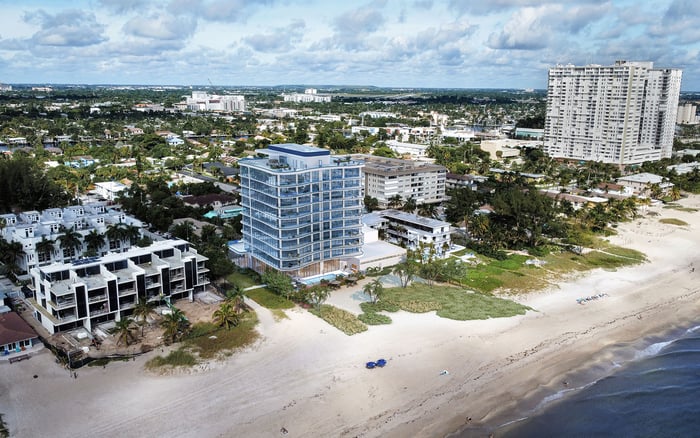
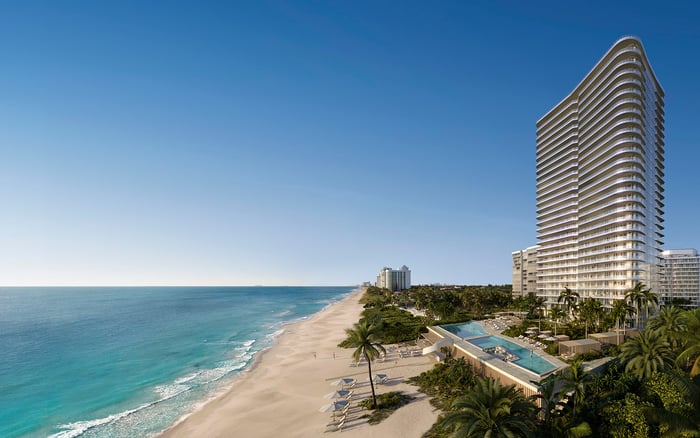
A buyer-oriented comparison of W Pompano Beach Hotel & Residences and Ocean 580 Pompano Beach, focused on indoor-outdoor living, shade, and long-term coastal maintenance.
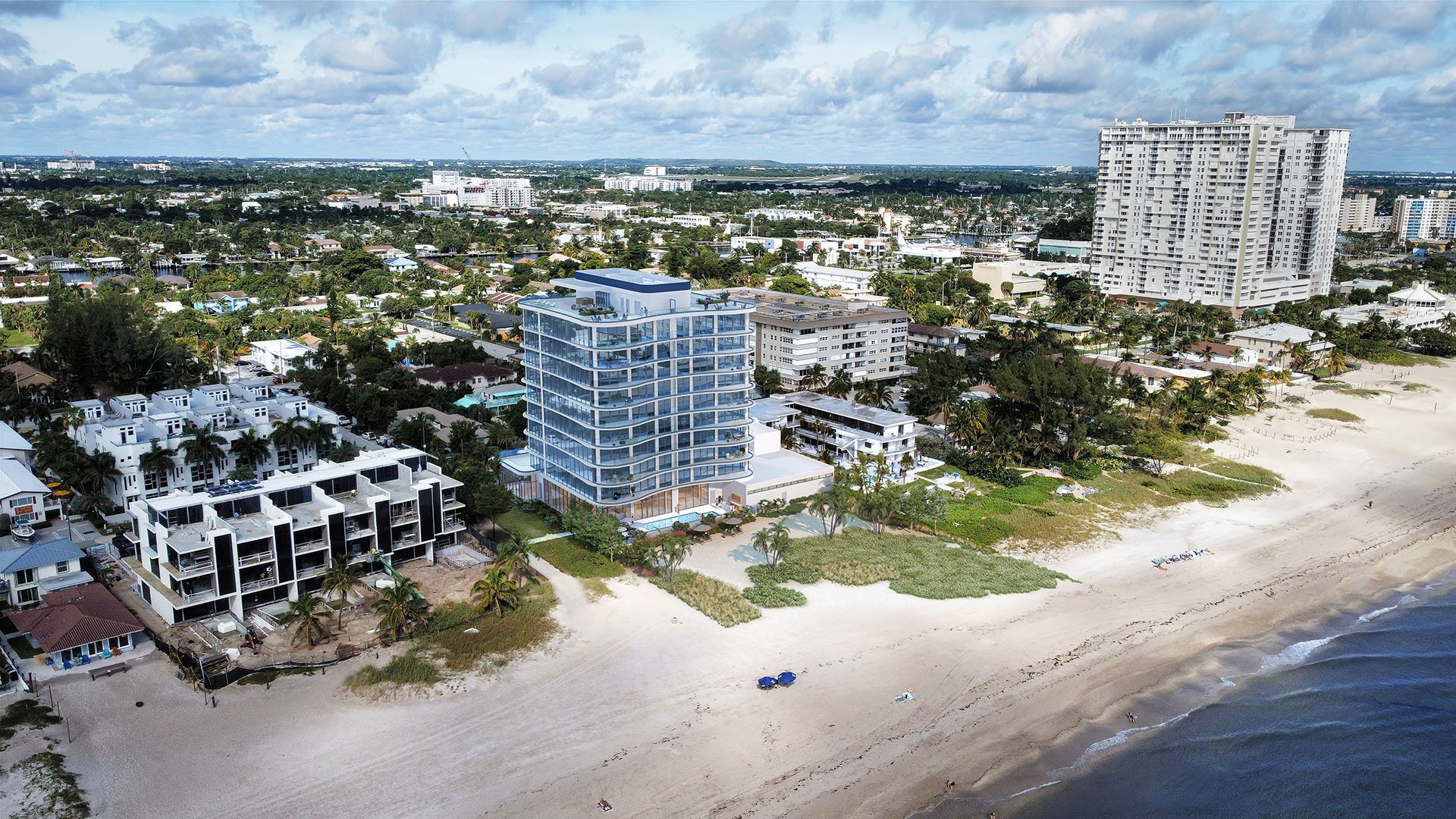
Pompano Beach has entered a more discerning phase of luxury residential demand. The question is no longer whether a building is close to the water, or whether it carries the right visual language. For sophisticated buyers, the sharper question is how a residence lives at 8 a.m., at 3 p.m., after a storm front, and after several seasons of salt-air exposure.
That is where W Pompano Beach Hotel & Residences and Ocean 580 Pompano Beach become an instructive pairing. They occupy a similar prestige band within the local luxury market, yet they appear to answer the ownership brief in different ways. W Pompano Beach Hotel & Residences is framed as a branded resort-style tower concept under the W flag. Ocean 580 Pompano Beach is framed as a boutique oceanfront development, with a quieter residential posture implied by its scale and positioning.
For buyers who track the market through practical search shorthand, Pompano Beach is no longer a secondary line item. It is increasingly part of the broader South Florida conversation around lifestyle, design, service, and long-term coastal ownership.
The first distinction is not about better or lesser. It is about atmosphere. A branded resort-style tower typically appeals to the buyer who values recognizable hospitality identity, a strong sense of arrival, and a lifestyle shaped by service rhythm. The W flag carries an expectation of energy, design confidence, and a social dimension that can make a residence feel connected to a larger hospitality ecosystem.
Ocean 580 Pompano Beach, by contrast, is best understood through the language of oceanfront residential composure. A boutique oceanfront development tends to speak to buyers who prefer intimacy, a lower-key identity, and a stronger sense that the home itself, rather than the brand universe around it, is the central luxury object.
This distinction matters because indoor-outdoor living is not only architectural. It is behavioral. Some owners want to move from residence to resort-style amenities and back again with minimal friction. Others want the terrace, the living room, and the view corridor to feel like a private daily ritual. Both can be prestigious. They simply serve different temperaments.
In South Florida, indoor-outdoor living is often used as a poetic phrase. Serious buyers should treat it as a performance question. A beautiful terrace is only as valuable as its usability across light, heat, wind, privacy, and maintenance conditions.
At W Pompano Beach Hotel & Residences, the buyer should evaluate how the branded resort-style tower concept shapes the transition between interior space and exterior experience. Does the residence encourage seamless daily movement outdoors, or is the outdoor area more of a visual extension? How does the building’s hospitality identity influence noise, circulation, and the feeling of retreat once the residence door closes?
At Ocean 580 Pompano Beach, the question shifts toward the boutique oceanfront proposition. A smaller-feeling residential environment may appeal to buyers who want the terrace to function as an extension of the living room rather than as part of a larger resort narrative. The balcony becomes less about spectacle and more about frequency of use: coffee, reading, an early dinner, a quiet hour after travel.
The best buyer walk-through is therefore not a quick view check. It is a simulation of daily life. Stand where you would sit. Notice glare. Consider the angle of afternoon sun. Ask how furniture would weather. Imagine guests moving between kitchen, living area, and outdoor space. Luxury is often revealed in the absence of friction.
Shade is one of the least glamorous and most consequential elements of coastal living. In Pompano Beach, sun exposure can determine whether an outdoor space is used every day or admired from behind glass. This is why shade and sun-control strategy belong at the center of the comparison between W Pompano Beach Hotel & Residences and Ocean 580 Pompano Beach.
For the W buyer, shade should be considered in relation to the tower experience and the broader resort-style identity. A residence may feel vibrant and open, but the practical test is whether its outdoor areas remain comfortable during the hours an owner actually expects to use them. Brand prestige does not replace solar discipline.
For the Ocean 580 buyer, shade has a slightly different emotional weight. In a boutique oceanfront setting, the terrace may be a more central part of the home’s private identity. If that outdoor room is too exposed, the boutique promise can feel compromised. If it is well protected, the residence can gain a sense of calm that is difficult to reproduce inland.
Buyers should be cautious about judging shade from renderings or a single visit. Morning, midday, and late-afternoon conditions can feel like different properties. The most polished residence is still subject to the physics of exposure.
Salt air is part of the romance of coastal ownership, and also part of its discipline. The closer a residence lives to the Atlantic environment, the more important it becomes to understand finishes, exterior elements, glass, railings, hardware, mechanical exposure, and association-level maintenance culture.
The comparison between W Pompano Beach Hotel & Residences and Ocean 580 Pompano Beach should therefore include an ownership lens, not only a lifestyle lens. Salt-air exposure and long-term maintenance implications are core evaluation points for both projects. A buyer who travels frequently, or expects a low-intervention second home, may think differently than a year-round resident who enjoys actively managing the details of a coastal home.
In a branded resort-style environment, one question is how the service culture and building operations support the feeling of ease. In a boutique oceanfront environment, the question may be how governance, scale, and upkeep priorities preserve the building’s residential quiet over time.
Neither framework eliminates maintenance. Coastal luxury is never maintenance-free. The better question is whether the maintenance model aligns with the buyer’s tolerance, habits, and expectations.
W Pompano Beach Hotel & Residences may resonate with a buyer who wants branded recognition, a resort-style rhythm, and a residence connected to a more expressive hospitality identity. The appeal is not only the home, but the feeling of being plugged into a larger lifestyle language.
Ocean 580 Pompano Beach may resonate with a buyer who wants boutique oceanfront living, a more private cadence, and a home that places the daily relationship with water, light, and terrace use at the center. Its appeal is likely less about brand theater and more about residential concentration.
The buyer choosing between them should avoid asking which project is more prestigious. The more useful question is: which one will I actually use more gracefully? If the answer is social energy, service identity, and branded resort association, the W concept may feel more natural. If the answer is discretion, quiet scale, and intimate oceanfront living, Ocean 580 may feel more aligned.
Are W Pompano Beach Hotel & Residences and Ocean 580 Pompano Beach direct competitors? They sit in a similar local prestige band, but their lifestyle propositions differ. The comparison is best framed as branded resort-style living versus boutique oceanfront living.
Is W Pompano Beach Hotel & Residences a branded project? Yes, it is framed as a branded resort-style tower concept under the W flag. Buyers should consider how that identity affects daily experience.
How is Ocean 580 Pompano Beach positioned? Ocean 580 Pompano Beach is framed as a boutique oceanfront development. Its appeal centers on a more intimate residential interpretation of coastal living.
Which project is better for indoor-outdoor living? The better choice depends on how the terrace, interiors, shade, and privacy match the buyer’s routine. Prestige alone does not determine outdoor usability.
Why is shade such an important issue in Pompano Beach? Shade affects whether outdoor areas are comfortable throughout the day. In coastal South Florida, sun control can be as important as view quality.
Should buyers evaluate salt-air maintenance before purchasing? Yes, salt-air exposure can influence long-term upkeep expectations. Buyers should understand how each ownership model addresses coastal wear.
Does boutique always mean quieter? Boutique positioning often suggests a more intimate residential mood, but buyers should still evaluate circulation, privacy, and building culture carefully.
Does a resort-style concept suit second-home buyers? It can, especially for buyers who value service rhythm and a recognizable hospitality environment. The fit depends on how hands-off the owner wants the experience to feel.
Is the ocean view the only factor that matters? No, view is only one part of the decision. Glare, wind, shade, terrace depth, and maintenance expectations all shape daily livability.
How should a luxury buyer decide between these two projects? The decision should begin with lifestyle: branded energy and resort association, or boutique privacy and oceanfront calm. Then test that preference against shade and maintenance realities.
For a tailored shortlist and next-step guidance, connect with MILLION.
If branded residences are on your mind — as a home or as an allocation — we would be glad to share what we are seeing, privately.
Begin a quiet conversation