A discreet buyer’s guide to evaluating valet, private parking, vehicle storage, and collector-car logistics in Bal Harbour’s luxury residential market.
In Bal Harbour, the garage is no longer a secondary convenience. For many high-net-worth buyers, it functions as part of the residence’s private operating system, as essential to daily life as elevator access, security posture, beach service, or concierge response. A home may offer a wide terrace and exceptional finishes, but if the arrival experience feels improvised, the property can lose polish quickly.
That is especially true for owners with multiple vehicles, seasonal cars, limited-production models, or chauffeured routines. A luxury vehicle collection asks more from a building than a striped space. It requires choreography: who receives the car, where it waits, how keys are controlled, how guests are handled, and whether the owner can retrieve a vehicle without friction at peak times.
The best residential parking experience is quiet. It does not announce itself. It simply works, every day, for residents who expect privacy, speed, and care.
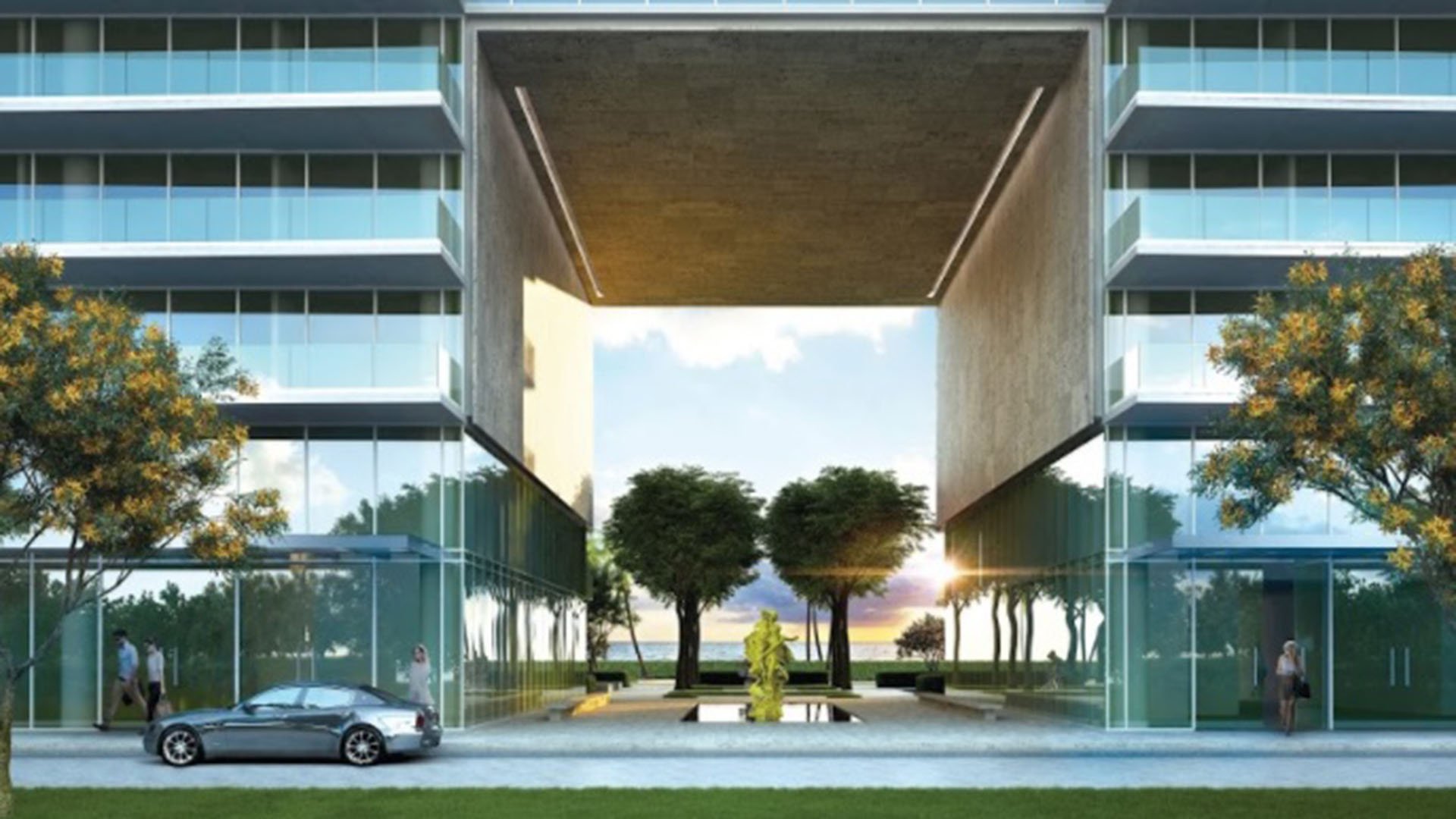
Bal Harbour’s luxury identity is built around discretion, oceanfront living, and a measured sense of arrival. The driveway, porte cochère, valet stand, and garage entry should feel like one continuous sequence rather than a set of disconnected functions. For buyers comparing residences such as Rivage Bal Harbour and Oceana Bal Harbour, the question is not only where the car is stored, but how the residence manages movement between street, lobby, elevator, and private home.
A refined arrival court should allow for a smooth pause without creating congestion. It should accommodate residents, guests, drivers, vendors, and service vehicles without compromising the front-door experience. The most successful buildings separate these flows as much as possible, keeping the owner’s arrival calm even when the property is active.
For collectors, this sequence matters because repeated handoffs can create risk. A car that is moved often, parked tightly, or left exposed to unnecessary circulation is not being treated as an asset. Bal Harbour buyers should think of the parking plan as a form of asset management, not merely a resident amenity.
Valet service in a luxury residence should be governed by clear protocols. Before purchasing, buyers should ask how keys are secured, who is authorized to access vehicles, whether attendants are dedicated or shared, and how after-hours retrieval is handled. The answer should be specific, not casual.
A serious building should be able to explain its process for guest vehicles, temporary drop-offs, house staff, car washes, delivery drivers, and high-demand periods. The goal is not to micromanage a service team. It is to understand whether the residence has a hospitality culture strong enough to protect privacy and minimize confusion.
For owners of exotic, vintage, or high-value vehicles, the valet conversation should include handling expectations. Some owners prefer never to have certain cars moved by anyone other than themselves or a designated driver. Others are comfortable with valet if access is controlled and the team is properly trained. Either way, assumptions should be removed before closing.
Not all parking is equal. A deeded space, an assigned space, a tandem arrangement, a valet-managed space, and a private garage bay each create a different ownership experience. The legal and operational details matter. Buyers should review what is actually included with the residence, what can be purchased separately, and what requires association approval.
Flexibility is often more valuable than a simple space count. A collector may need one vehicle available daily, another held for weekends, and another stored for seasonal use. A family may require room for drivers, visiting relatives, or security personnel. A resident who entertains frequently may care as much about guest parking as personal parking.
The strongest properties provide clarity. They make it easy to understand which vehicles can remain onsite, which may need offsite storage, and how temporary needs are handled. In a market defined by high expectations, uncertainty around parking can become a negotiating issue.
South Florida’s coastal environment adds another layer to vehicle ownership. While a residence cannot replace a dedicated collector-car facility, its garage conditions still matter. Buyers should observe ventilation, lighting, drainage, circulation width, ramp angles, ceiling clearance, and proximity to loading or service areas.
The garage should feel clean, orderly, and durable. Tight turns, low curbs, steep ramps, and poorly placed columns can turn daily parking into a small but persistent irritation. For low-clearance vehicles, even a beautiful building can be impractical if access geometry is not considered.
Oceanfront living is highly desirable, but it also makes indoor care more important. Oceanfront residences should support a lifestyle where vehicles are protected from unnecessary exposure and handled with consistent attention. That is part of the total ownership experience.
Bal Harbour buyers often compare the village with Surfside, Bay Harbor Islands, Miami Beach, and Sunny Isles, particularly when vehicle logistics are a priority. Nearby projects help clarify how different residential cultures treat arrival, privacy, and parking. A buyer looking just south may consider Fendi Château Residences Surfside, while an owner with a strong automotive focus may also study Bentley Residences Sunny Isles as part of the broader conversation around cars and vertical luxury living.
These comparisons are useful, but they should not distract from the owner’s real needs. A building may present beautifully yet still be inconvenient for a three-car routine. Another may be quieter, more boutique, and better suited to an owner who values privacy over spectacle. The right answer is personal.
When touring, buyers should arrive by car, not only by appointment. Notice how the entry feels from behind the wheel. Watch where attendants stand, how quickly doors open, how guests are received, and whether the experience feels rehearsed. Luxury is often revealed in small operational details.
The parking review should begin early, ideally before a preferred residence is selected. Ask how many spaces are included, whether additional spaces are available, whether spaces are deeded or assigned, and how valet overflow is managed. Ask where resident vehicles are placed during maintenance, storms, repairs, or building projects.
For vehicle collections, request clarity on battery tenders, detailing access, tire pressure care, long-term idle periods, and the use of outside service providers. Some residences may have policies that affect what can be done onsite. The issue is not whether every service is available. It is whether the policy aligns with the owner’s routine.
Privacy should be part of the conversation. Owners of rare vehicles often prefer not to have their collection visible to residents, staff, or visitors. Ask whether there are discreet routes, camera coverage, controlled access points, and procedures for high-profile arrivals.
For a primary residence, parking must support daily rhythm. For a second home, it must support absence. For a collector, it must support stewardship. Each use case asks something different from the building.
The most successful Bal Harbour purchase is one where the residence and operating model are aligned. A buyer with one daily driver and a chauffeured car may need simplicity and speed. A collector may need space, predictability, and minimal handling. A family may need guest capacity and a team that can coordinate several arrivals at once.
In this segment, buyers are not simply purchasing square footage. They are purchasing a way of moving through the day. The garage, valet court, and service culture are part of that promise.
How important is valet service in a Bal Harbour luxury residence? It can be central to daily comfort, especially for owners who use multiple vehicles, drivers, or frequent guest arrivals.
Should I ask whether parking spaces are deeded or assigned? Yes. Ownership structure affects control, resale positioning, and how easily parking can be transferred or modified.
Can a condo accommodate a luxury vehicle collection? Some residences may suit smaller collections well, but buyers should review space count, access, storage rules, and valet procedures.
What should low-clearance vehicle owners check first? Ramp slope, curb placement, turn radius, ceiling height, and garage circulation should be reviewed in person whenever possible.
Is guest parking a major issue for luxury buyers? It can be. Entertaining, family visits, drivers, and staff all place pressure on the arrival court and valet team.
Do valet policies differ between buildings? Yes. Each residence may handle keys, after-hours access, guest vehicles, and long-term parking in its own way.
Should I tour the garage before making an offer? Absolutely. The garage often reveals how a building operates beyond its public-facing amenities.
How does coastal living affect vehicle storage? Buyers should prioritize covered, orderly, well-maintained parking environments and reduce unnecessary exposure when possible.
Are nearby markets worth comparing? Yes. Surfside, Sunny Isles, and Bay Harbor Islands can help buyers understand different approaches to arrival and parking culture.
What is the best parking solution for collectors? The best solution is the one that combines secure access, minimal handling, adequate space, and a service team aligned with the owner’s routine.
If you'd like a private walkthrough and a curated shortlist, connect with MILLION.
If branded residences are on your mind — as a home or as an allocation — we would be glad to share what we are seeing, privately.
Begin a quiet conversation