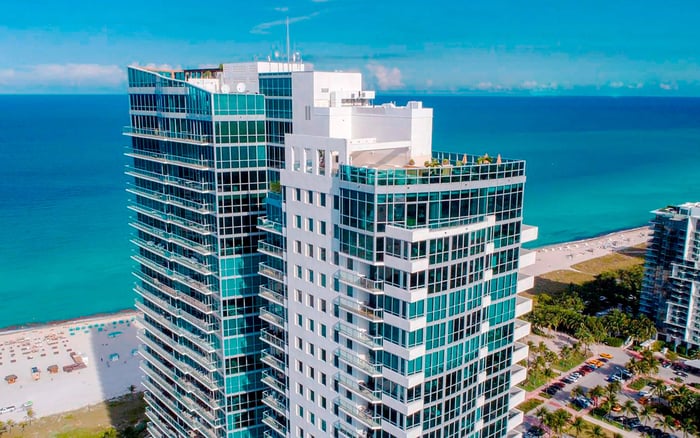
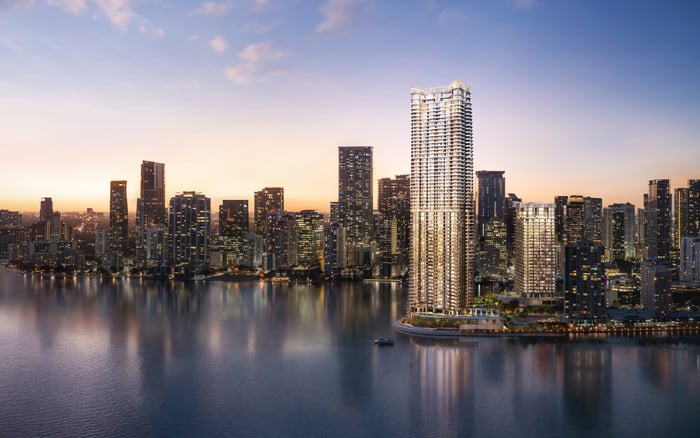
A buyer-focused framework for evaluating view protection, adjacent parcels, and possible future construction when comparing residences at 619 Brickell and Faena House Miami Beach.

In South Florida luxury real estate, a view can influence both the ownership experience and a buyer’s evaluation of a residence. Yet a view shown in marketing, an outlook supported by an open physical setting, and a legally protected view corridor are different concepts. That distinction is essential when comparing 619 Residences by Foster + Partners + Nobu Hospitality with Faena House Miami Beach.
A rendering or sales presentation can illustrate an intended outlook, but it does not by itself establish a permanent right to that view. Buyers should determine what lies within each important sightline and whether any recorded document addresses the continued availability of that outlook.
A premium view should be evaluated as a property condition, not merely a rendering.
The review of a residence at 619 Brickell should begin with its exact stack, floor, orientation, window placement, and terrace geometry. These details help distinguish a primary outlook from a secondary or oblique sightline that may cross another parcel.
Elevation alone does not settle the question. A residence may clear a structure that exists today while retaining a side view across land whose future condition requires separate analysis. A lower residence may offer a different relationship to nearby open space, streets, landscaping, or surrounding buildings. Neither condition should be generalized across the entire project.
Buyers should ask for a marked plan showing the selected residence and its directional exposures. Where available, view studies should be reviewed from the approximate finished-floor elevation rather than from an unspecified camera position. The analysis should also consider how balcony slabs, railings, columns, structural elements, and neighboring wings affect visibility from both seated and standing positions.
A useful review starts with a current survey or parcel map identifying the land beside and across from the property. Buyers and their advisers can then examine the applicable zoning context, potential building envelopes, title matters, recorded easements, and any other documents relevant to the sightline.
The objective is not to predict every future proposal. It is to understand which parts of a view cross water, public space, roadway, common property, or privately controlled land-and what that distinction may mean for the selected residence.
This discipline also applies when considering another Brickell waterfront option such as St. Regis® Residences Brickell. A neighborhood name or waterfront description cannot establish the durability of a particular view. Conditions may differ between buildings, between stacks in one building, and even between residences on different floors of the same stack.
Buyers should separate the principal view from secondary exposures. If the living room and primary terrace face one direction while bedrooms or side terraces face another, each sightline deserves its own parcel review. A single broad label such as “water view” may not explain those differences.
Faena House Miami Beach requires the same residence-specific discipline. Buyers should identify the orientation of the principal rooms and terraces, trace the relevant sightlines, and distinguish the primary outlook from lateral or rear exposures.
A water-facing description should not be treated as a substitute for document review. The practical questions remain the same: What lies between the residence and the horizon? Which parcels intersect side views? How do elevation and terrace configuration influence the outlook? Which representations, if any, appear in binding documents?
The same framework can guide comparisons with a newer Miami Beach option such as The Perigon Miami Beach. The meaningful comparison is not simply one project name against another. It is the specific residence, its orientation, the land within its sightlines, and the buyer’s tolerance for possible change.
A disciplined comparison of 619 Brickell and Faena House can be organized around several layers. First, identify the exact residence, stack, floor, and directional exposures. Second, trace every important view across the surrounding land and water. Third, determine who controls any intervening parcels. Fourth, review zoning, title, easements, and related matters with qualified advisers. Finally, verify which sales representations are incorporated into the purchase documents.
This process helps separate lifestyle preference from view risk. A buyer may prefer one neighborhood, architectural expression, or residence configuration while reaching a different conclusion about the durability of a particular outlook. The central question is not which building has the better view in the abstract, but which residence best fits the buyer’s priorities after appropriate diligence.
Buyers should request current plans and confirm north, south, east, and west exposures. They should ask whether the principal panorama is direct or oblique and identify every parcel crossed by the most important sightlines.
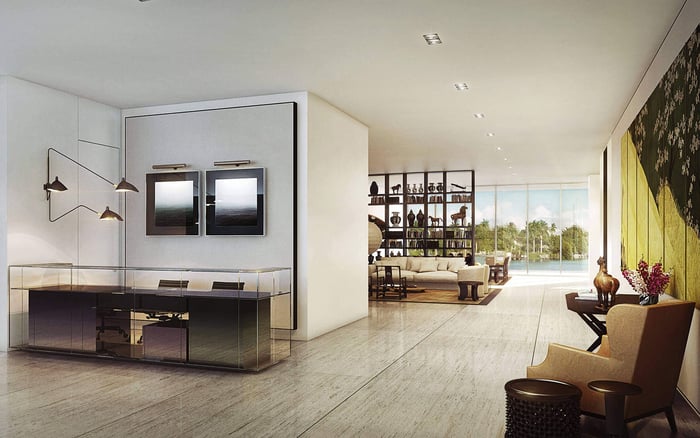
It is also helpful to compare marketing images with floor plans and available view studies. Camera height, lens choice, weather, light, and staging can affect how an outlook appears. A careful review focuses on the likely experience from the residence rather than relying on a single image.
Where possible, buyers should evaluate how the outlook may change throughout the day. Glare, shade, weather, and nighttime illumination can alter the experience even when the physical setting remains unchanged. These considerations do not determine legal protection, but they can matter to daily enjoyment.
Before committing, confirm the selected residence’s stack, floor, orientation, and terrace configuration. Identify the primary and secondary views, map the parcels within those sightlines, and review the relevant recorded documents with appropriate legal and technical advisers.
Buyers should also ask which statements are illustrative and which are contractual. If view durability is material to the purchase decision, it should be evaluated through documents and professional advice rather than inferred from a rendering, a general project description, or the current condition of nearby land.
For discreet guidance on comparing South Florida’s most consequential waterfront residences, connect with MILLION.
If branded residences are on your mind — as a home or as an allocation — we would be glad to share what we are seeing, privately.
Begin a quiet conversationNo. Buyers should review recorded documents and binding purchase materials to determine whether any relevant rights exist.
The review should cover the selected stack, floor, orientation, terrace geometry, sightlines, and surrounding parcels.
A sightline crossing privately controlled land may be affected by future changes. Zoning, title, easements, and potential building envelopes should be reviewed with qualified advisers.
No. Elevation may affect visibility, but orientation and the land crossed by each sightline also matter.
Buyers should evaluate the exact residence, including the orientation of its principal rooms, terraces, and lateral exposures.
A direct view follows the residence’s primary orientation, while an oblique view extends across a side angle that may involve different parcels or structures.
Yes. Living areas, bedrooms, and terraces may face different directions and have distinct sightlines.
Buyers should prioritize current plans, surveys, title materials, recorded easements, applicable zoning information, and binding purchase documents.
Not by itself. The legal status, ownership, and permitted use of the relevant land require separate review.
Buyers should consult qualified legal, title, zoning, surveying, and real estate professionals as appropriate to the transaction.