A disciplined comparison of two waterfront propositions through three distinct diligence categories: wind-rated enclosure, flood-aware mechanical elevation, and documented emergency-power coverage.
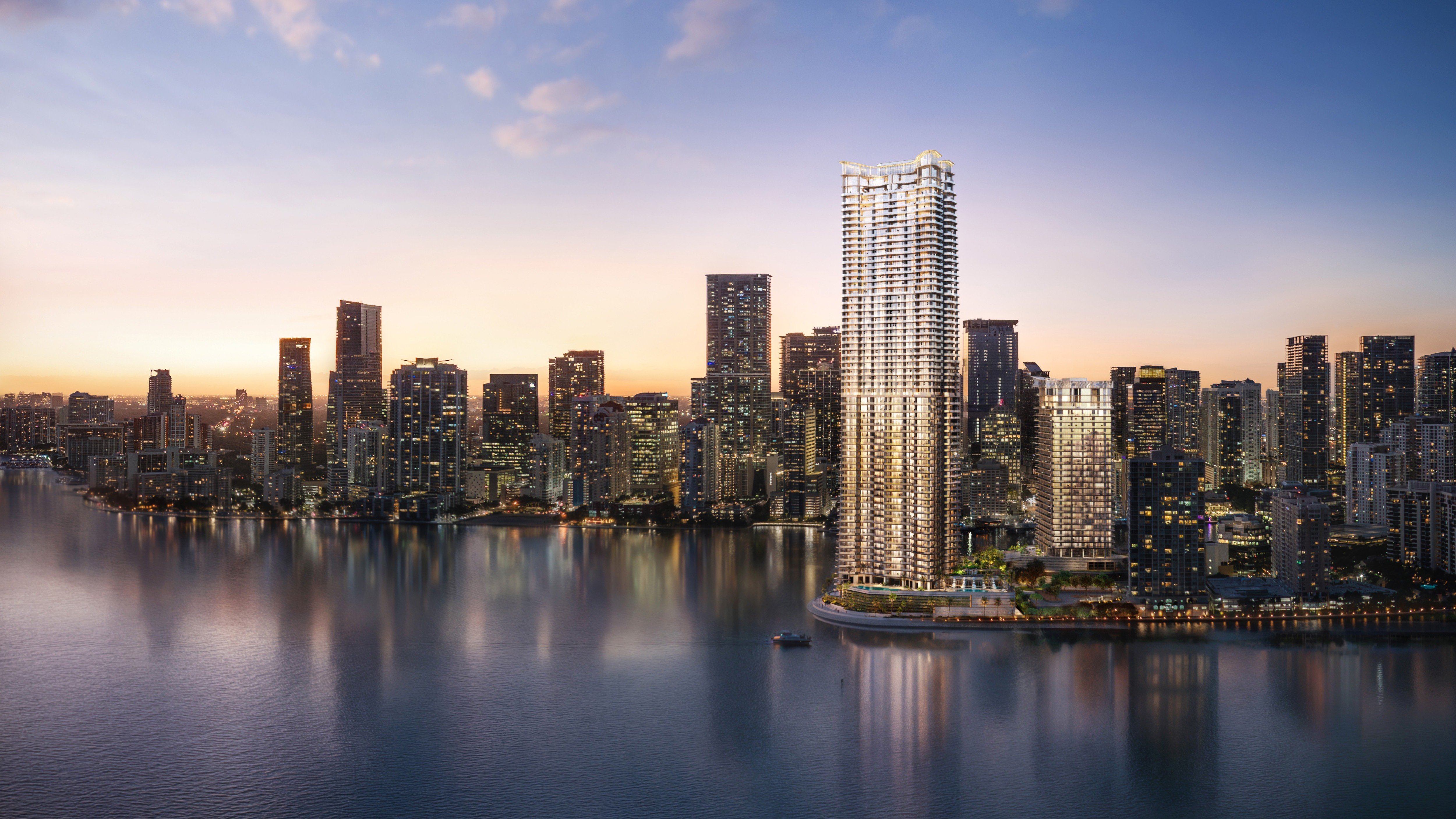
At the upper end of South Florida real estate, architecture and resilience belong in the same ownership conversation. For buyers comparing Faena House Miami Beach with The Residences at Mandarin Oriental, Miami, the useful question is not which property makes the stronger visual impression. It is how clearly each building’s documents explain enclosure performance, the placement of critical systems, and the scope of backup power.
These categories should remain separate throughout diligence. A strong façade specification does not answer where electrical or mechanical equipment is located. Elevated equipment does not show which circuits a generator serves. Emergency generation does not establish how the enclosure was tested or approved.
Resilience is not a single specification but a chain of systems that must remain coherent.
The exterior enclosure is the first analytical layer. Buyers and their advisers can request the approvals, schedules, drawings, and product information applicable to glazing, doors, façade components, and other exterior assemblies. The objective is to understand what was specified for the building rather than infer performance from appearance, brand identity, or marketing language.
Wind and impact performance should be evaluated within the correct regulatory and project context. The documents should identify the relevant assemblies and clarify whether the information applies to the residence, a shared amenity area, or another part of the property. If renovations or replacements have occurred, the review should distinguish original materials from later work.
This discipline also applies when evaluating other design-led Miami-Dade offerings, including The Perigon Miami Beach and The Residences at 1428 Brickell. Architectural distinction and technical verification are complementary, but neither should substitute for the other.
Flood-aware diligence often focuses on areas that are not visible during a residence tour. Electrical rooms, pumps, transfer equipment, elevator controls, cooling systems, plumbing components, generators, and fuel-related infrastructure can all affect how a property responds to an interruption.
The review should begin by identifying the governing flood benchmark, vertical datum, and any applicable elevation or protection requirements for the specific property. Because Faena House is in Miami Beach and the Mandarin Oriental residences are associated with Miami, buyers should not assume that one jurisdiction’s framework or one building’s records can stand in for the other’s.
Approved plans, sections, schedules, and elevation documentation can help locate the lowest occupied areas and critical equipment relative to the applicable benchmark. Labels such as “above grade” are not enough when a precise elevation is needed. Buyers should also determine whether equipment is elevated, enclosed, flood-protected, or supported by another documented measure.
A practical document package may include available elevation records and approved architectural, civil, electrical, plumbing, and mechanical plans. The goal is to map the systems that matter to daily operation and recovery, then reconcile their locations across the available records.
For Faena House, advisers can ask where switchgear, pumps, elevator equipment, cooling components, generation equipment, transfer systems, and fuel infrastructure are shown. The same questions apply to the Mandarin Oriental residences, with added care to ensure that every document reviewed concerns the correct residential property.
Names shared across a hospitality brand or nearby properties can create ambiguity. A drawing, specification, or engineering narrative is useful only when its project identity, scope, and status are clear. Draft material should not be treated as equivalent to an approved or final record.
Buyers should also separate the elevation of occupied space from the elevation of operational infrastructure. A residence may sit well above grade while a component essential to access, water, drainage, communications, or cooling is located elsewhere. Building-specific evidence is therefore more informative than a broad assumption based on tower height or residence level.
The statement that a building has backup power is only a starting point. A meaningful review examines the generator load schedule alongside capacity information, fuel arrangements, expected operating assumptions, automatic transfer provisions, maintenance records, and available testing documentation.
Buyers can ask which life-safety systems receive power, whether elevator operation is supported or sequenced, and whether pumps needed for water or drainage are included. They should also clarify whether cooling is limited to designated common or critical areas and whether any circuits serving private residences appear on the backup-power schedule.
The distinction matters because generator capacity alone does not reveal how power is allocated. A system may be designed around selected loads, staged operation, or specific emergency priorities. The relevant question is not simply whether generation exists, but what the documented configuration is intended to support.
Runtime should receive the same scrutiny. Any operating estimate depends on the documented equipment, fuel availability, connected load, testing assumptions, and building procedures. Buyers should avoid converting a general statement into a precise expectation without supporting records.
A rigorous review can proceed in layers. First, identify the correct property, jurisdiction, flood information, governing elevation reference, and vertical datum. Second, map occupied areas and critical systems against that framework. Third, examine enclosure documentation independently. Fourth, reconcile emergency generation with connected loads, transfer arrangements, elevator sequencing, fuel assumptions, maintenance, and testing.
The final step is to connect the technical findings to the buyer’s intended use. A full-time resident may prioritize elevator access, water service, communications, and cooling continuity. A second-home owner may focus more heavily on remote monitoring, restart procedures, staffing, and post-event access. These priorities can guide document requests without replacing the need for qualified legal, engineering, insurance, and property advice.
Faena House Miami Beach and The Residences at Mandarin Oriental, Miami present different ownership propositions, but the same diligence framework can organize a careful comparison. Enclosure performance addresses wind-related questions. Equipment location and protection address flood exposure. Load schedules and operating records address continuity during an outage.
The most persuasive luxury proposition is one in which design quality is supported by systems that can be identified, documented, and understood. Where records do not answer a question, the disciplined response is to preserve it as an open diligence item rather than fill the gap through inference.
For discreet guidance on South Florida’s most considered residences, connect with MILLION.
If branded residences are on your mind — as a home or as an allocation — we would be glad to share what we are seeing, privately.
Begin a quiet conversationNo. Enclosure performance is separate from flood elevation, equipment protection, and emergency-power coverage.
Review enclosure performance, critical-system locations, and emergency-power coverage as distinct categories.
They help identify the assemblies specified for the property and the scope to which each approval applies.
The location and protection of critical equipment can affect building operation and recovery after an interruption.
No. Buyers should verify the jurisdiction and approvals applicable to each specific property.
Available elevation records, approved plans, sections, and system schedules can help locate critical components.
A document is useful only when it clearly applies to the correct property, scope, and approval status.
They should review connected loads, transfer arrangements, fuel assumptions, maintenance, and testing records.
Not necessarily. Buyers should verify whether any private-residence circuits appear on the documented load schedule.
No. Unresolved points should remain open diligence items until supported by appropriate property records.