A buyer-oriented reading of what is publicly disclosed, what remains unverified, and which technical documents matter when comparing resilience at two boutique Coconut Grove developments.
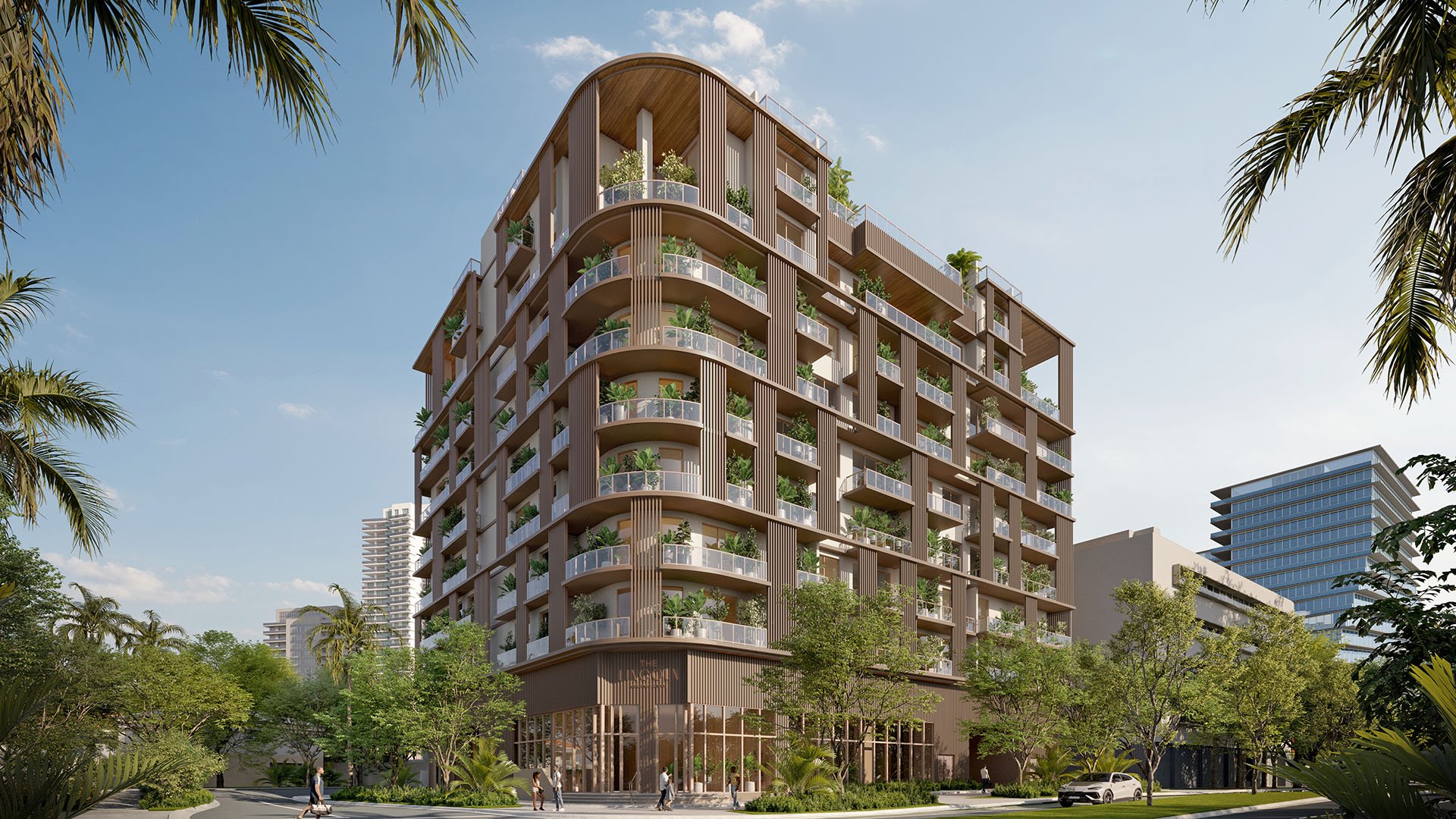
In Coconut Grove, architectural character, landscape and privacy naturally lead the residential conversation. Yet for buyers evaluating a newly developed condominium, resilience deserves equal attention. Emergency power, equipment placement and flood-protection planning can shape how a building functions during and after a severe weather event.
The essential distinction is between a marketed feature and a fully documented system. A reference to a generator confirms that backup power is contemplated, but not its capacity, runtime or supported loads. Likewise, the absence of mechanical elevations from a project website does not establish that equipment is poorly positioned. It simply means buyers cannot verify that aspect through public-facing materials.
In resilience due diligence, the decisive issue is not whether a feature is named, but whether its scope is documented.
This distinction is particularly relevant when comparing The Lincoln Coconut Grove and Ziggurat Coconut Grove. Both are boutique additions to the Grove, but their publicly presented resilience details are not equivalent.
The Lincoln is located at 2650 Lincoln Avenue. Its development team is identified as LORE Development and Element Development, with Leste Group and Opportunity as partners. The project entity is identified as 3151 SW 27Ave Propco LLC. These names matter because technical requests, contractual representations and follow-up questions should ultimately be directed to the appropriate project parties and evaluated through the governing documents.
The Lincoln's advertised building features include a generator for emergency backup power. That is a meaningful starting point, but the public description does not specify generator capacity, fuel type, fuel-storage volume, anticipated runtime or supported circuits. It therefore does not establish whether backup power extends beyond emergency and life-safety functions to elevators, cooling systems, residential receptacles or other convenience loads.
The development also advertises EV-ready parking. Buyers should not assume this means vehicle charging will operate during an outage, as no connection to emergency power is publicly defined. Similarly, an on-site management and maintenance team may support building-system oversight, but published materials do not provide storm procedures or generator-testing schedules.
The Lincoln is also marketed with green-building certification, although the public description identifies neither the certifying program nor the certification level. Sustainability and storm resilience can complement one another, but they are not interchangeable. Buyers should evaluate each through its own technical documentation.
Ziggurat is presented as a bespoke sanctuary in central Coconut Grove, pairing biophilic design with timeless architecture. The project is a joint development by The Allen Morris Company and the Espinosa Family, while its legal notices identify Coconut Grove Condo, LLC, a Delaware limited liability company, as the developer.
Its public narrative places greater emphasis on architecture, landscaping and the relationship between built and natural environments than on named storm-hardening systems. The reviewed project materials do not explicitly advertise a standby generator or define emergency-power coverage for residences and common systems.
That silence should be interpreted carefully. It does not prove that emergency generation is absent; it means the system's existence and scope remain publicly unverified. The same principle applies to flood protection and equipment placement: a website is a presentation tool, not a substitute for technical drawings or binding condominium disclosures.
Ziggurat's terms clarify that its website is not an offer to sell. Buyers should therefore look to the official condominium and offering documents for binding specifications. Design and architecture may frame the project's identity, but resilience questions demand a parallel, document-based review.
Mechanical elevation concerns where critical building components sit relative to relevant flood-risk levels and how vulnerable spaces are otherwise protected. For condominium buyers, the inquiry can encompass electrical rooms, generator rooms, pumps, HVAC equipment, garage infrastructure and the elevation of occupied floors or podium areas.
Neither project publishes finished-floor, podium or critical mechanical-room elevations in the reviewed public materials. The Lincoln's pages do not provide elevations for its garage podium, generator room, electrical room, pumps or HVAC equipment. Ziggurat likewise does not publish finished-floor, podium, mechanical-room or electrical-room elevations. Public information also does not explain whether critical systems are elevated above applicable flood elevations or protected by engineered barriers.
This is not grounds for a negative engineering conclusion. It is a reason to request evidence. Elevation certificates, civil drawings, and mechanical, electrical and plumbing plans can provide a more precise picture than renderings or amenity summaries.
The most useful generator question is not simply, “Is there one?” Buyers should ask what the generator serves, for how long and under which operating assumptions. A load schedule can identify supported systems, while fuel-runtime calculations can clarify the assumptions behind expected duration.
Coverage for life-safety equipment is not necessarily equivalent to coverage for residential comfort. Elevators, central cooling, domestic water systems, selected common areas and in-unit outlets may each have different power requirements. Buyers should request written confirmation rather than infer coverage from the phrase “emergency backup power.”
The same disciplined approach is useful when evaluating other Grove residences, including Four Seasons Residences Coconut Grove and The Well Coconut Grove. These links provide broader project context, but resilience comparisons should still rest on project-specific technical and offering documents-not assumptions carried from one property to another.
Before making a resilience comparison, request the elevation certificate, civil plans, relevant MEP drawings, generator load schedule, fuel and runtime calculations, and details for any flood barriers or protected equipment rooms. Together, these documents should identify which systems receive backup power and where critical components are positioned.
Buyers may also request testing and maintenance protocols, operational responsibilities, storm procedures and any limitations affecting EV charging during an outage. If a representation is material to the purchase decision, it should appear in, or be reconciled with, the controlling documents.
Investment analysis benefits from separating confirmed specifications from marketing language. Lifestyle priorities also matter, particularly when a residence is expected to remain functional during an extended interruption. Publicly, The Lincoln offers the clearer initial signal because it advertises an emergency generator, yet its coverage remains undefined. Ziggurat offers no equivalent public detail in the reviewed materials, leaving both existence and scope to be confirmed.
The available information does not support a complete technical ranking of the two developments. The Lincoln identifies emergency backup power but does not quantify it. Ziggurat does not publicly define standby generation. Neither publishes the elevations or protection strategies required to compare critical equipment placement.
For buyers, the sophisticated response is neither reassurance nor alarm. It is targeted diligence, conducted through the official documents and technical schedules that translate broad resilience language into verifiable building performance.
For discreet guidance on Coconut Grove opportunities and project-specific due diligence, connect with MILLION.
If branded residences are on your mind — as a home or as an allocation — we would be glad to share what we are seeing, privately.
Begin a quiet conversationYes. Its public marketing identifies a generator for emergency backup power, but does not quantify the system.
That is not established publicly. Supported circuits, capacity and coverage for elevators, cooling or in-unit outlets are not defined.
No standby generator is explicitly advertised in the reviewed public materials. This does not prove that one is absent.
No comparable runtime information is publicly provided. The Lincoln also does not disclose fuel type or fuel-storage volume.
Neither project publishes the detailed finished-floor, podium, mechanical-room or electrical-room elevations needed for comparison.
No. Public materials do not indicate that vehicle charging will be connected to emergency power.
Not by itself. The Lincoln is marketed with green-building certification, but the program and level are not publicly identified.
Buyers should request elevation certificates, civil and MEP drawings, generator load schedules, runtime calculations and flood-protection details.
Its terms state that the website is not an offer to sell. Official condominium and offering documents are the appropriate place to confirm binding specifications.
Not from the public materials reviewed. Generator scope, equipment elevation and detailed flood-protection strategies remain insufficiently defined.