Private dining is not a single entitlement. This buyer-focused guide separates promoted hospitality services from confirmed residential privileges and identifies the event rules purchasers should verify before closing.
Private dining can mean several things in a branded residence: dinner prepared inside a home, a catered gathering in a residential amenity room, or access to a separate hotel venue. These experiences may appear seamless in presentation, yet each can be governed by a distinct reservation process, fee schedule and set of operating rules.
That distinction is central when comparing Faena Residences Miami Downtown Miami with The Residences at Mandarin Oriental, Miami. The former is a Downtown Miami development, while the detailed Faena dining and event examples currently available relate to separate hospitality venues in Miami Beach. The latter is promoted with residential dining services and purpose-designed entertaining amenities, but the information publicly disclosed does not define several operational limits that matter to a host.
Hospitality access and residential event rights are related benefits, not interchangeable promises.
Faena's Miami Beach hospitality operations offer useful brand context. They demonstrate an established approach to intimate gatherings, chef involvement and staff-executed catering. They do not, however, establish what an owner may reserve or arrange at the Downtown residential project.
La Cava at Faena Hotel Miami Beach is a private wine-cellar setting used for tastings, meetings and intimate dinners. The approximately 558-square-foot space has a stated maximum capacity of 26 guests, while another capacity reference lists seating for 22. Executive chefs can curate personalized menus and wine pairings, and clients may collaborate on a catered menu or select cuisine associated with Los Fuegos or Pao.
Elsewhere in the Miami Beach operation, Faena Forum offers on-site catering and dining supported by district restaurants and bars, with catered events executed by Faena staff. Los Fuegos also accommodates private-party inquiries. Together, these details illustrate a hospitality ecosystem capable of producing polished events, from a cellar dinner to a larger catered occasion.
Location remains decisive. None of these examples confirms that an owner at the Downtown development can book La Cava, Faena Forum or another hotel venue as a residential privilege. Nor do they establish a right to bring an independent caterer into the residential building. Buyers should also keep Faena House Miami Beach distinct from both the hotel venues and the Downtown project. Shared branding or geographic proximity should never substitute for project-specific documentation.
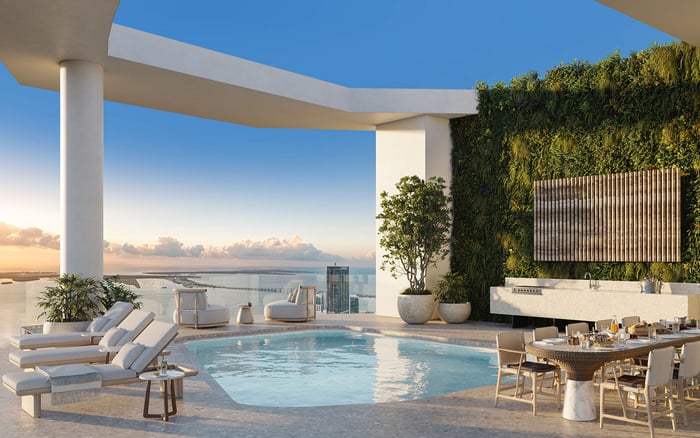
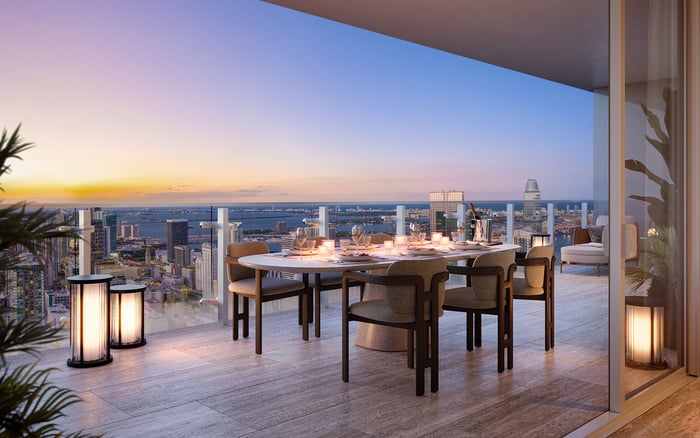
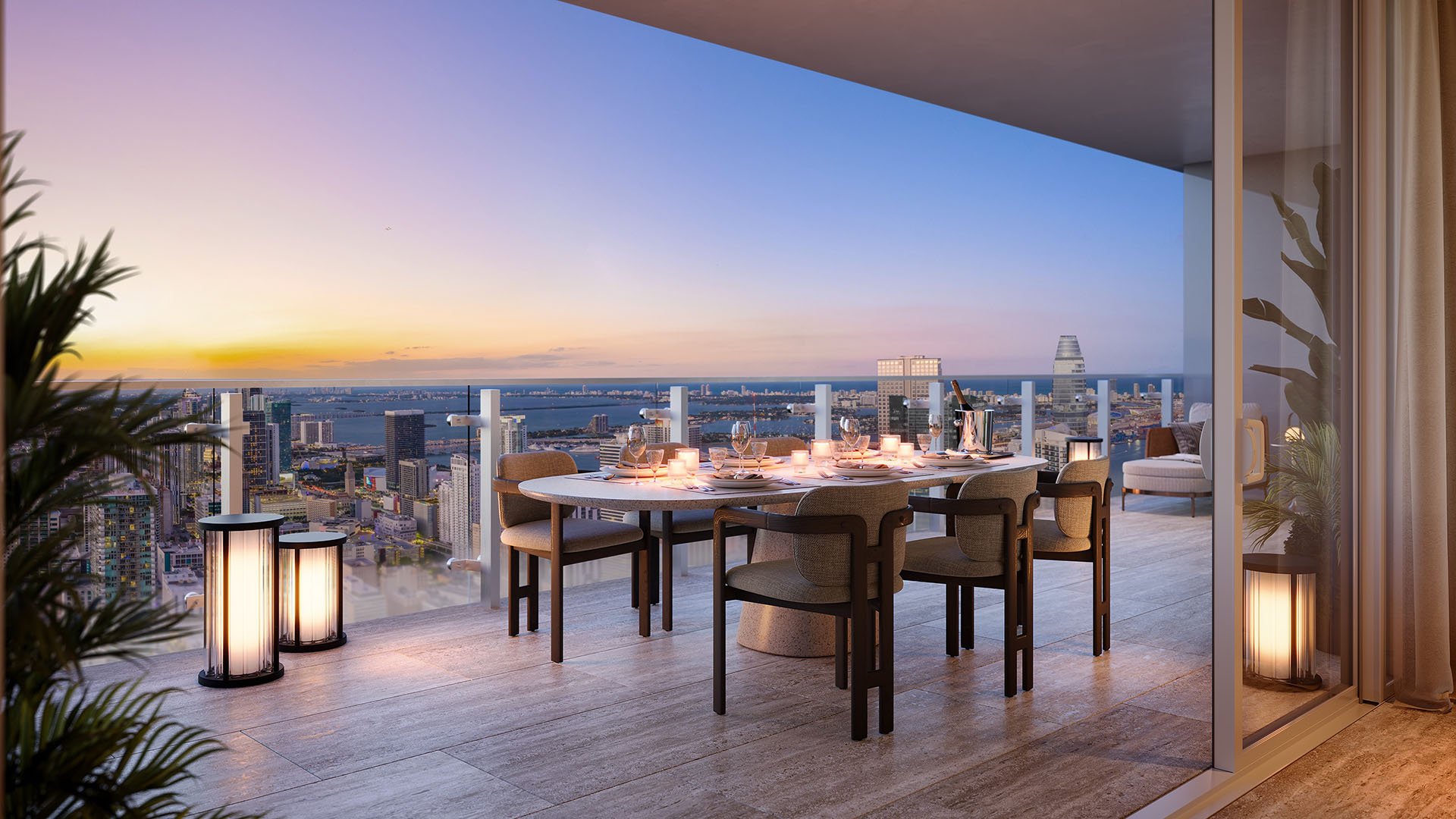
The Residences at Mandarin Oriental, Miami are promoted with private chefs, in-residence catering and in-residence dining supported by access to hotel catering. The residential offering also includes entertaining settings described as dining pavilions and private dining facilities. For an owner who values discreet hosting, this combination points to service delivered both within the residence and in dedicated shared spaces.
The existing Mandarin Oriental hotel on Brickell Key provides gourmet in-room dining to hotel rooms and suites. That service helps clarify the hospitality context, but it does not define the future residential rules. In-residence catering access is not equivalent to unrestricted use of hotel function rooms, and a private dining amenity is not necessarily an open-ended event venue.
Important details remain unspecified in the publicly available materials. These include amenity guest limits, the number of events an owner may host, menu minimums, mandatory staffing and whether an outside caterer can use residential entertaining spaces. The absence of a publicly stated restriction should not be interpreted as permission.
For both properties, buyers should look beyond whether catering is advertised and ask how it works physically and contractually. A chef preparing dinner in a private residence may face different requirements from a catering team serving a dining pavilion. The latter scenario can involve common-area reservations, building personnel, deliveries, equipment and post-event cleaning.
The first question is whether affiliated hotel catering is optional, preferred or mandatory. If it is mandatory for certain rooms, owners should request the applicable menu structure, minimum spending requirements and staffing charges. If independent chefs are allowed, buyers should confirm whether they can enter amenity kitchens or may prepare food only within the residence.
Access logistics warrant equal scrutiny. Written rules should address service elevators, loading areas, delivery windows, kitchen use and vendor arrival procedures. Buyers should also verify insurance standards, certificates of insurance, security requirements and responsibility for damage. These provisions can determine whether a favorite private chef can execute the evening as envisioned.
This level of diligence is especially relevant across branded residences, where a celebrated service culture can coexist with carefully controlled residential operations. Brand standards often shape the experience, but condominium documents and current operating policies govern what an owner can actually do.
A serious review should begin with the current condominium rules and the actual amenity reservation form-not a general amenity description. Ask for the guest cap by space and event format. A room may support one number for a reception and another for a seated dinner, as the differing La Cava references illustrate.
Buyers should then request event-frequency limits, reservation lead times, owner-presence requirements and policies for holidays or high-demand dates. Fees may extend beyond the room reservation to staffing, security, cleaning, food and beverage minimums, taxes, service charges or refundable deposits. The documentation should identify each obligation clearly.
Noise limits and event end times are equally material, particularly when entertaining spaces sit near residences. Confirm whether amplified music, live performers, decorators, florists or rental furniture are permitted. If approvals are required, establish who grants them and how far in advance submissions must be made.
Finally, ask whether hotel venues and residential amenities are administered separately. A concierge may facilitate an inquiry without guaranteeing availability or preferred terms. Hotel catering access should likewise never be treated as proof of a resident's right to reserve hotel event space.
A buyer evaluating Downtown Miami service should separate three layers: in-residence dining, residential amenity entertaining, and hotel or off-site venue access. For each layer, request written confirmation of who may provide food, where preparation can occur, how guests and vendors enter, and which charges or limits apply.
This approach protects the quality of the experience as much as the buyer's legal expectations. An intimate chef's dinner may require little more than residential access and kitchen coordination. A milestone celebration in a shared dining room can trigger a far more structured process. Neither is inherently better, but each should be understood before it becomes part of a purchase rationale.
For readers consulting Buyer's Guides, the most valuable takeaway is precision. The Faena examples show a sophisticated Miami Beach event operation, not confirmed owner privileges at Faena Residences Miami Downtown Miami. Mandarin Oriental presents compelling in-residence and private dining concepts, while the practical boundaries still require direct written confirmation. Both belong in a Lifestyle conversation, but the decisive evidence is the current project-specific rule set.
For discreet guidance on South Florida luxury residences and their service structures, connect with MILLION.
If branded residences are on your mind — as a home or as an allocation — we would be glad to share what we are seeing, privately.
Begin a quiet conversationThe available information does not establish venue-booking rights for Downtown owners. Miami Beach venues should be treated as hospitality context unless access is confirmed in writing.
La Cava is an approximately 558-square-foot private wine cellar used for tastings, meetings and intimate dinners.
Faena identifies a maximum capacity of 26 guests, while a separate capacity reference lists seating for 22. Event format should therefore be confirmed when booking.
Yes. Its private dining offering includes personalized menus and wine pairings curated with Faena's executive chefs.
No. Staff-managed catering in Miami Beach does not establish catering, reservation or outside-vendor rights at the Downtown residential project.
The project is promoted with private chefs, in-residence catering and in-residence dining with access to hotel catering.
Yes. Its promoted amenities include dining pavilions and private dining facilities.
The supplied public details do not confirm unrestricted outside-caterer access. Buyers should request written rules for vendors, kitchens, loading areas and service elevators.
Confirm guest caps, frequency limits, fees, deposits, staffing, insurance, noise restrictions, reservation procedures and event end times.
No. Catering access should not be interpreted as a right to reserve hotel venues or to use residential amenities without separate approval.