A buyer-focused comparison of how club-style privileges, hospitality services, condominium assessments, and resale transfer questions should be evaluated at two distinctive South Florida branded residences.
At South Florida's branded residences, the language of ownership often blends condominium amenities, hotel-style services, preferred access, and private-club culture. These concepts may feel seamless in daily life, yet carry distinctly different financial and legal consequences. The central question is not simply what an owner may enjoy, but whether each benefit is included in condominium assessments, billed upon use, governed by a separate membership agreement, limited to an introductory term, or personal to the original purchaser.
That distinction is especially important when comparing Four Seasons Hotel & Private Residences Fort Lauderdale with ORA by Casa Tua Brickell. Both offer hospitality-rich lifestyles, yet their brand-linked experiences are described more fully than their legally binding dues, renewal obligations, transfer rights, or resale treatment.
A lifestyle privilege becomes an ownership right only when the governing documents say so.
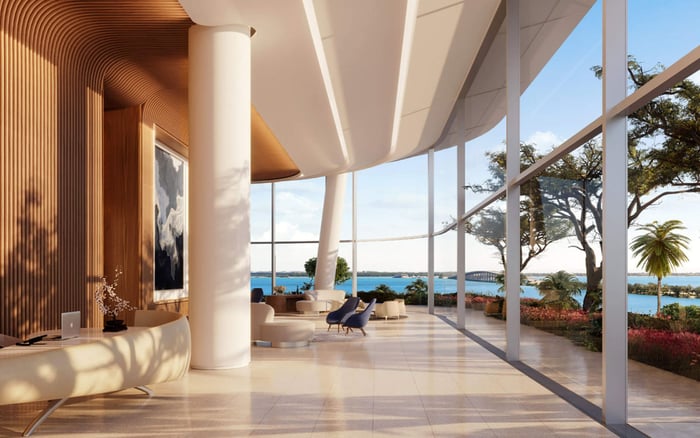
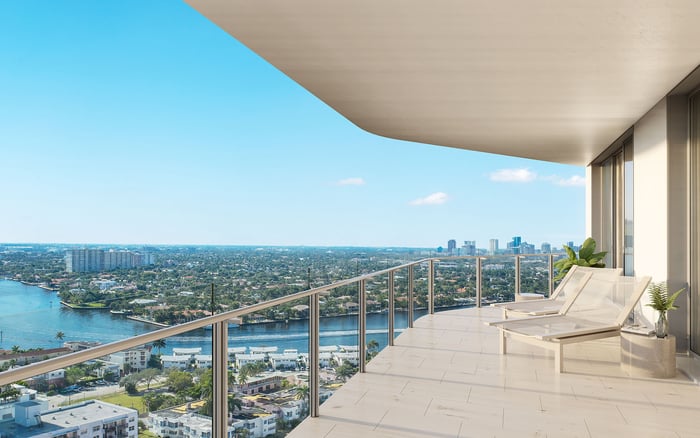
Four Seasons Hotel & Private Residences Fort Lauderdale combines private residences, a beachfront hotel, and shared hospitality amenities. Its positioning evokes a classic yacht-club lifestyle on the Fort Lauderdale beachfront. Owners also receive a Fort Portfolio Card and preferred-guest status at participating South Florida Four Seasons properties, including preferred rates for stays, dining, and leisure activities.
These privileges are meaningful, but no separate schedule of private-club initiation fees, recurring dues, minimum spending requirements, or related owner charges is publicly available. Nor is a mandatory, separately billed beach-club or residents'-club membership identified as distinct from condominium assessments. Buyers should therefore assume neither that club-style access is free indefinitely nor that a conventional club-dues structure necessarily exists.
Hotel guests may encounter separate resort, valet, and breakfast charges. These charges illustrate the property's à-la-carte hospitality environment, but they do not establish what residence owners pay. The residence-specific budget and fee schedule remain the relevant references. Buyers comparing this beachfront service model with Auberge Beach Residences & Spa Fort Lauderdale should apply the same discipline: compare written owner obligations, not brand atmosphere alone.
ORA by Casa Tua is planned for 1210 Brickell Avenue as a 76-story, 540-unit tower developed by Fortune International Group, with architecture by Arquitectonica and interiors by M2 Atelier. Residences have been presented at approximately 507 to 2,237 square feet, with prices ranging from about $990,000 to $4 million. The deposit structure calls for 20 percent at contract and another 20 percent at groundbreaking.
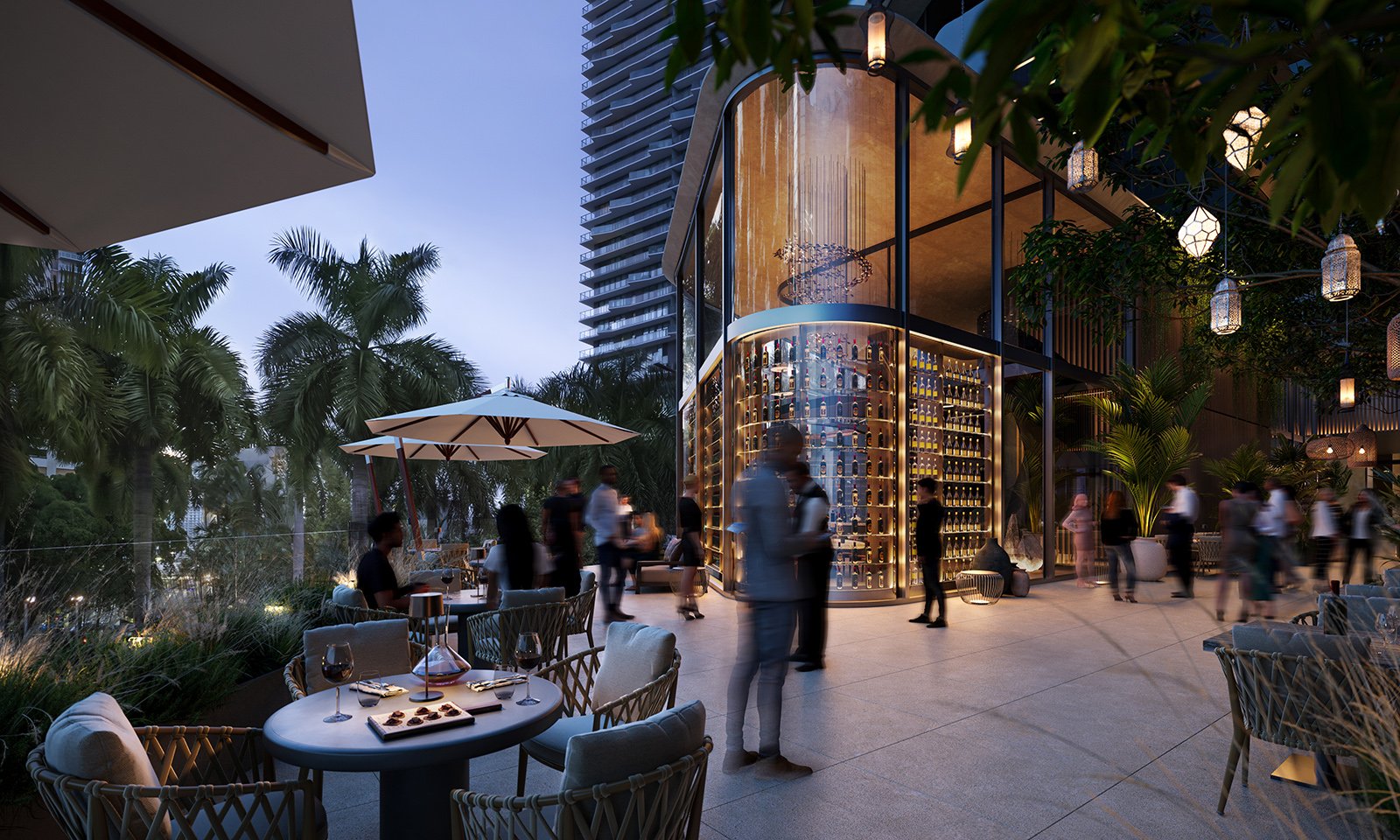
The hospitality program includes a 24/7 concierge, valet, lifestyle enhancements, and private-event spaces. Casa Tua programming encompasses culinary and mixology experiences, private dining, and member access to Casa Tua Miami events associated with Formula 1, the Miami Open, and Art Week. The Club Room, meanwhile, is conceived as an in-building social amenity with billiards, games, a children's room, and reservable event capacity. It is not defined as a separately assessed private club.
A projected HOA charge of approximately $1.99 per square foot has circulated, although the HOA amount also remains identified as TBA. The figure should be treated as provisional rather than a final carrying-cost commitment. It is also unclear which concierge, valet, dining, event, or hospitality expenses are included in assessments and which may be charged à la carte.
Certain Sky Suites have been marketed with a 12-month Grand Bay Club membership. This is a limited-term external-club benefit, not confirmation of permanent membership for every owner. Buyers considering ORA alongside Cipriani Residences Brickell should compare the duration, eligibility, renewal cost, and contractual status of every brand-linked privilege-not merely the prominence of the affiliated name.
Transferability can shape both enjoyment and resale positioning. At Four Seasons, it remains unclear whether the Fort Portfolio Card, preferred-guest status, or club-style privileges automatically follow the residence upon sale or remain personal to the owner. At ORA, it is likewise unclear whether Casa Tua event access or Grand Bay Club privileges transfer, expire, or require a new application.
Buyers should request a written answer for every benefit: Is it attached to the unit, issued to named individuals, conditioned on good standing, revocable, or subject to renewal? If a privilege is promotional, confirm whether it survives both assignment of the purchase agreement and a later resale. If approval by an external club is required, condominium ownership alone may not guarantee admission.
These details matter in Brickell, where branded experiences can influence a residence's appeal, but they should never be incorporated into a resale valuation without documentary support. This is a core principle for buyer's guides addressing hospitality-led ownership.
Condominium assessments are only the starting point. A rigorous annual budget should distinguish mandatory assessments from usage-based costs, optional memberships, reservation fees, valet or parking charges, food and beverage spending, event costs, housekeeping, and renewal dues. It should also identify which charges may change through association budgeting and which are controlled by a hotel operator, brand manager, or outside club.
For ORA, the provisional HOA indication cannot yet answer the broader question of total annual ownership cost. For Four Seasons, the absence of a published private-club fee schedule should not be read as proof that every hospitality experience is covered by assessments. In both cases, buyers should request sample invoices or fee menus where available, recognizing that future charges may be revised under the governing agreements.
Before treating any service as bundled or transferable, reconcile the sales presentation with the latest condominium budget, declaration, rules, purchase agreement, and any separate club or membership contract. Ask counsel to identify conflicts among those documents and determine which language controls.
The review should confirm whether participation is mandatory or optional; which party may raise charges; any initiation or renewal fee; minimum spending requirements; suspension rights; guest privileges; reservation priorities; and the effect of leasing or resale. It should also establish whether a limited benefit begins at contract, closing, occupancy, or club activation. A 12-month membership can carry materially different value depending on its start date.
The luxury proposition at both properties remains compelling precisely because service and social access are central to the experience. The sophisticated approach is not to discount these benefits, but to price them accurately, define their duration, and understand whether they belong to the residence or the individual.
For discreet guidance on South Florida luxury residences and their ownership structures, connect with MILLION.
If branded residences are on your mind — as a home or as an allocation — we would be glad to share what we are seeing, privately.
Begin a quiet conversationNo separate public schedule of initiation fees, recurring club dues, or minimum spending requirements is available for residence owners.
Public materials do not identify a mandatory, separately billed beach-club or residents'-club membership distinct from condominium assessments.
It provides owners preferred-guest status at participating South Florida Four Seasons properties, including preferred rates for stays, dining, and leisure activities.
The available public materials do not clarify whether these privileges transfer with the residence or remain personal to the owner.
Approximately $1.99 per square foot has been presented as a projected figure, while other active materials still label the HOA amount TBA. Buyers should treat it as provisional.
Public materials do not provide an itemized breakdown showing which concierge, valet, event, dining, or hospitality costs are included or billed separately.
It is marketed as an in-building social amenity with games, a children's room, billiards, and reservable event capacity, not as a clearly defined separate private club.
No such permanent benefit is confirmed. Marketing for certain Sky Suites mentions a limited 12-month Grand Bay Club membership.
Public materials do not specify whether those privileges transfer, expire with the original owner, or require a new application.
Review the current condominium budget, declaration, rules, purchase agreement, and every separate club or membership contract with qualified counsel.