A buyer-focused comparison of where privacy begins at two South Florida condominiums, what their published service programs establish, and which operational details require confirmation.
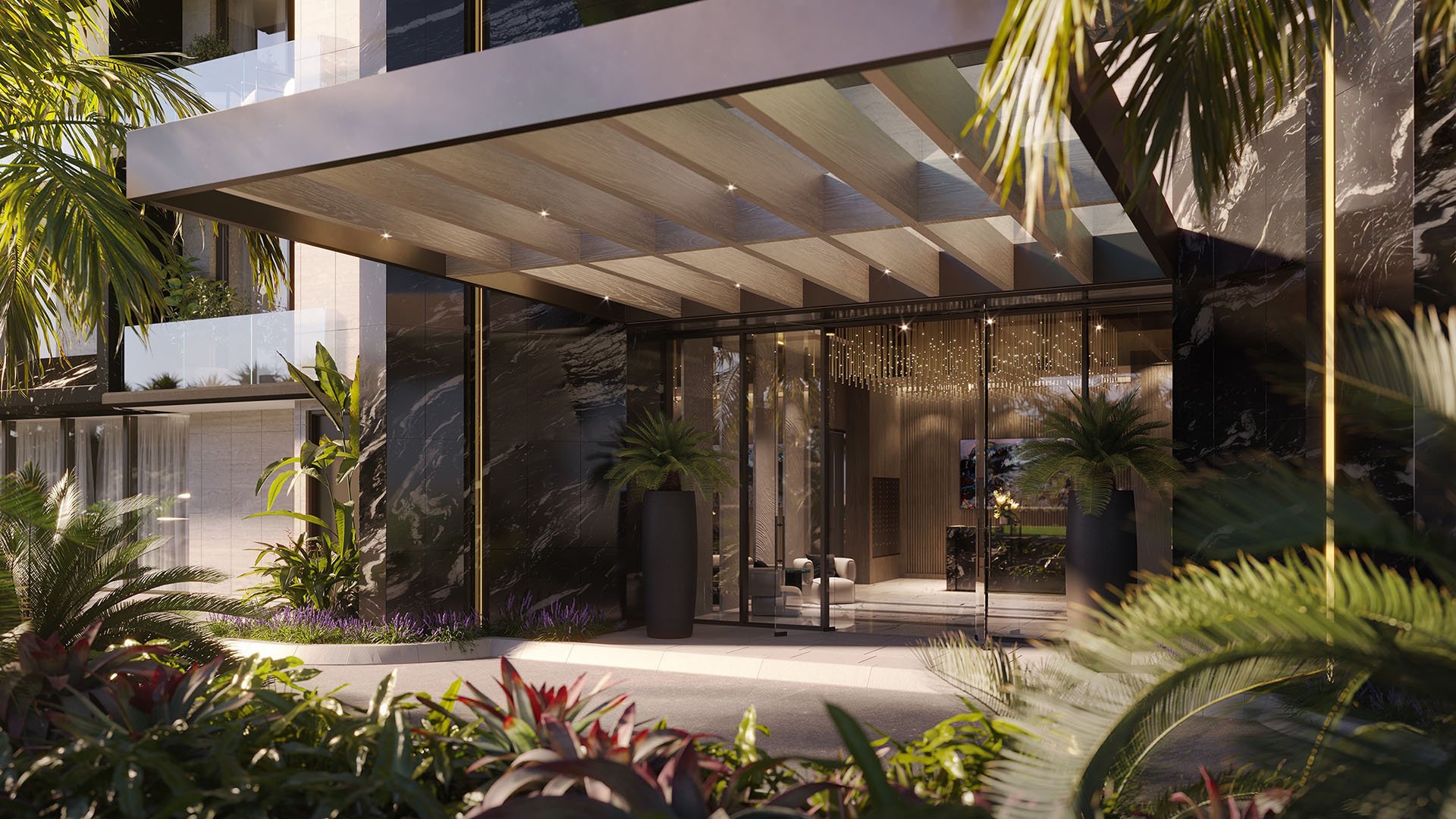
In an ultra-premium condominium, privacy is not a single amenity. It is a sequence that begins at the property line and continues through vehicle handling, access control, vertical transportation, the elevator landing, and the residence itself. For owners with household employees, frequent guests, drivers, contractors, or regular deliveries, the quality of that sequence can shape daily life as meaningfully as the floor plan.
Bentley Residences Sunny Isles and Bay Harbor Towers approach this sequence differently. Bentley concentrates architectural privacy at the vehicle-arrival stage. Bay Harbor Towers emphasizes privacy later, at the residential elevator landing. Both supplement design with staffed services, but neither project fully defines how visitors, household staff, vendors, and deliveries will circulate in practice.
The essential question is not whether a building offers privacy, but where that privacy begins and whom it covers.
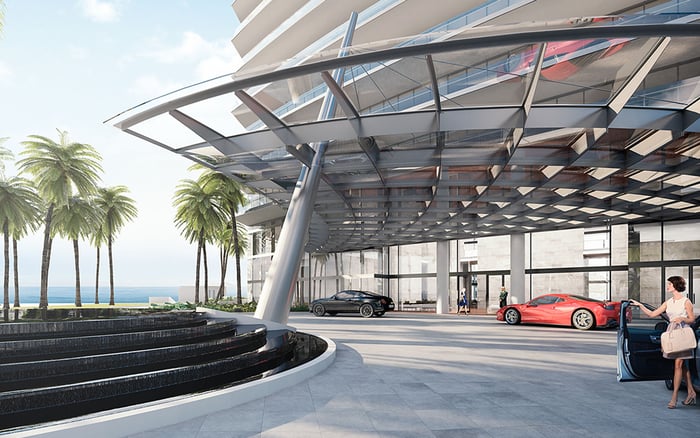
Bentley’s defining arrival feature is the patented Dezervator car elevator. Designed to transport a resident, passengers, and vehicle from road level directly to the residence, the system provides access to each home’s private three- or four-car garage. Secure vehicle storage is placed within the residence rather than in a conventional shared parking garage.
That arrangement can reduce an owner’s exposure to shared parking and lobby circulation during arrivals and departures. It also changes the emotional cadence of coming home: the vehicle is not merely handed off or parked below, but remains part of a private, direct journey to the home’s doorstep.
This is a particularly distinctive proposition within Sunny Isles Beach, where waterfront living and privacy are often considered together. Buyers reviewing the local competitive set might also examine St. Regis® Residences Sunny Isles, while recognizing that Bentley’s documented distinction is its resident-and-vehicle route to an in-residence garage.
The Dezervator should not, however, be assumed to resolve every circulation question. It is presented as a route for residents and their vehicles, not as a general system for guests, domestic employees, contractors, or deliveries. Bentley also plans 24-hour valet as a conventional vehicle-handling alternative, together with 24-hour security and multilingual concierge service. Those staffed layers support oversight, but they do not by themselves define visitor credentials, guest preauthorization, service entrances, or dedicated staff-elevator procedures.
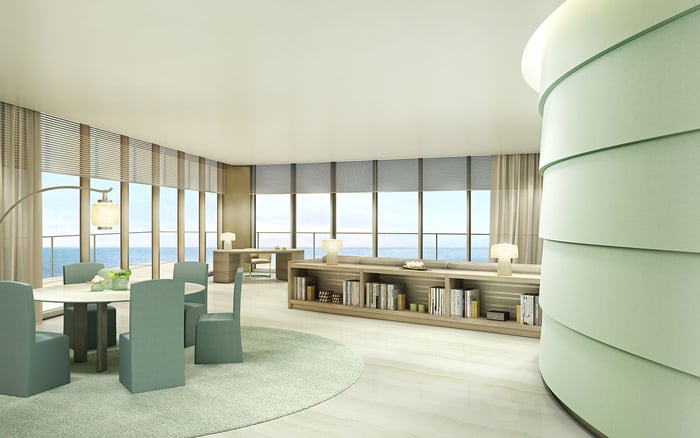
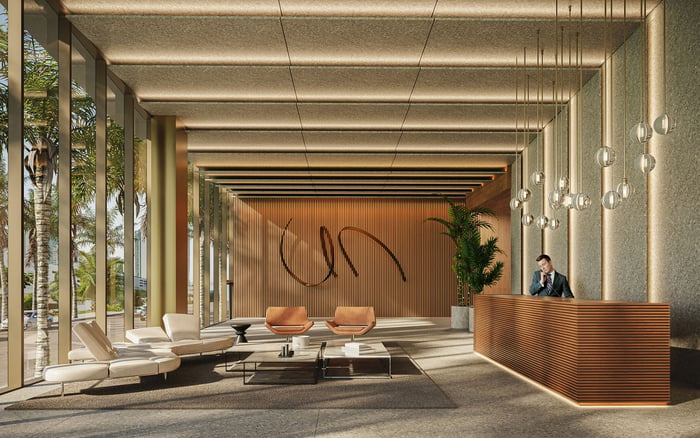
Bay Harbor Towers follows a more conventional staffed arrival model, with 24/7 concierge and valet as well as 24-hour security. Its principal architectural privacy feature appears farther into the journey: residences are marketed with private and semi-private elevator foyers.
That distinction matters. A private foyer implies a different degree of landing exclusivity than a semi-private foyer, so buyers should not assume a uniform condition across every residence. The relevant question is specific to the selected home: who else can arrive at that landing, and under what circumstances?
The approach may appeal to an owner who values a familiar valet-and-concierge arrival followed by greater separation near the front door. It is also useful to compare Bay Harbor Towers within the broader Bay Harbor Islands context. The Well Bay Harbor Islands can broaden a buyer’s review of the area without changing the core diligence required for the residence under consideration.
At Bay Harbor Towers, available details do not clarify whether household employees, deliveries, and vendors use separate entrances, freight elevators, or back-of-house corridors. Visitor-vetting steps-including identification checks, advance resident approval, temporary credentials, and floor-restricted elevator access-are also unspecified. The presence of security, valet, and concierge establishes staffed services, not the exact operating protocol.
For a household with a nanny, housekeeper, chef, personal assistant, driver, or security professional, employee circulation should be evaluated separately from owner arrival. The most private resident route is not necessarily the designated staff route, and it may not be available to service personnel at all.
A buyer should ask where an employee enters at the beginning of a shift, how management verifies recurring access, which elevator bank is used, and whether access is limited by floor, schedule, or credential. It is equally important to understand how employees leave, receive packages, accompany children or pets, and admit approved vendors when the owner is absent.
Neither project has established detailed household-staff circulation protocols. Staffing ratios, camera placement, emergency-access rules, and service-elevator routing also remain matters to confirm. For a pre-construction purchase, written operating documents and management policies may evolve, making specificity in the buyer’s questions more valuable than broad assurances.
Visitor privacy depends on a series of handoffs: curb arrival, identification or recognition, resident authorization, waiting location, elevator release, and access to the correct floor. Concierge and security personnel can supervise those moments, while architecture determines whether guests encounter shared lobbies, parking areas, corridors, or residential landings.
A Bentley owner may bypass much of the conventional arrival sequence through the Dezervator, yet a guest may still use valet, concierge, and ordinary controlled circulation. At Bay Harbor Towers, the owner and guest experience may begin within shared staffed infrastructure before becoming more private at the elevator foyer. In each case, the visitor journey can differ substantially from the owner’s.
Buyers should therefore request a step-by-step explanation for several scenarios: a dinner guest arriving alone, an overnight guest receiving temporary access, a contractor carrying tools, a food delivery, and a household employee arriving before the owner. These practical examples reveal more than a general assurance of controlled access.
Design and architecture should be tested against operations. For Bentley, confirm who may use the Dezervator, how passengers are authenticated, what happens during maintenance or an emergency, and how valet service interfaces with the private garage. Ask how guests reach the residence if the owner does not meet them below.
For Bay Harbor Towers, verify whether the chosen residence has a private or semi-private foyer. Confirm whether service traffic shares the passenger elevator bank, whether elevator permissions are floor-restricted, and where visitors wait while approval is obtained.
At both projects, request current answers on resident preauthorization, recurring staff credentials, vendor insurance requirements, package handling, camera coverage, after-hours access, emergency overrides, and valet queue procedures. If these details are important to the household’s lifestyle, seek clarity in governing documents, management materials, and the applicable purchase paperwork rather than relying on an amenity label.
Bentley’s strongest documented privacy proposition begins with the car and extends directly to an in-residence garage. Bay Harbor Towers offers a more traditional staffed arrival, with its clearest architectural separation at a private or semi-private elevator foyer. Neither model is universally superior. The right choice depends on whether the owner prioritizes direct vehicle privacy, a concierge-led welcome, landing exclusivity, or clearly separated routes for a complex household.
For a discreet review of arrival design and operating questions across South Florida's finest residences, connect with MILLION.
If branded residences are on your mind — as a home or as an allocation — we would be glad to share what we are seeing, privately.
Begin a quiet conversationBentley centers privacy on a direct vehicle journey to an in-residence garage. Bay Harbor Towers places its clearest architectural privacy feature at the private or semi-private elevator foyer.
It is a patented vehicular elevator designed to carry residents, passengers, and their vehicle from road level directly to the residence.
Each Bentley residence is planned with a private three- or four-car garage accessible through the Dezervator system.
Yes. Bentley plans 24-hour valet service alongside its direct-to-residence vehicle system.
No uniform condition is publicly established. Residences are marketed with private and semi-private foyers, so buyers should verify the arrangement for a specific home.
Detailed routes for household employees are not publicly specified for either project. Buyers should confirm entrances, credentials, elevator use, and permitted hours.
No. Staffed services provide oversight, but they do not alone establish identification checks, preauthorization, temporary credentials, or elevator permissions.
The system is presented as a resident-and-vehicle route to private garages. Available details do not establish it as general circulation for guests, vendors, or household employees.
They should confirm foyer exclusivity, whether service traffic shares the elevator bank, and whether elevator access can be restricted by floor.
Architecture establishes the physical route, while management policies govern daily access. Final procedures may depend on condominium and building-management decisions.