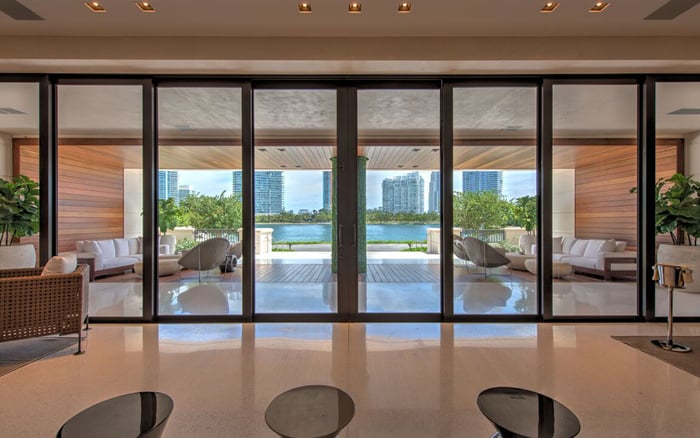
Oceanfront living is shaped not only by proximity to the sand, but also by the legal and operating documents governing access, cabanas, guests, services, and adjacent public routes. Buyers comparing 57 Ocean and Shore Club Private Collections should distinguish amenity language from documented property and use rights before assigning value to privacy or exclusivity.

For an oceanfront buyer, proximity to the Atlantic is only the beginning. The more consequential questions concern what lies between the residence and the water: who controls the route, who may use adjacent pathways, how cabanas are allocated, and whether an easement or public-access arrangement could affect privacy near the amenity level.
That distinction matters when comparing 57 Ocean Miami Beach with Shore Club Private Collections Miami Beach. Descriptions of an ocean-oriented lifestyle can establish the experience being offered, but they do not independently define the ownership, duration, exclusivity, or transferability of beach and cabana privileges.
In oceanfront real estate, access, service, and ownership are three different assets.
A careful purchaser should therefore separate presentation from documentation. Marketing introduces the intended experience; surveys, title exceptions, condominium documents, and operating agreements determine the rights supporting it. Oceanfront privacy is as much a document question as a design question.
The phrase “private beach access” can describe a controlled route intended for residents, but it does not by itself establish ownership of the sand. It also does not answer whether a nearby route is subject to public or third-party use, who maintains the route, or how access may operate over time.
Buyers should identify the precise path from the building to the beach and compare the physical route with the survey and governing documents. The review should distinguish condominium property from public areas, licensed spaces, shared facilities, and any land subject to recorded rights.
The same analysis applies to interfaces with beachfront walkways, landscaped buffers, dunes, and crossover structures. A convenient route may still involve maintenance obligations or rights benefiting another party. Those details can influence circulation, noise, lighting, and perceived seclusion without changing the appeal of direct coastal access.
Cabana language requires equal care. A cabana may be a common amenity available by reservation, a licensed space, an area assigned under building rules, or part of an operated pool or beach program. Each arrangement creates a different level of certainty for the resident.
A buyer should not assume that use of a cabana is permanent, exclusive, transferable with a resale, or included without additional conditions. The relevant documents should clarify reservation priority, fees, guest access, cancellation procedures, operating hours, and any limits on the duration of use.
The distinction is especially important in a hospitality-oriented setting. Dedicated service can enhance the resident experience, but the quality of that service does not establish a property interest. Ownership, assignment, and use rights must be evaluated separately.
At 57 Ocean Miami Beach, the diligence inquiry should focus on how residents reach the beach, how cabana use is administered, and whether the survey or title materials disclose rights affecting the ocean-facing side of the property. Buyers should also compare the documented arrangement with actual pedestrian circulation around the amenity areas.
At Shore Club Private Collections, the review should distinguish residential amenities from any broader hospitality or beach-club operations. Buyers should ask which areas are reserved for residents, how cabanas are allocated, whether guests may use them, and which rules or agreements control the experience.
Neither property should be reduced to a simple “private” or “public” label. A more useful inquiry asks what is owned, what is licensed, what is reserved, what is serviced, and what may remain subject to public or third-party rights.
Public-easement exposure should be treated as a diligence category rather than a conclusion about either property. The existence, location, and terms of any easement must be confirmed through parcel-specific documents.
If an access route is located near a property line or amenity area, its physical relationship to residences, pools, cabanas, and landscaped buffers may affect the buyer’s perception of privacy. Lower-level residences can be particularly sensitive to pedestrian movement, sightlines, sound, and lighting near shared routes.
A site visit should therefore do more than confirm that the ocean is nearby. Buyers can observe where people enter and exit, how pathways relate to private amenity areas, and whether landscaping or changes in elevation create meaningful separation. The visit should then be reconciled with the legal geometry shown in the survey.
Begin with the recorded boundary and topographic survey. Confirm property lines, improvements, beach connections, crossover locations, and every plotted easement. The survey should be read together with the title commitment and all referenced exceptions.
Next, review the condominium declaration, prospectus, current rules, management agreement, and any separate cabana license or assignment agreement. These materials should explain whether cabanas are shared, reserved, licensed, or assigned and whether the applicable rights continue after a transfer of the residence.
The operating details matter as well. Confirm booking procedures, priority rules, charges, guest limits, hours, cancellation terms, and maintenance responsibilities. If the residential experience interfaces with a hospitality operation, determine which party controls each relevant area and service.
Finally, compare the documents with the lived environment. Visit the property at times relevant to the buyer’s anticipated use and observe circulation between the residence, amenities, beachfront routes, and sand. Documents explain legal rights; an on-site review shows how those rights function in practice.
Comparable due diligence can be useful when considering other oceanfront options, including The Perigon Miami Beach and Setai Residences Miami Beach. The purpose is not to assume identical conditions, but to compare how each property documents access, amenity use, hospitality services, and privacy.
A polished amenity program can still leave important legal and operational questions for the buyer to resolve. Conversely, the presence of a nearby route does not determine the quality of the residential experience without understanding its location, design, use, and management.
The most useful comparison between 57 Ocean and Shore Club Private Collections is layered. Buyers should evaluate the beach route, cabana structure, guest rules, operating responsibilities, and any recorded rights that could affect the ocean-facing environment.
That precision allows a purchaser to value service and convenience without mistaking amenity language for a recorded interest. It also creates a clearer basis for comparing privacy, flexibility, and long-term usability across Miami Beach residences.
For discreet guidance on evaluating South Florida’s most exceptional residences, connect with MILLION.
If branded residences are on your mind — as a home or as an allocation — we would be glad to share what we are seeing, privately.
Begin a quiet conversationNo. Access language may describe a controlled route, while ownership and other rights must be confirmed through surveys, title materials, and governing documents.
No. Service describes an operating benefit, while ownership or exclusive use depends on the applicable legal documents.
Buyers should confirm priority, fees, guest rules, cancellation terms, operating hours, and whether any rights continue after resale.
Potentially. Its location and use may influence sightlines, pedestrian movement, sound, lighting, and the feel of nearby amenity areas.
The survey and title materials should be reviewed together to identify plotted easements and the recorded instruments governing them.
A site visit reveals how pathways, landscaping, elevation changes, and pedestrian circulation function in practice.
Buyers should examine the documented beach route, cabana-use structure, title exceptions, and the physical relationship between access routes and amenities.
Buyers should distinguish residential amenities from broader hospitality operations and confirm the rules governing cabanas, guests, and access.
Not by themselves. Transferability should be established in the condominium, operating, license, or assignment documents.
No. Any easement and its effects require parcel-specific review of the survey, title materials, governing documents, and site conditions.