A buyer-focused guide to evaluating staffing ratios, service coverage, dues exposure, and operational durability at Turnberry Ocean Club in Sunny Isles Beach.
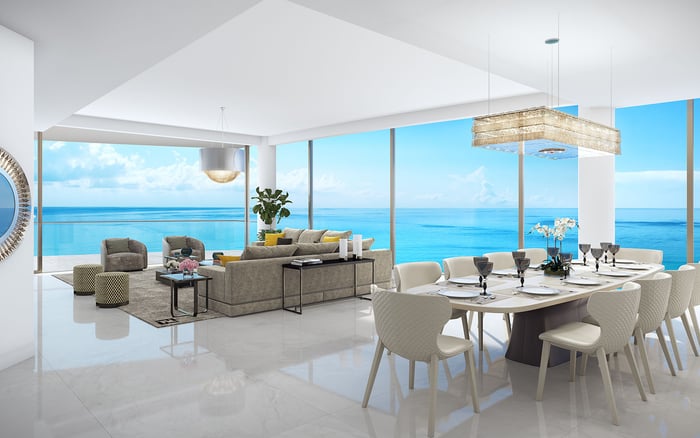
Turnberry Ocean Club Sunny Isles is positioned as an oceanfront ultra-luxury condominium in Sunny Isles Beach, with a lifestyle proposition that reads closer to a private club or resort than a conventional residential tower. For buyers, that distinction matters. In a building where the promise includes elevated amenities, hospitality-level service, and a daily sense of ease, staffing is not a back-office detail. It is part of the asset.
The most sophisticated buyers already know how to study view corridors, ceiling heights, exposure, terrace depth, and finish quality. The next layer is operational. Who opens the door, manages arrivals, prepares the beach experience, supports the pool deck, coordinates spa access, handles private dining, answers resident requests, and protects the building through the night? The answer is not a single headline number. It is a staffing model, and it deserves the same discipline as an association budget or reserve schedule.
Within a Sunny Isles search, buyers often compare towers by brand, architecture, amenities, and waterfront position. At this level, however, the true differentiator can be consistency. A beautifully designed amenity level can feel entirely different at noon on a quiet weekday than during a holiday weekend with high occupancy. Staffing ratios help reveal whether the building is prepared for both.
The essential request is simple: ask for the current and budgeted staffing table. That table should identify full-time equivalents, part-time roles, third-party contractors, outsourced vendors, and overnight coverage. It should also separate departments. Valet, concierge, security, engineering, housekeeping, pool, beach, spa, and dining functions may all touch the resident experience, but they are not interchangeable.
A total employee count is useful only as a starting point. Buyers should ask for resident-to-staff ratios by shift because service quality depends on when people are actually present. A building may feel well staffed during daytime arrival hours yet thin during early mornings, late evenings, weekends, or holidays. The more relevant question is not, “How many people work here?” It is, “Who is on duty when residents are most likely to need them?”
The table should also clarify whether staff members are dedicated to one function or cross-trained across several. Cross-training can be efficient, but it can also mask coverage gaps if the same person is expected to resolve a maintenance issue, respond to a service request, and support an amenity area at the same time. In a luxury environment, clarity is the foundation of confidence.
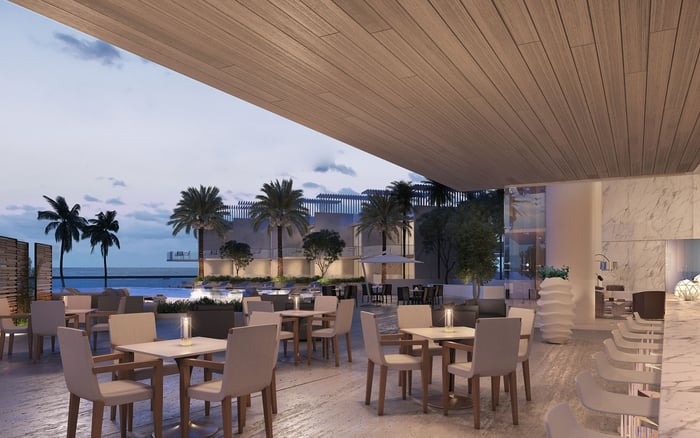
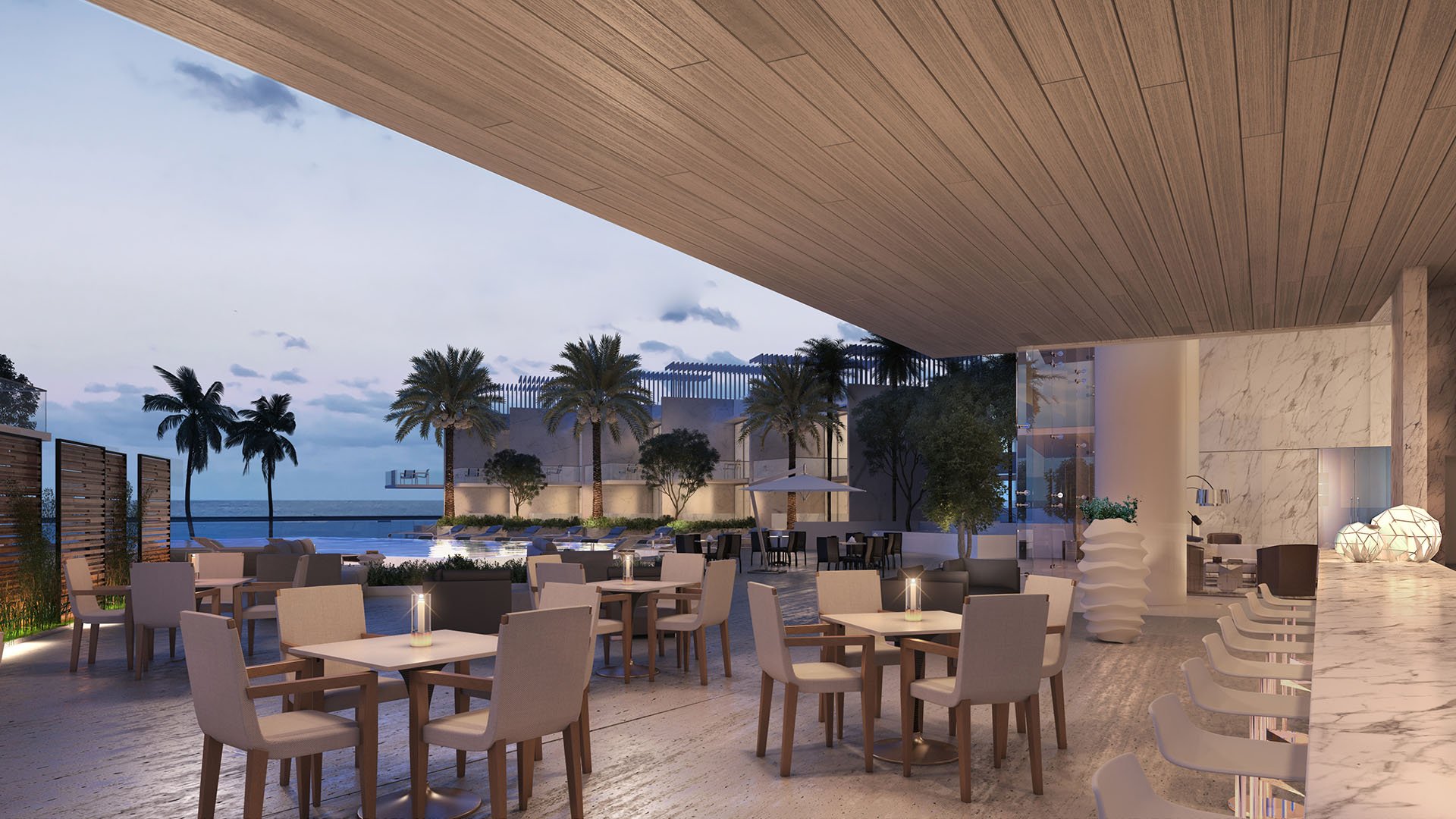
Turnberry Ocean Club’s amenity lifestyle implies service-intensive operations, so buyers should evaluate staffing by zone. Sky-club-style amenities should be paired with questions about hours, access control, cleaning cadence, event support, and response time. If a space is marketed as a signature experience, the staffing plan should show how that experience is delivered beyond the initial design.
Pool operations deserve particular attention. Ask about attendants, towel service, cleaning, furniture resetting, food and beverage coordination, peak-hour coverage, and weather-related procedures. A luxury pool deck depends on subtle choreography. Towels appear before they are requested, chairs are reset quickly, surfaces stay immaculate, and residents do not need to search for assistance.
Beach access is equally operational. Buyers should ask who handles chairs, umbrellas, towels, safety awareness, resident requests, food and beverage logistics, and end-of-day breakdown. Beach service can be one of the most visible elements of the lifestyle, especially in an oceanfront building. It is also one of the most labor-sensitive, because heat, wind, occupancy, and seasonality all affect workload.
Private dining and spa amenities require their own diligence. In dining, determine whether staff are permanent, outsourced, on-call, or event-based. In spa areas, service depends on trained personnel, booking systems, operating hours, and protocols for maintenance and privacy. The more specialized the amenity, the more important it is to understand who is responsible for execution.
A staffing ratio has financial meaning only when paired with the association budget. Buyers should ask which services are included in dues and which require user fees, gratuities, reservations, or vendor charges. A rich service menu may be compelling, but the economic structure determines how residents experience it day to day.
The critical question is whether the budget fully funds the advertised service model. If labor costs rise, insurance expenses increase, or vendors adjust pricing, the association may face pressure. Buyers should understand whether the likely result would be higher dues, new fees, modified service hours, or reduced staffing. In a resale evaluation, this is not merely a lifestyle question. It is a carrying-cost and value-preservation question.
Luxury buyers should also ask how staffing changes seasonally. South Florida buildings can experience different rhythms in winter, summer, weekends, school holidays, and major event periods. A service model that works in low occupancy may not be enough when residences, guest suites, pool decks, valet areas, and beach services are all active at once.
The most elegant answer in a presentation is less important than what is documented. Buyers should ask whether staffing standards appear in governing documents, management agreements, vendor contracts, or annual budgets. Informal statements may describe an aspiration, but enforceability comes from written obligations and funded commitments.
Day-to-day control also matters. Is staff managed by the condominium association, a professional management company, a hospitality operator, or outside vendors? Each structure can work, but each creates different lines of accountability. A buyer should know who sets standards, who supervises performance, who resolves complaints, and who has authority to change staffing.
Service measurement is another mark of a mature operation. Ask whether the building tracks response times, resident complaints, satisfaction feedback, work orders, staffing incidents, and management reporting. In the best residential environments, service is not left to mood or memory. It is monitored, refined, and discussed at the board and management level.
Before committing, ask for the present staffing table, the budgeted staffing table, and any summary of recent staffing changes. Review full-time and part-time roles. Identify contractors. Confirm overnight coverage. Ask about turnover trends, training practices, and whether any departments have been reduced, expanded, or reorganized.
Then test the service model against daily life. What happens when several residents request beach setup at the same time? Who handles a spa booking conflict? How quickly is a pool area reset after heavy use? Who responds if a private dining event overlaps with peak valet demand? These questions are not adversarial. They are the natural diligence of a buyer who understands that service is architecture in motion.
For Turnberry Ocean Club Sunny Isles, the central issue is not whether the tower presents itself as luxurious. It does. The buyer’s task is to determine how that luxury is staffed, funded, measured, and protected over time.
Why do staffing ratios matter at Turnberry Ocean Club? They help buyers determine whether the service experience is supported by enough people at the right times, not just by attractive amenities.
Should buyers rely on a single total staff count? No. A total count is less useful than staffing by shift, department, amenity zone, and season.
What documents should a buyer request? Ask for current and budgeted staffing tables, relevant budget line items, management details, and vendor arrangements where available.
Which amenity areas are most staffing-sensitive? Pool, beach, spa, private dining, concierge, valet, security, housekeeping, and engineering coverage all deserve close review.
Are all services usually included in dues? Not necessarily. Buyers should confirm which services are included and which may involve user fees, reservations, gratuities, or vendors.
Why ask about seasonal staffing? Service demand can change during weekends, holidays, winter months, and high-occupancy periods, so coverage should be tested against peak use.
Who should manage the staff day to day? The key is clarity. Buyers should know whether oversight comes from the association, management company, hospitality operator, or outside vendors.
Can staffing levels change after purchase? They can, depending on budgets, contracts, board decisions, labor costs, insurance expenses, and vendor pricing.
What is the risk of undocumented service promises? If staffing expectations are not tied to budgets, contracts, or governing documents, they may be difficult to enforce later.
What is the best overall question to ask? Ask how the advertised lifestyle is staffed, funded, measured, and protected during both ordinary days and peak-demand periods.
When you're ready to tour or underwrite the options, connect with MILLION.
If branded residences are on your mind — as a home or as an allocation — we would be glad to share what we are seeing, privately.
Begin a quiet conversation