An artist’s studio changes more than a floor plan. Legal use, conversion feasibility, flood-related restrictions, indoor storage and residential compatibility can reshape a South Florida luxury home shortlist.
For an artist, a home’s most consequential room may not be its principal suite or entertaining salon. It may be where work remains undisturbed, materials are stored and a creative practice coexists with domestic life. That requirement turns a comparison of beautiful residences into a more exacting assessment of permitted use and practical fit.
A spare bedroom, garage or garden outbuilding is not automatically a viable studio. The distinction matters before a buyer becomes attached to an address or commissions a conversion concept. Define the intended activity first: its footprint, equipment, storage needs and potential sound or vibration.
The five priorities below are an editorial ordering of buyer decisions, not a market-performance ranking. The regulatory details concern Miami-Dade, Miami and South Miami; they should not be carried over to Broward or Palm Beach County.
1. Zoning and legal-use flexibility: establish eligibility first
Legal suitability should precede aesthetic preference. In Miami-Dade, music, art, instruction and studio activities can qualify as home occupations, subject to conditions. Workspace is limited to 25% of the dwelling’s living area and garage, capped at 500 square feet. The occupation must be conducted by the home’s occupant or occupants and remain ancillary and secondary to residential use. A larger home therefore does not create an unlimited studio allowance.
Identify the property’s exact jurisdiction before applying that framework. The City of Miami has its own development code, Miami 21. South Miami’s artist-studio provisions address light-industrial conditions and live-work settings; they do not grant blanket permission throughout residential neighborhoods. Confirm the current adopted provisions and their applicability to the parcel.
2. Renovation potential and permitting: assess the conversion, not just the room
A seemingly ideal garage or detached building deserves the same scrutiny as an unfinished interior. Miami-Dade requires permits for new structures, additions and many alterations. Electrical, plumbing, mechanical and gas work can also trigger requirements. An existing residential property does not make a studio conversion permit-free.
Have the proposed work evaluated before treating the space as purchase-ready. Some improvements exempt from a building permit may still require a Zoning Improvement Permit and zoning compliance. The better candidate is not necessarily the property with the most surplus square footage, but the one whose proposed alterations can be confirmed as feasible.
3. Flood exposure and workspace elevation: distinguish space from usable space
Waterfront appeal should not obscure the status of a proposed workroom. In Miami-Dade high-flood-hazard districts, separate zoning provisions address building portions below the regulatory flood level and the lowest habitable floor. Buyers should not assume those areas are equivalent to ordinary habitable studio space.
Before assigning creative functions to a lower level, establish its permitted status and the restrictions governing the intended use. Assess the proposed studio itself, not simply the home’s overall presentation. A generous enclosure is no substitute for confirmed usability.
4. Space planning and neighborhood compatibility: accommodate the whole practice
The working footprint extends beyond the easel or desk. Under South Miami’s artist-studio provisions, activity and material storage must remain inside the building or unit, and mass-production and assembly-line techniques are prohibited. Where those provisions apply, an outdoor area cannot be assumed to provide overflow workspace.
Miami-Dade’s home-occupation conditions also restrict sound and vibration detectable more than 100 feet from the home. Equipment cannot be unusually large or numerous compared with equipment typically found in a residence. Evaluate the intended process and equipment inventory alongside the floor plan, rather than discovering an operating mismatch after purchase.
5. Long-term residential compatibility: protect the home’s primary purpose
A successful studio arrangement must remain compatible with residential use. Under Miami-Dade’s home-occupation framework, the business remains secondary to the home. The application process calls for a Certificate of Use, an occupational license and a sketch identifying the workspace. These are due-diligence questions, not details to defer until the studio is furnished.
Review applicable association restrictions before planning improvements. Separately, ask about insurance for the proposed activity, equipment and artwork, and consider how specialized alterations might suit a future owner. Neither insurance terms nor a resale premium should be assumed from the presence of a studio.
Once legal feasibility is established, architectural comparison becomes more useful. Ask where work begins and ends, whether materials can remain contained and how much residential space the practice would displace. A room that photographs beautifully may still be poorly matched to the artist’s routine.
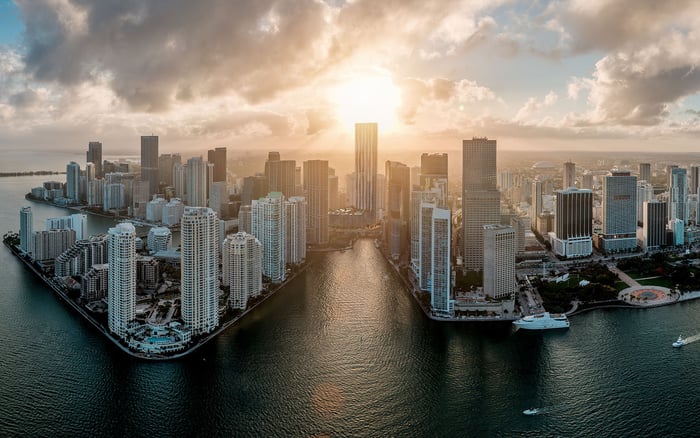
For a Brickell search that includes 2200 Brickell, treat any proposed studio as a property-specific question. Request the relevant governing documents and a measured layout before deciding that an additional room can accommodate the practice. Inclusion on a residential shortlist does not confirm studio permission.
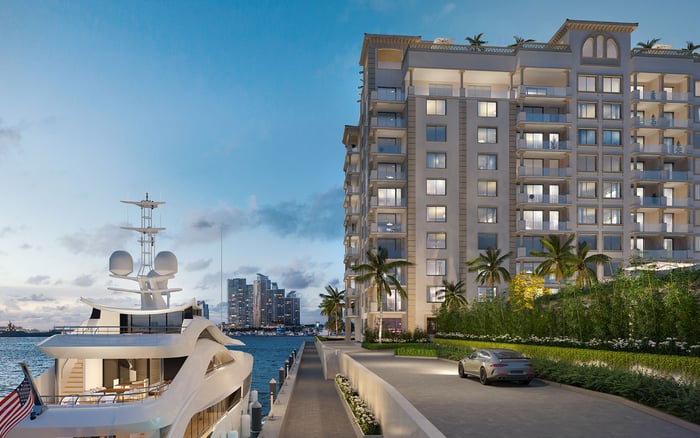
Apply the same discipline in Coconut Grove when considering The Lincoln Coconut Grove. Compare the proposed working area with storage needs and circulation, then verify the intended use and any alterations separately. Design preference and legal suitability should reinforce one another, not be mistaken for the same thing.
The most revealing exercise is to walk through a normal day of making art. Where will supplies arrive? Where will unfinished work remain? Can the artist stop working without reorganizing the household? These questions distinguish a dedicated studio from a room that merely accommodates an occasional creative session.
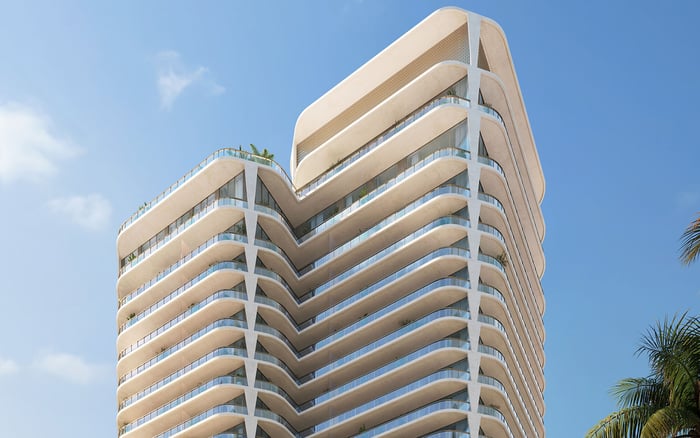
A Coral Gables shortlist might include The Village at Coral Gables, but the same test applies: verify the particular residence, governing restrictions and proposed studio configuration. A project name or neighborhood preference cannot establish whether a specific artistic activity is suitable.
Before making an offer, assemble a clear workspace sketch, an equipment inventory and a description of the intended activity. Ask the appropriate professionals to evaluate use, conversion requirements and flood-related limitations. Obtain separate answers on association restrictions and insurance rather than relying on a broad assurance that the home has room for a studio.
The right residence supports both the creative practice and the life around it, without leaving either dependent on unverified assumptions.
For a South Florida home search shaped around your creative practice, explore the residential collection at MILLION.
If branded residences are on your mind — as a home or as an allocation — we would be glad to share what we are seeing, privately.
Begin a quiet conversationArt and studio activities can qualify as Miami-Dade home occupations, subject to conditions. Confirm the property’s jurisdiction and the rules applicable to the intended activity.
Where this framework applies, the limit is 25% of the dwelling’s living area and garage, capped at 500 square feet. The activity must remain secondary to residential use.
No. Where the Miami-Dade home-occupation framework applies, its 500-square-foot cap still limits the workspace.
Do not assume so. New structures, additions, many alterations and certain building-system changes can require permits.
Yes. Some improvements exempt from a building permit may still require a Zoning Improvement Permit and compliance with applicable zoning requirements.
No. Miami-Dade’s high-flood-hazard rules separately address areas below the regulatory flood level and lowest habitable floor, so the proposed use needs verification.
The artist-studio provisions do not provide blanket residential authorization. Confirm current adopted requirements, parcel applicability and any live-work conditions.
Miami-Dade’s home-occupation conditions limit unusually large or numerous equipment and restrict sound and vibration detectable more than 100 feet from the home.
The application process calls for a Certificate of Use, an occupational license and a sketch identifying the workspace within the home. Confirm current requirements for the property’s jurisdiction.
Neither should be assumed. Evaluate insurance for the intended activity separately and consider future residential flexibility without presuming a resale premium.