A discreet shortlist of five Surfside residences, organized around the questions that matter when private dining, guest flow, service and privacy shape a purchase.
In Surfside, the most compelling residence is not always the one with the longest amenity list. For buyers who host, the more consequential question is whether a property can accommodate a dinner, reception or family celebration with discretion and operational ease.
That assessment extends well beyond a beautiful room. It encompasses reservation rights, guest limits, service access, catering rules, acoustics, cleanup responsibilities and the route visitors take through the property. A private residence may also require sufficient internal dining capacity to function independently when shared spaces are unavailable.
Within MILLION's Buyer's Guides, this is best approached as a Lifestyle decision rather than a simple amenity comparison. The following Surfside shortlist prioritizes the projects that warrant close consideration through a private-dining and entertaining lens, with final verification reserved for current building documents and a carefully structured tour.
Begin by defining the occasions the residence must accommodate. An intimate dinner for eight presents a different brief from a cocktail reception, multigenerational holiday or catered business gathering. Determine whether the preferred setting is inside the home, in a reservable building space or across both.
Then assess capacity in practical terms. Seating is only one consideration. Buyers should examine circulation around the table, proximity to preparation areas, tableware storage, separation between service and guest paths, and access to outdoor space when weather permits. For shared amenity areas, request current rules, fees, deposits, booking windows and restrictions in writing.
1. The Delmore Surfside - formal hosting brief
The Delmore Surfside leads this buyer-focused shortlist as a project to assess with a precise entertaining program in hand. Prioritize the relationship between residence interiors, any reservable social areas, service circulation and the rules governing outside culinary teams.
2. The Surf Club Four Seasons Surfside - service-led inquiry
For buyers considering The Surf Club Four Seasons Surfside, the central question is how residential privacy and hospitality-style service intersect during hosted occasions. Confirm which spaces residents may reserve, what support can be arranged and how guests are received from arrival through departure.
3. Arte Surfside - intimate entertaining lens
Arte Surfside belongs on the tour schedule for buyers whose ideal gathering is deliberately scaled and highly private. Evaluate the residence's dining plan first, then determine whether shared settings can extend that capacity without compromising exclusivity or creating impractical guest movement.
4. Fendi Château Residences Surfside - residence-first assessment
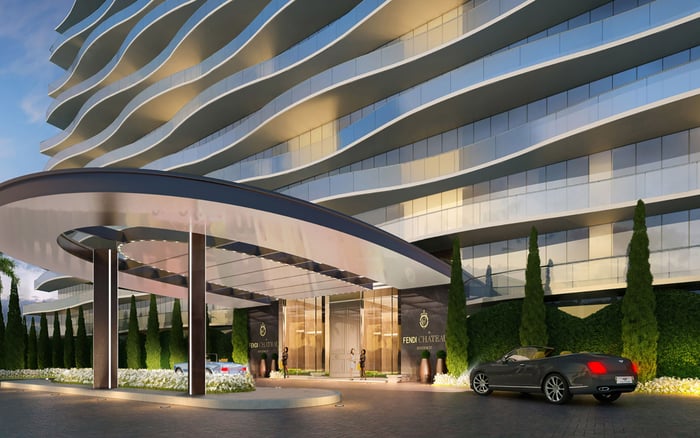
At Fendi Château Residences Surfside, buyers should examine how the individual home supports dining before assigning value to any communal offering. Kitchen adjacency, table placement, terrace connection and service access should be measured against the owner's actual guest count and preferred hosting style.
5. Ocean House Surfside - practical capacity review
Ocean House Surfside completes the shortlist with a clear due-diligence mandate: test the intended residence and relevant shared spaces against real scenarios. A scaled furniture plan and a walkthrough centered on guest arrival, food preparation, service and cleanup can reveal more than broad amenity language.
A productive tour should recreate the full sequence of an event. Before visiting The Delmore Surfside, prepare a concise hosting brief outlining typical party size, frequency, catering preference and privacy expectations. Applying that same brief to each project creates a consistent basis for comparison.
At The Surf Club Four Seasons Surfside, focus questions on the boundary between resident privileges and services that may require separate arrangements. When viewing Arte Surfside, examine scale, transitions and whether the setting suits the buyer's most frequent gatherings.
For Fendi Château Residences Surfside and Ocean House Surfside, compare the residence-level experience with any shared entertaining option under consideration. The objective is not maximum theoretical capacity, but a credible, repeatable experience that feels composed for hosts, guests and staff.
Terms such as private dining room, residents' lounge, club room and event space are not interchangeable. A room may be attractive yet constrained by limited hours, restricted catering, short reservation periods or modest guest allowances. Conversely, a smaller setting may prove more valuable if it is easier to reserve and better suited to intimate hosting.
Buyers should also distinguish design appeal from operating certainty. Request current policies and identify who controls bookings, approves vendors, manages security and restores the room after use. If entertaining capacity materially influences the purchase, all relevant permissions should be understood before a commitment is made.
What defines private dining in a condominium? It generally refers to a resident-accessible setting intended for hosted meals, though access, exclusivity and service provisions should be confirmed.
Is a residents' lounge the same as a private dining room? Not necessarily. A lounge may lack dedicated dining furniture, preparation support or permission for catered events.
How should buyers compare entertaining capacity? Compare seated and standing scenarios, circulation, service paths, guest rules and space availability on preferred dates.
Should the residence itself support formal dining? Ideally, yes, when hosting is a priority. In-home capacity provides flexibility when shared amenities are booked or restricted.
What documents should a buyer request? Request current amenity rules, reservation procedures, fee schedules, vendor requirements and applicable guest policies.
Why does service circulation matter? It allows catering staff to work efficiently while limiting disruption to guests and preserving the tone of the occasion.
Are terraces automatically suitable for entertaining? No. Buyers should assess layout, access, furnishings, weather exposure and any applicable building rules.
How important are booking windows? They are critical for owners planning holidays or larger occasions well in advance. Ask how competing requests are handled.
Can an amenity offering change after purchase? Policies, fees and access conditions can evolve, so buyers should review governing documents and current operating practices.
What is the best final test before buying? Walk through a realistic event from guest arrival to cleanup, then confirm every essential permission in writing.
For a discreet conversation and a curated building-by-building shortlist, connect with MILLION.
If branded residences are on your mind — as a home or as an allocation — we would be glad to share what we are seeing, privately.
Begin a quiet conversation