An editorial guide to evaluating five South Florida residences through the practical needs of seasonal owners, with emphasis on verifiable air, water, lighting, and recovery performance.
For seasonal owners, residential wellness is most useful when it continues to support the home between visits. Air treatment, water filtration, lighting, materials, and recovery spaces deserve closer examination than a conventional list of amenities because their value depends on scope, operation, access, and maintenance.
This editorial ranking keeps the focus on five South Florida residences named in the original selection. It is not a certification, clinical assessment, or substitute for current project documents. Buyers should independently confirm every proposed or delivered feature before relying on it in a purchase decision.
A wellness feature becomes meaningful when its scope, performance, and maintenance can be clearly explained.
619 Brickell leads this editorial order as a residence for buyers to examine through an exacting wellness lens. The appropriate next step is not to rely on broad terminology, but to request current specifications identifying the systems intended for individual residences, shared amenity areas, or both.
Seasonal owners should ask how air and water equipment operates during an extended absence, whether settings can be managed remotely, and who is responsible for servicing each component. Any treatment or recovery offering also warrants questions about staffing, reservations, availability, protocols, and separate charges.
THE WELL Coconut Grove occupies the second position in the original selection. Buyers evaluating its wellness proposition should distinguish permanent in-home infrastructure from optional equipment, services, memberships, and shared facilities.
Documentation should clarify what is included with a residence, what requires replacement or calibration, and whether an owner can review system status after time away. Where lighting, ventilation, filtration, or recovery features are discussed, request model information, coverage details, maintenance responsibility, and delivery status.
Cora Merrick Park is third in the ranking and should be reviewed with equal attention to the private residence and the wider building. Buyers can ask for schedules covering air and water equipment, interior materials, acoustic measures, wellness spaces, and any recovery installations represented in current sales documents.
For a seasonal owner, service continuity is central. Confirm how equipment is inspected before arrival, how replacement parts are handled, what happens during downtime, and whether building management can coordinate access when the owner is away.
House of Wellness is fourth in the original editorial order. A wellness-led identity should be translated into a room-by-room and system-by-system scope before it influences a buying decision.
Prospective owners should determine whether each feature is planned, installed, commissioned, or optional. They should also separate building-wide provisions from systems serving only common areas or private homes. Written clarification can reduce ambiguity around future operations, resident access, maintenance, and fees.
Elysee Miami completes the five-residence selection. As with the other properties, a buyer should avoid assuming that a wellness feature mentioned for one area applies throughout the building or inside every home.
The useful inquiry is specific: which spaces are served, which standards or targets apply, how performance is checked, and who receives the results? That process allows seasonal owners to compare residences on consistent terms even when project language, equipment, and service structures differ.
Words such as purified, advanced, optimized, or medical-grade do not provide a complete measurement framework on their own. A buyer needs documentation that connects each description to equipment, coverage, operating targets, testing procedures, and maintenance.
For air systems, request the equipment schedule, filter type, areas served, sensor locations, replacement intervals, and any resident-facing monitoring. Ask whether readings are continuous or periodic and what action follows an out-of-range result. If a system serves only shared spaces, it should not be treated as an in-residence feature.
For water, identify the point of treatment, filtration stages, fixtures served, testing schedule, target substances, replacement cycle, and party responsible for upkeep. Buyers should also clarify whether a system treats drinking water only or has a broader scope. Current test records are more informative than general marketing language.
Lighting claims merit similar care. Ask which fixtures or controls are included, whether programming is automatic or owner-managed, and what happens after a power interruption or extended vacancy. A lighting concept is different from a documented operating sequence delivered with the residence.
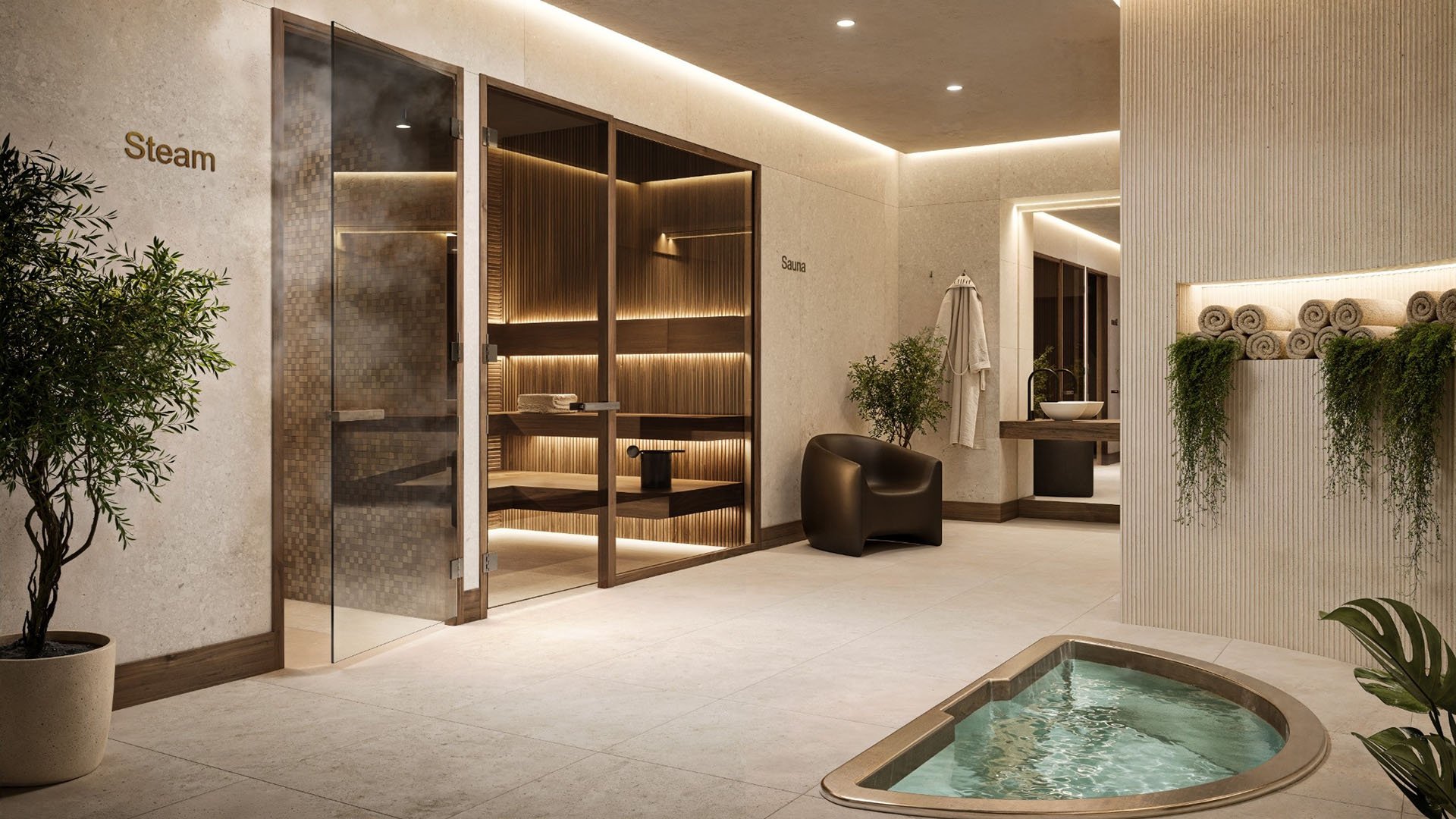
Recovery facilities require another form of verification. Confirm the exact equipment, operating hours, supervision, reservation process, eligibility, service limits, sanitation procedures, downtime policy, and costs. Private equipment requires its own review of power, ventilation, servicing, warranty, and safe-use guidance.
A residence used intermittently creates practical questions that may not arise in a primary home. Before buying, establish which systems remain active while the home is vacant and whether reduced-use modes affect air, water, lighting, or connected controls. Determine who receives alerts and who is authorized to respond.
Pre-arrival procedures also matter. Ask whether management can flush water lines, inspect filters, confirm system operation, or arrange qualified service before occupancy. The purchase documents, management agreement, warranty materials, and current operating policies should explain where owner responsibility begins and ends.
Shared recovery amenities may be appealing, but availability can shape their usefulness. Review booking restrictions, guest rules, operating hours, staffing, closures, and fee structures. An in-home feature may offer privacy, yet it can also place more maintenance and replacement responsibility on the owner.
Use the same written checklist for every residence. Begin with the location of each system: private home, shared area, or both. Then record whether the feature is included, optional, planned, delivered, or subject to change. Add the performance target, testing method, maintenance cycle, responsible party, warranty, access rules, and expected cost.
Do not combine unlike categories into a single wellness score. Air quality, water treatment, lighting, material selection, acoustics, fitness, thermal facilities, and specialized recovery services involve different evidence and operating requirements. A project may be compelling in one category while offering limited documentation in another.
Finally, consider fit rather than the length of an amenity menu. The right South Florida residence for a seasonal owner is the one whose documented systems, management structure, access model, and upkeep requirements match the owner’s actual schedule and expectations.
For private guidance on South Florida residences suited to seasonal ownership, connect with MILLION.
If branded residences are on your mind — as a home or as an allocation — we would be glad to share what we are seeing, privately.
Begin a quiet conversationA measurable feature has documented scope, equipment, operating targets, testing procedures, and maintenance responsibilities.
No. It is an editorial framework, not a certification or clinical assessment.
Request equipment details, filter type, coverage, sensor locations, replacement intervals, monitoring methods, and response procedures.
Confirm the treatment point, filtration stages, fixtures served, testing schedule, replacement cycle, and maintenance responsibility.
A feature serving a shared area may not provide the same benefit inside a private residence. Buyers should confirm exactly which spaces are covered.
They should confirm which systems remain active, who receives alerts, and who can arrange inspection or service while the home is vacant.
Confirm the equipment, access rules, supervision, reservation process, sanitation procedures, downtime policy, and costs.
No. Descriptive terms should be supported by current specifications, test methods, operating records, and maintenance plans.
Yes. A consistent checklist makes differences in scope, status, testing, access, upkeep, and cost easier to identify.
The systems and services should match the owner’s schedule, vacancy periods, access expectations, and willingness to manage ongoing upkeep.