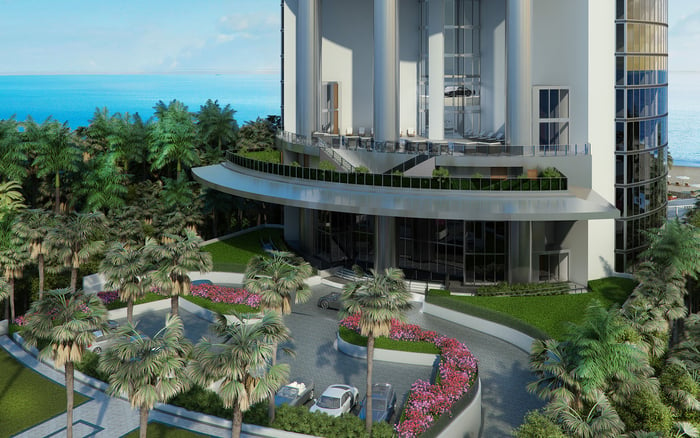
A buyer-focused ranking of five ultra-premium South Florida residential settings where reported annual lease minimums and approval controls can help limit transient occupancy, subject to document-level verification.

For an ultra-premium buyer, a residence is both a private retreat and a balance-sheet asset. When portfolio financing is involved, the building’s operating profile warrants scrutiny alongside the borrower’s relationship with the lender. Clear leasing rules can help limit rapid tenant turnover, discourage vacation-style occupancy, and sustain a more residential atmosphere. On their own, however, they do not guarantee silence, safety, value preservation, or loan approval.
Most Miami luxury condominiums require minimum leases of six or 12 months rather than permitting nightly or weekly stays. The distinction is material. A six-month minimum combined with a limit of three rentals per year can effectively exclude weekly, monthly, and Airbnb-style use; a 12-month requirement creates an even more deliberate occupancy pattern.
The five selections below prioritize reported annual lease minimums, tenant approval, and neighborhoods associated with longer-term occupancy. Portfolio-loan eligibility remains a separate determination. Buyers should ask lenders to examine reserves, insurance, litigation, owner occupancy, and any other underwriting criteria relevant to the specific transaction.
1. Acqualina Resort & Residences on the Beach - Collins Avenue oceanfront, Sunny Isles Beach
Acqualina presents the strongest restriction profile in the available information. Its rules are described as requiring 12-month minimum leases, excluding short-term vacation rentals, and imposing a rigorous tenant-approval process.
That combination is particularly relevant for owners who value low turnover. Before it influences an acquisition decision, however, the policy should be confirmed through the current declaration, amendments, application procedures, and written management guidance.
2. Porsche Design Tower - Collins Avenue oceanfront, Sunny Isles Beach
Porsche Design Tower is also described as requiring 12-month leases and strict association approval. Compared with buildings designed for greater leasing flexibility, those controls can materially reduce the cadence of tenant arrivals and departures.
The annual minimum is the headline restriction, but sophisticated diligence should also examine rental frequency, waiting periods, approval standards, enforcement rights, and whether pending amendments could alter the ownership experience.
3. Bal Harbour oceanfront luxury residences - St. Regis Bal Harbour and Ritz-Carlton Bal Harbour context
Many luxury buildings in Bal Harbour use 12-month minimum leases, effectively excluding short-term stays. St. Regis Bal Harbour and Ritz-Carlton Bal Harbour illustrate the caliber of residential setting under consideration, but a neighborhood pattern cannot substitute for each property’s governing documents.
A buyer should compare the recorded declaration with the association’s current rules and actual leasing procedures. The objective is a restriction that is both clearly drafted and consistently enforceable.
4. Key Biscayne luxury residences - Oceana Key Biscayne context
Key Biscayne’s luxury condominium inventory commonly uses 12-month minimum leases, making the island a compelling low-turnover setting for buyers who prioritize privacy and a stable residential rhythm.
Oceana Key Biscayne is a relevant neighborhood example, although its current policy must be verified independently. Counsel should determine precisely when leasing may begin, how often a unit may be leased, and what approval documentation a tenant must provide.
5. Coconut Grove waterfront luxury residences - Grove at Grand Bay and Park Grove context
Many high-end buildings in Coconut Grove require 12-month leases. That profile is more restrictive than the six-month minimums associated with some investor-oriented condominium districts and may better suit owners seeking a less transient environment.
Grove at Grand Bay and Park Grove provide recognizable context for the neighborhood’s waterfront tier. Neither should be assumed to follow a neighborhood-wide rule without a review of its latest recorded and operational documents.
A project link can illuminate architecture, setting, and available residences, but it does not verify leasing rights. In Sunny Isles Beach, buyers exploring the broader Acqualina setting can consider The Estates at Acqualina Sunny Isles while keeping its rules distinct from those attributed to Acqualina Resort & Residences.
The same discipline applies farther south. Oceana Bal Harbour provides Bal Harbour context, while Oceana Key Biscayne represents the Key Biscayne market discussed above. In Coconut Grove, Park Grove Coconut Grove is a useful reference point for the area’s waterfront residential character. Every building requires its own document review.
Municipal permission and association permission are distinct layers. A city may allow vacation rentals in a particular zone, yet a condominium or HOA can impose stricter limits. Conversely, favorable zoning does not establish that a specific unit may be rented nightly, monthly, or at all.
Florida associations commonly impose minimum lease terms ranging from 90 days to 12 months, sometimes alongside rental caps affecting 20% to 30% of units. Rule changes also demand careful legal analysis. In condominium settings, amendments changing lease duration or frequency generally bind owners who consent and purchasers who acquire after the amendment. Certain HOA communities can adopt six-month minimums and three-rentals-per-year caps that apply retroactively.
Before closing, counsel should review the declaration, all amendments, current rental rules, lease-frequency limits, tenant-screening procedures, application timing, waiting periods, caps, and enforcement provisions. Buyers should also request an estoppel or written management confirmation. Clear language matters, as do the association’s procedures for administering it.
A restrictive rental policy may suit a buyer’s lifestyle, but it creates no presumption about financing. No stated lease rule confirms that a condominium is acceptable to a particular portfolio lender. The bank may assess the borrower holistically while still scrutinizing building-level risk.
The cleanest approach is to conduct two coordinated reviews. Legal counsel verifies present and prospective occupancy rights, while the lender evaluates the condominium and proposed collateral. This preserves optionality without conflating a desirable residential rule with a credit decision.
Do 12-month minimum leases eliminate short-term rentals? They generally exclude vacation-style stays, but buyers must confirm the precise language, exceptions, and enforcement provisions.
Is Acqualina’s reported policy verified by current association documents? Not within the available information. Current governing documents and written management confirmation therefore remain essential.
Does Porsche Design Tower require tenant approval? Its process is described as strict, with a reported 12-month lease minimum, but current procedures should be verified.
Do all Bal Harbour luxury buildings follow the same rule? No. Annual minimums reflect a neighborhood pattern, not a confirmed universal policy for every building.
Is Oceana Key Biscayne confirmed to require annual leases? The broader Key Biscayne pattern supports annual leasing, but Oceana’s specific current rule requires document-level confirmation.
Are Coconut Grove buildings stricter than Brickell buildings? Many high-end Grove properties use annual minimums, while several investor-friendly Brickell buildings use six-month minimums.
Can city zoning override a condominium rental restriction? No. Municipal permission does not displace a stricter condominium or HOA rule.
Do longer leases prove that a building is quiet or secure? No. They may reduce turnover, but they do not measure noise, security incidents, or resident satisfaction.
Does a restrictive rental policy guarantee portfolio financing? No. Lenders may separately assess reserves, insurance, litigation, owner occupancy, and other building risks.
What should a buyer obtain before closing? Obtain the latest declaration, amendments, rental rules, approval procedures, enforcement terms, and written management confirmation.
For a tailored shortlist and next-step guidance, connect with MILLION.
If branded residences are on your mind — as a home or as an allocation — we would be glad to share what we are seeing, privately.
Begin a quiet conversation