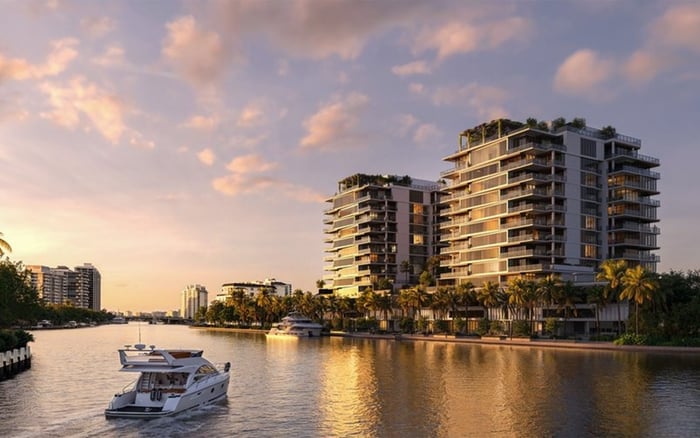
A Fort Lauderdale-focused ranking that helps staffed households evaluate mechanical elevation, emergency power, flood planning, access, and operating continuity through property-specific diligence.

For a household supported by estate managers, housekeepers, chefs, drivers, or security personnel, storm readiness extends beyond the visible building envelope. Buyers must determine whether access, vertical circulation, water service, refrigeration, communications, and other household functions can continue when normal services are disrupted.
That inquiry must remain property-specific. Buyers exploring Fort Lauderdale options, including Four Seasons Hotel & Private Residences Fort Lauderdale, should request records for the exact building and residence under consideration rather than transfer assumptions from another property.
True resilience is the ability to preserve both the residence and its service routines.
The five entries below form an editorial shortlist for further investigation, not a certification of engineering performance or storm readiness. With no property-specific engineering documents included here, the order should be treated as a structured starting point for legal, insurance, building, and technical review.
A complete comparison should examine three connected layers. The first is the envelope, including openings and exterior components. The second is the building’s critical infrastructure, including power, pumps, controls, and vertical circulation. The third is the household operating plan governing staff, vendors, vehicles, supplies, and re-entry.
Adagio Fort Lauderdale Beach begins the shortlist. Before relying on any resilience feature, buyers should obtain current building records and identify the systems serving the specific residence.
The technical review should establish the location and protection of critical electrical and mechanical equipment, the scope of emergency power, and the procedures governing elevator use and building access during an outage. A staffed household should also confirm how storage, deliveries, refrigeration, and communications would be managed if ordinary service routines were interrupted.
This Aquamar Las Olas entry should be evaluated independently, even if it shares management practices or infrastructure with neighboring addresses. Buyers should not assume that equipment locations, electrical distribution, access procedures, or emergency operations are identical without documentary confirmation.
Households with marine operations should coordinate residential planning with vessel preparation, crew responsibilities, provisioning, and relocation decisions. Building management records and the household’s own written protocol should identify who has authority to act and when each task must occur.
The second Aquamar entry requires the same address-specific discipline. Counsel and technical advisers should review plans, maintenance records, emergency procedures, and any available documentation describing the systems that remain available during a power or access disruption.
Private circulation and outdoor areas can create additional operating responsibilities for household personnel. Buyers should identify shutdown procedures, responsibility for securing exterior furnishings, and any restrictions affecting staff movement before, during, or after severe weather.
The third Aquamar entry completes the group of related candidates. Its inclusion does not establish that its resilience profile matches the other addresses; the relevant question is what the records for this address and the selected residence demonstrate.
The review should trace power and access dependencies from the property entrance to the residence. It should also clarify how water service, communications, security controls, parking access, and any staff-critical areas would operate under the building’s emergency plan.
The Commodore rounds out the shortlist as another Fort Lauderdale candidate requiring building-specific verification. Established buildings can merit particular attention to the current condition, maintenance history, testing practices, and documented scope of any emergency systems.
Buyers should separate visible improvements from building-wide infrastructure. A residence may appear prepared while still depending on shared equipment, access points, or management procedures that require separate examination.
Mechanical elevation concerns where critical equipment is positioned relative to the property’s documented flood conditions and applicable requirements. The diligence team should identify equipment serving power, water, access, communications, cooling, and other essential functions, then verify its location through current plans and professional review.
This inquiry should not rest on marketing language. Buyers comparing coastal projects such as St. Regis® Residences Bahia Mar Fort Lauderdale should request documentation for the precise property under consideration and ask qualified advisers to interpret it.
Equipment location is only one part of continuity. Buyers should also examine the pathways connecting equipment to the residence, the controls required to operate it, and the dependencies that could interrupt service even if a principal component remains protected.
A reference to emergency power does not explain which loads are supported. Buyers should request the available load schedules, transfer information, maintenance history, testing records, fuel assumptions, and operating procedures. Qualified advisers can then determine whether the documentation addresses elevators, pumps, access controls, gates, refrigeration, communications, common areas, or selected in-residence circuits.
The same diligence applies to urban alternatives such as Sixth & Rio Fort Lauderdale. Location alone should not substitute for review of drainage, utility dependencies, access, and building operations.
Staff planning should reflect the verified scope of building systems. If an elevator, gate, pump, or communications service is not supported, the household needs a practical alternative rather than an assumption that normal routines will continue.
A useful diligence package combines building and residence records with a written household operating plan. The plan should assign responsibility for exterior preparation, vehicles, vessels, collections, refrigeration, communications, credentials, supplies, and coordination with management.
Staffing and re-entry procedures should be equally clear. The household should know when personnel must leave, who may return, how management will communicate changes, which entrances may be available, and how vendors will be contacted. Redundancy for keys, access credentials, charging, radios, and contact records can reduce dependence on a single person or device.
These procedures should be tested against the property documents before closing. Any unresolved question involving life safety, structural performance, flood exposure, insurance, or code compliance belongs with the appropriately qualified professional.
This ranking presents five Fort Lauderdale candidates through the lens of staffed-household continuity. It does not establish that one property is mechanically superior to another without current, property-specific evidence. The strongest choice will be the residence whose documented systems, management procedures, and household operating plan align with the buyer’s actual service requirements.
For discreet guidance on South Florida residences aligned with your household’s operational priorities, connect with MILLION.
If branded residences are on your mind — as a home or as an allocation — we would be glad to share what we are seeing, privately.
Begin a quiet conversationIt provides an editorial shortlist for property-specific diligence. It does not certify engineering performance or storm readiness.
Household continuity can also depend on power, water, access, elevators, refrigeration, communications, and management procedures.
Buyers should identify where critical electrical and mechanical equipment is located and have qualified professionals assess the relevant plans and requirements.
No. Buyers need documentation showing the supported loads, transfer arrangements, operating procedures, and maintenance history.
The review may include elevators, pumps, gates, access controls, refrigeration, communications, common areas, and essential residence circuits.
No. Each address and selected residence requires its own documentary and technical review.
A written plan clarifies when personnel and vendors may return, how they receive updates, and which access points or services may be available.
Request available plans, emergency procedures, load information, maintenance history, testing records, fuel assumptions, and building access protocols.
They should coordinate residential responsibilities with vessel preparation, crew assignments, provisioning, and relocation decisions.
No. Coastal and urban properties both require review of drainage, utilities, access, equipment, and operating procedures.