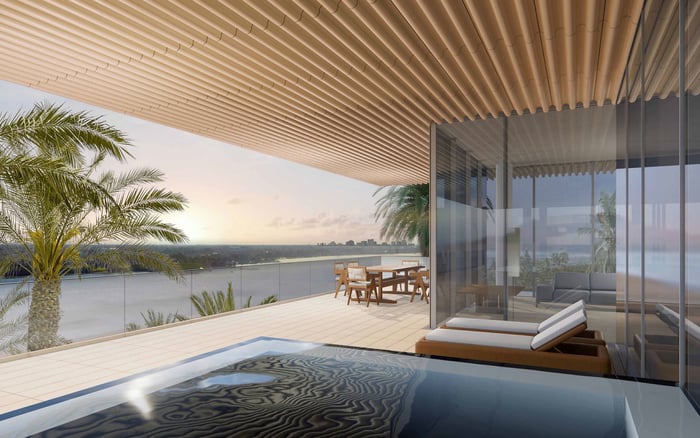
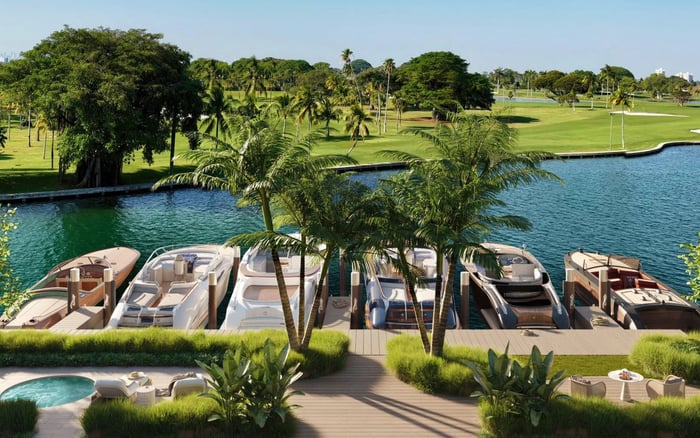
Five South Florida neighborhoods merit a closer look for private deep-water dockage and ocean routes without fixed bridges, with essential distinctions for yacht-owning buyers.
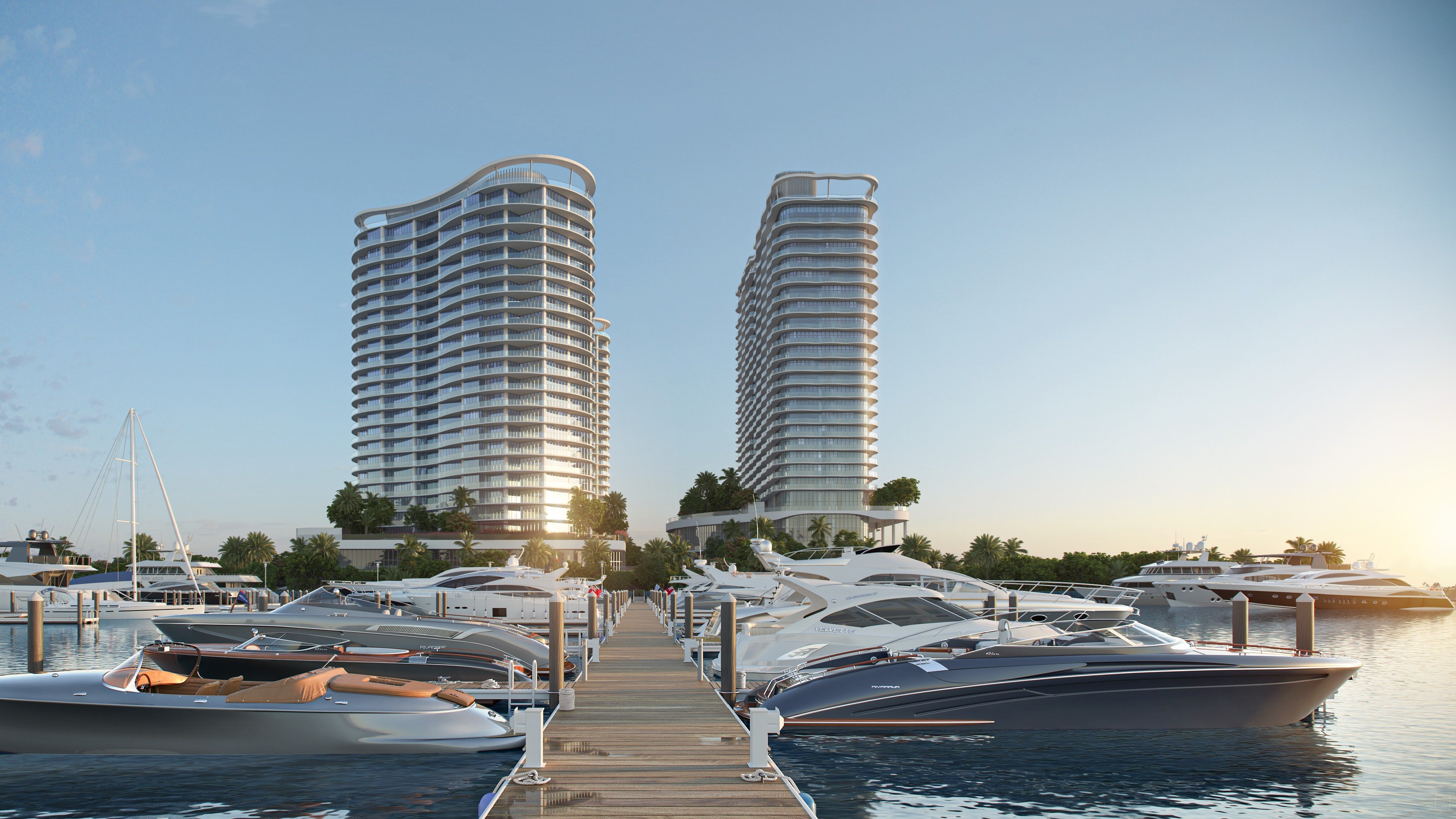
For a yacht-owning buyer, the most consequential feature of a South Florida residence may lie beyond its property line: the passage from the dock to the Atlantic. A compelling waterfront address must work for the vessel, not merely frame it beautifully.
The distinction begins with language. “Bridge-free” is appealing shorthand, but “no fixed bridges” is often more accurate. An opening bridge may remain on the route, and a deep-water description does not establish a verified minimum depth. Neither phrase replaces a property-specific assessment.
Las Olas Isles, Seven Isles, Bel Lido, Rio Del Rey Shores and Venetian Isles offer five starting points. For buyers also considering a Fort Lauderdale residence such as Andare Residences Fort Lauderdale, the first decision is whether private residential dockage is indispensable. That requirement should shape the search before architecture, interiors or amenities do.
1. Las Olas Isles: Fort Lauderdale, ZIP 33301
Las Olas Isles ranks first for its combination of deep-water residential canals, private dockage and ocean access without fixed bridges, alongside proximity to Las Olas Boulevard. It is a natural starting point for buyers who want a waterfront home that supports boating rather than simply offers a view. Atlantic access through Port Everglades remains dependent on the individual property and route.
The neighborhood name also requires precision. Nurmi Isles belongs to the broader group commonly called Las Olas Isles, and its boating route includes an opening bridge at Las Olas Boulevard. A home can therefore offer access without fixed bridges yet lack an entirely bridge-free passage. Confirm the exact island street and departure route rather than relying on the broader neighborhood name.
2. Seven Isles: North of Las Olas Boulevard
Seven Isles lies north of Las Olas Boulevard, opposite Idlewyld, and offers direct ocean access through Port Everglades without fixed bridges. Its appeal is straightforward: private residential waterfront with a defined ocean-access route. For buyers focused on Fort Lauderdale, it warrants close comparison with the broader Las Olas Isles search.
A property's stated dockage applies to that home, not the neighborhood. It should not become an assumed minimum or a proxy for usable vessel length. The meaningful comparison is between each home's actual dock configuration and the dimensions of the yacht intended to occupy it.
3. Bel Lido: Highland Beach, west of A1A
Bel Lido is an estate enclave associated with deep-water Intracoastal dockage and canals offering ocean access without fixed bridges. Its Highland Beach location makes it a distinct alternative to the Fort Lauderdale entries, particularly for buyers whose residential search centers farther north.
Here, the estate and its waterfront should be evaluated together. A deep-water description is a reason to investigate, not a guarantee of suitability. The dock, canal approach, turning space and complete ocean route must all accommodate the intended vessel before the home can reasonably be considered yacht-ready.
4. Rio Del Rey Shores: Delray Beach, south of Atlantic Avenue
Rio Del Rey Shores is a single-family waterfront community just south of Atlantic Avenue. It combines direct Intracoastal properties with homes on adjoining deep-water canals, including private docks or lifts and ocean access without fixed bridges. That mix gives buyers two distinct waterfront settings within one community.
The choice should begin with the individual parcel rather than a blanket preference for Intracoastal or canal frontage. Compare the actual berth, approach and vessel requirements at each home. A lift-equipped property and a dock intended for an alongside berth are not interchangeable simply because both offer private waterfront access.
5. Venetian Isles: Lighthouse Point
Venetian Isles rounds out the shortlist with wide canals, deep-water access and no fixed bridges in key sections. The qualification matters: these attributes should not extend automatically to every address. For buyers searching Broward beyond Fort Lauderdale, it adds another neighborhood to consider for private dockage.
Its appeal for larger vessels warrants a careful look, but canal width alone cannot establish suitability. Confirm the property's precise section, usable maneuvering area and complete route to the ocean. The right address works for the boat; the neighborhood name alone is not enough.
Private dockage should clarify residential priorities. Buyers weighing Bel Lido or Rio Del Rey Shores against The Residences at Mandarin Oriental Boca Raton should decide whether keeping a vessel at home is a requirement or a preference. That distinction is more useful than comparing residences on finishes alone.
Likewise, a broader coastal search that includes Rosewood Residences Hillsboro Beach should keep residential appeal separate from boating suitability. A project comparison does not establish the availability of a private berth, a particular water depth or a suitable ocean route. Each requires separate confirmation.
Start with the entire passage. Establish the route from the proposed berth to the Atlantic, including any opening bridges and their operating restrictions. “No fixed bridges” answers only one part of the clearance question; it does not establish that every departure will suit the owner's schedule or vessel.
Next, verify controlling low-water depth throughout the route and at the berth. Deep-water descriptions alone do not provide standardized, comparable depth measurements across these neighborhoods. Buyers need property-level information relevant to the yacht's draft, not a neighborhood-wide label.
Then assess maneuverability. Consider length, beam, draft and height alongside canal dimensions, turning room and dock layout. A stated dockage measurement is useful, but it does not independently establish the maximum vessel a property can accommodate. The approach and departure deserve as much attention as the berth itself.
Finally, review dock permits and seawall condition before treating the waterfront as a finished amenity. Keep the residential and marine evaluations connected throughout the purchase decision. An exceptional home can still be the wrong acquisition if its berth or route does not fit the intended boat.
The strongest choice is not necessarily the most dramatic frontage. It is the residence where daily living, private dockage and the passage offshore work together without relying on assumptions.
Explore South Florida residences with MILLION to shape a search around both your home and your vessel.
If branded residences are on your mind — as a home or as an allocation — we would be glad to share what we are seeing, privately.
Begin a quiet conversationLas Olas Isles ranks first for its combination of deep-water canals, private residential dockage and ocean access without fixed bridges, alongside proximity to Las Olas Boulevard.
No. Opening bridges can remain on the route, including the Las Olas Boulevard bridge on the Nurmi Isles boating route.
Yes. Nurmi Isles belongs to the group of neighborhoods commonly called Las Olas Isles.
Seven Isles offers direct ocean access through Port Everglades without fixed bridges. Buyers should still verify the route for their specific property and vessel.
No. Buyers must also assess the dock configuration, approach, turning room and water depth against the vessel's dimensions.
Bel Lido is an estate enclave in Highland Beach, west of A1A, associated with deep-water Intracoastal dockage and no-fixed-bridge ocean access.
The Delray Beach community includes direct Intracoastal properties and homes on adjoining deep-water canals, with private docks or lifts.
No blanket assurance applies. No-fixed-bridge access is identified in key sections, so buyers must confirm the individual property's route.
The neighborhood descriptions do not establish standardized, comparable depths. Controlling low-water depth must be verified for the berth and complete ocean route.
Verify the ocean route, controlling low-water depth, bridge restrictions, turning room, dock permits and seawall condition. Match those findings to the vessel's dimensions.