For buyers who value a daily walk more than a boat slip, South Florida’s most compelling choices are specific neighborhoods, not entire cities. These five areas pair pedestrian destinations with distinct coastal lifestyles.

For a buyer whose favorite outdoor activity is walking, the most valuable waterfront amenity may be a route rather than a dock. The question is not simply whether a residence overlooks the water, but whether leaving home on foot leads somewhere worth going: coffee, dinner, a gallery, the beach or a satisfying daily circuit.
South Florida offers several compelling versions of that life, but they are highly localized. A walkable downtown does not make an entire city pedestrian-oriented, and an attractive shoreline does not necessarily put daily errands within reach. The right purchase begins by distinguishing practical walking from recreational strolling, then deciding how much of each belongs in the weekly routine.
This editorial ranking balances those priorities with dining, shopping, outdoor destinations and relevance to luxury buyers. It is not an official regional ranking or a promise that every address within these areas offers the same experience.
1. Miami Beach: Flamingo-Lummus, South Pointe and West Avenue
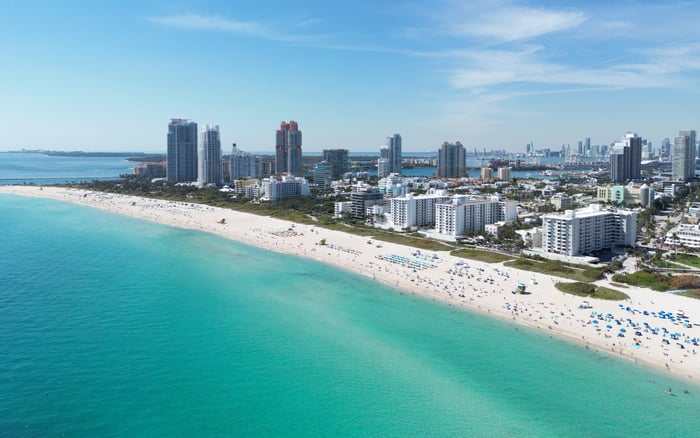
Miami Beach leads this selection because it offers several established pedestrian neighborhoods rather than a single downtown pocket. Flamingo-Lummus, South Pointe and West Avenue stand out as its strongest walking-oriented districts. For buyers seeking everyday convenience on foot, these are sensible places to begin a focused search rather than treating the entire city as interchangeable.
The choice among them should turn on the outings that matter most. Test the routes to a preferred breakfast stop, an evening destination and a recreational walk separately. Miami Beach earns first place for the breadth of its pedestrian options, but the residence still needs to support the buyer's particular routine.
2. Downtown Delray Beach: Atlantic Avenue and Pineapple Grove
Downtown Delray Beach combines restaurants, boutiques, galleries, coffee shops, arts activities and beach access. The Atlantic Avenue corridor and Pineapple Grove are especially appealing to buyers who want their walks to include a destination, not simply a loop for exercise. Dining and browsing can become part of the same outing.
Its appeal lies in the overlap between recreation and daily pleasure: a coffee stop, a gallery visit or a walk toward the beach. Keep the search centered on downtown, however. Delray Beach's pedestrian appeal is concentrated; the city name alone does not establish that a particular home supports this lifestyle.
3. Downtown West Palm Beach: Clematis Street, CityPlace and the waterfront
Downtown West Palm Beach brings together coffee shops, fitness studios, shopping, recurring events and waterfront destinations. Clematis Street, CityPlace and the downtown waterfront offer several reasons to leave home on foot without making boating the organizing principle of ownership. This is a strong fit for buyers who want walking to serve both practical and social purposes.
The distinction is between owning near downtown and living within its connected network of destinations. Evaluate a residence against the places a buyer will actually use. Access to a favorite studio or coffee shop may matter more to the daily routine than a water view enjoyed primarily from indoors.
4. East Boca Raton: Mizner Park, Royal Palm Place and downtown
East Boca Raton's pedestrian-oriented core is anchored by Mizner Park and Royal Palm Place. For buyers drawn to Boca Raton but unwilling to make every outing a drive, this compact downtown area deserves a focused search. Its appeal rests on the relationship between the home and these established destinations, not a broad assumption about the city.
Downtown Boca illustrates why geographic precision matters. A walkable central pocket and a more car-dependent citywide pattern can coexist. Buyers should define the routes they expect to use before comparing residences, then check whether those routes feel convenient enough to become habits rather than occasional excursions.
5. Palm Beach Island: Worth Avenue, Lake Trail and central beach access
Palm Beach Island is the choice here for scenic daily strolling. Its walking appeal centers on the beach, Lake Trail, Worth Avenue boutiques and central dining areas. Compared with a nightlife-focused pedestrian environment, it offers a quieter, more residential version of outdoor life, with the walk itself often the principal attraction.
That distinction makes Palm Beach particularly relevant to buyers who value an unhurried circuit as much as an errand completed. Still, scenic access and everyday convenience are separate questions. Evaluate the relationship between a prospective home, a preferred trail or beach route, and the dining or shopping destinations that would shape an ordinary week.
In Miami Beach, a buyer considering Apogee South Beach should apply the same route-based test used elsewhere: start at the actual residential entrance and walk to the places that matter. A neighborhood's appeal is a starting point, not a substitute for checking the experience from a specific building.
For West Palm Beach, evaluating Mr. C Residences West Palm Beach should include a separate assessment of connections to the buyer's chosen downtown destinations. Keep views, building preferences and pedestrian convenience as distinct criteria, so strength in one does not obscure a compromise in another.
The same discipline applies when considering Alina Residences Boca Raton. Map the desired outings around Mizner Park and Royal Palm Place, then test the relevant routes rather than assuming a Boca Raton address guarantees a walking-first routine.
On the island, buyers exploring Palm Beach Residences can begin with a different question: which daily walk would they most want to repeat? The answer may prioritize scenic recreation over the concentration of errands that drives a downtown search.
Make two short itineraries before a property visit. The first should cover practical destinations, such as coffee, fitness and dinner. The second should trace a walk taken purely for enjoyment. A residence that satisfies both offers a different proposition from one that excels at only one.
Walk those routes rather than relying on a map. Assess crossings, sidewalk continuity, shade and the residential entrance as part of personal due diligence. Return at the hours when the walks would normally happen. Neither measured walking times nor comparable property prices are established here, so neither should be assumed.
The strongest choice is not necessarily the busiest district or the most scenic waterfront. It is the address that makes a preferred outdoor routine easy enough to repeat.
Explore residences aligned with your walking-first priorities at MILLION.
If branded residences are on your mind — as a home or as an allocation — we would be glad to share what we are seeing, privately.
Begin a quiet conversationMiami Beach ranks first, with Flamingo-Lummus, South Pointe and West Avenue providing several established pedestrian-oriented options.
No. It is an editorial ranking balancing pedestrian convenience, recreational walking, amenities and luxury-buyer relevance.
The Atlantic Avenue corridor and Pineapple Grove combine dining, boutiques, galleries, coffee shops, arts activities and beach access.
Clematis Street, CityPlace and the downtown waterfront are key destinations within its walking-oriented downtown.
The core is centered on Mizner Park, Royal Palm Place and central downtown Boca Raton.
Its appeal emphasizes quieter scenic strolling, with Lake Trail, the beach, Worth Avenue boutiques and central dining areas.
No. Delray Beach, West Palm Beach and Boca Raton have walkable central pockets within more car-dependent citywide patterns.
Views and pedestrian convenience should be evaluated separately. A scenic outlook does not establish convenient walking routes from the residence.
Walk from the actual residential entrance to preferred destinations and recreational routes. Assess crossings, sidewalk continuity and shade at the hours you expect to go out.
No comparable property prices or measured walking times are established here. Evaluate both for the specific residence under consideration.