From Key Biscayne’s island community to the waterfront estates of Coral Gables, these five Miami-Dade enclaves offer distinct approaches to privacy, space and seasonal ownership.
A quiet second home is not necessarily the most remote address. For some buyers, it is an island residence with beaches and parks close at hand. For others, it is a gated waterfront estate, a generous inland garden or a condominium with ownership arrangements that make extended absences manageable. The distinction matters: privacy, space and convenience are related, but they are not interchangeable.
These five Miami-Dade enclaves offer different answers to that brief. Key Biscayne leads for its balance of island living and established community; Cocoplum and Gables Estates put waterfront privacy first; Pinecrest offers land; and Bal Harbour provides a condominium-led alternative. Here, quiet means residential character and the potential for retreat-not a guarantee of measured sound levels at every property.
The right choice begins with how you intend to spend your time, followed closely by how the home will be cared for when you are elsewhere.
1. Key Biscayne: Best balance of island living and community
Key Biscayne combines a barrier-island setting east of mainland Miami with an established residential community, rather than an exclusively seasonal resort atmosphere. Its causeway maintains a mainland connection, while Crandon Park and Bill Baggs Cape Florida State Park provide access to beaches and substantial outdoor recreation areas. For a second-home buyer, the appeal extends well beyond the residence itself.
The median single-family sale price was approximately $4.59 million across 36 transactions in January-September 2026. Treat that as historical market context, not an entry price. The village ranks first for buyers who want an island retreat without making seclusion their only priority.
2. Cocoplum: Best for a private boating-oriented retreat
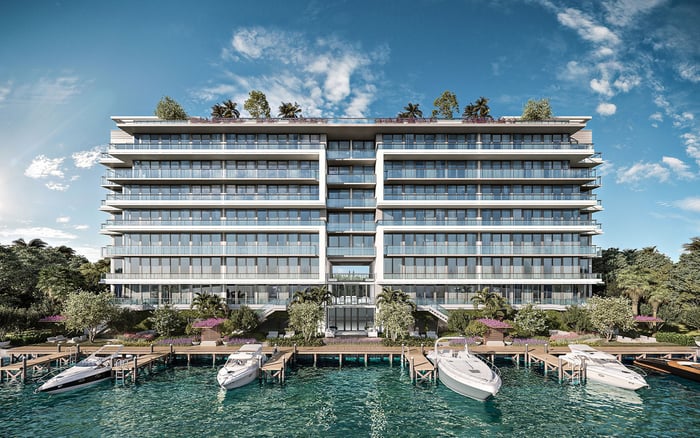
Within southern Coral Gables, Cocoplum offers a gated waterfront setting along the Old Cutler Road corridor. Canals and properties with private docks make it a compelling choice for buyers whose idea of retreat includes boating. Its appeal lies in the relationship between residence and water, rather than simply proximity to a beach.
Cocoplum’s typical home value was approximately $6.4 million. That is a value measure, not a median closed-sale price, and is no substitute for property-level analysis. Start with the residence’s privacy and dock configuration, then determine whether its ownership responsibilities suit a seasonal schedule.
3. Gables Estates: Best for estate-scale waterfront privacy
Gables Estates takes a more estate-focused approach to Coral Gables waterfront living. The gated enclave near Old Cutler Road and Biscayne Bay is distinguished by substantial lots, bayfront or canal-front homes, and private-dock potential. Its position on this list rests on that combination of scale and seclusion, not a broadly applicable purchase threshold.
For buyers considering both Gables Estates and Cocoplum, the deciding question is how much estate they want to own. Evaluate the grounds, relationship to neighboring properties and waterfront configuration together. A larger private setting also calls for a realistic plan for its care between visits.
4. Pinecrest: Best for a spacious inland retreat
Pinecrest offers a different luxury: room to spread out without making waterfront ownership the premise. Luxury homes commonly occupy half-acre to one-acre lots, with indicative pricing around $2 million-$6 million. Its predominantly single-family character makes it a natural starting point for buyers seeking land rather than condominium ownership.
The median single-family sale price was approximately $2.85 million across 171 transactions in January-September 2026. That broader market figure is distinct from the indicative luxury range. Pinecrest suits buyers who prioritize private outdoor space and accept that a substantial house and grounds require a deliberate maintenance plan.
5. Bal Harbour: Best for condominium-based seasonal ownership
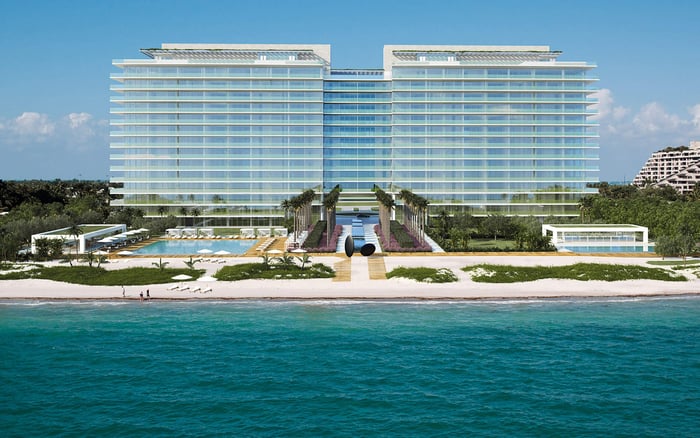
Bal Harbour offers a small oceanfront village setting and a discreet luxury identity. For buyers who prefer a condominium to an estate, it provides a different route to a second home: choose the residence and building together, rather than treating the apartment as an isolated purchase.
Its median condominium sale price was approximately $1.6 million in January-September 2026. That figure does not describe every luxury building or residence. Seasonal practicality remains property-specific. Test the appeal of reduced private-estate upkeep against the actual services, rules and maintenance arrangements of the building under consideration.
Key Biscayne and Bal Harbour deserve comparison when your priorities include both coastal living and manageable periods away. They represent different residential settings, however, and ownership format should not be confused with the character of the wider village.
A buyer exploring Oceana Key Biscayne can apply the same questions used to assess an island house: Does the residence deliver the desired privacy, and who handles its care during absences? The answers should come from the particular property, not an assumption that every island residence offers the same experience.
In Bal Harbour, Oceana Bal Harbour and Rivage Bal Harbour are relevant options for a property-level comparison. Confirm each property’s ownership arrangements and services. Lock-and-leave suitability must be established; it is not a promise that comes automatically with condominium living.
Cocoplum and Gables Estates should be evaluated separately from the broader Coral Gables market. The city’s median house sale price of approximately $2.3 million across 316 transactions in January-September 2026 is not a median for either enclave.
Likewise, wider Coral Gables options such as The Village at Coral Gables belong in a separate comparison if your search expands beyond the two waterfront enclaves. A shared city address does not make the ownership proposition equivalent.
For a waterfront search, ask property-specific questions about dock suitability, access, privacy and maintenance before deciding whether the setting fits your intended use. Neither an enclave name nor a broad market figure answers those questions.
The clearest shortlist follows the life you expect to lead. Choose Key Biscayne for island living and community, Cocoplum for a boating-oriented retreat, Gables Estates for waterfront scale, Pinecrest for inland space, or Bal Harbour for a condominium-focused search.
All transaction figures here describe January-September 2026, not live asking prices. Estimates, typical values and indicative price ranges also measure different things. Use them to orient the search, then return to the residence itself: its privacy, its upkeep and how naturally it accommodates both your arrival and your absence.
Explore a more considered South Florida second-home search with MILLION.
If branded residences are on your mind — as a home or as an allocation — we would be glad to share what we are seeing, privately.
Begin a quiet conversationKey Biscayne ranks first for its balance of island living, beach and park access, and an established residential community.
No. Quiet refers to residential character, privacy and retreat potential, not measured sound levels at individual properties.
Cocoplum is the boating-oriented choice, with a gated waterfront setting, canals and private-dock properties. Suitability still depends on the individual residence.
Gables Estates emphasizes estate-scale waterfront privacy through substantial lots and bayfront or canal-front homes. Cocoplum’s ranking emphasizes its boating-oriented residential setting.
Pinecrest suits buyers seeking an inland single-family retreat with land. Luxury homes commonly occupy half-acre to one-acre lots.
Bal Harbour is a strong option for buyers who prefer condominium ownership to an estate. Services and maintenance arrangements must be assessed building by building.
It was approximately $4.59 million across 36 sales in January–September 2026. This is historical transaction context, not a current asking-price threshold.
No. It is a reported typical home value and should not be treated as a median closed-sale price.
Pinecrest’s reported median was approximately $2.85 million across 171 sales in January–September 2026. That measure differs from the indicative $2 million–$6 million luxury pricing range.
It was approximately $1.6 million in January–September 2026. Individual luxury residences and buildings should be evaluated separately.