A buyer-focused edit of five Miami buildings to consider when a terrace must function as a genuine extension of the residence.
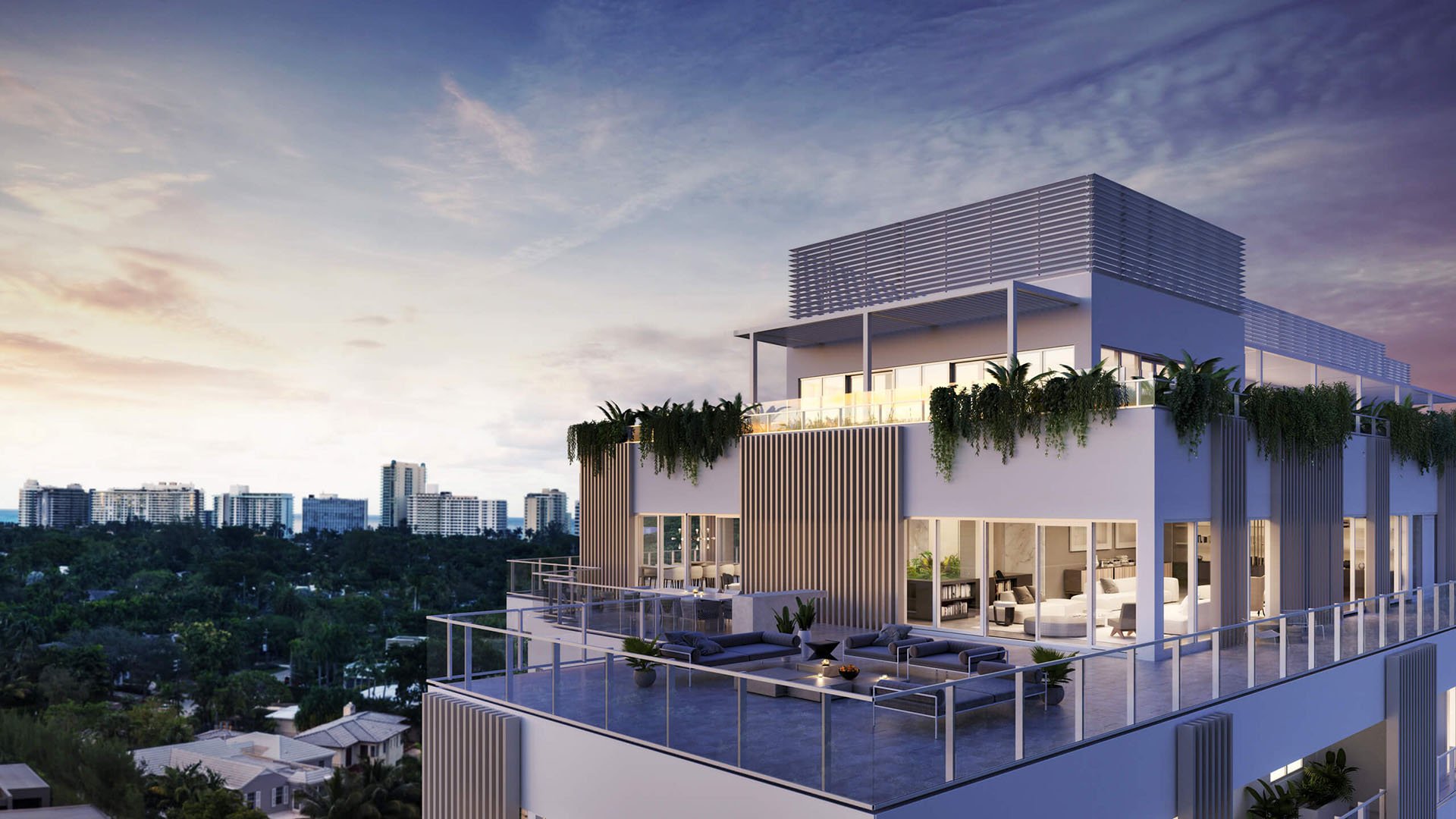
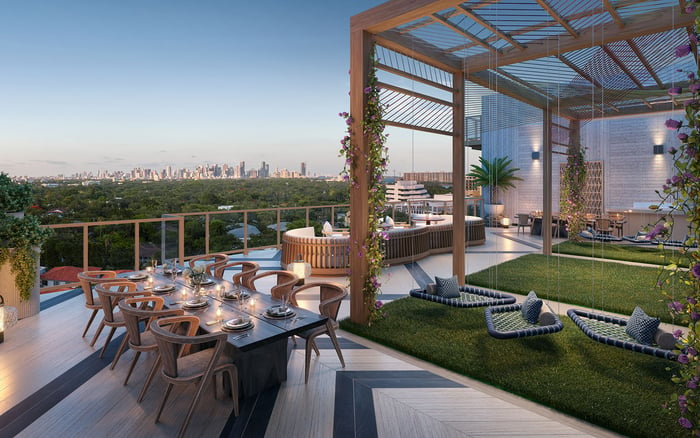
In Miami, private outdoor space can be transformative or merely decorative. A successful terrace should support the rhythms of daily life: breakfast in soft morning light, an afternoon in a reading chair, dinner with friends and an easy transition indoors when the weather changes. Scale matters, but proportion, exposure, privacy and access ultimately determine whether the space functions as a true room.
For buyers, the distinction between a balcony and a terrace is more than terminology. A narrow ledge may provide fresh air and a view yet still resist furniture. A deeper outdoor area can potentially accommodate distinct zones for dining, lounging and planting, provided doors, structural elements and circulation do not consume the usable footprint.
The five buildings below form a focused Miami shortlist for terrace-minded buyers. Each should be assessed residence by residence, as outdoor conditions, layouts and sightlines may vary within the same property.
1. Apogee South Beach - South of Fifth privacy
Apogee South Beach belongs at the top of a terrace-first tour for buyers drawn to the South of Fifth setting. Evaluate how the outdoor area connects with the principal living spaces, whether dining and lounging can coexist, and how neighboring residences affect privacy.
The strongest candidate will feel composed from inside and out. Doors should open onto a clear furniture zone rather than a passage that must remain unobstructed.
2. Faena House Miami Beach - Miami Beach perspective
Faena House Miami Beach is a natural second stop for buyers exploring outdoor living in a Miami Beach context. During a showing, compare the terrace’s apparent scale with its genuinely furnishable depth, then identify where shade, planters and service pieces could sit without interrupting movement.
Give equal attention to the threshold. A terrace becomes more useful when access feels intuitive from the rooms used most often.
3. Regalia Sunny Isles Beach - Sunny Isles Beach outlook
Regalia Sunny Isles Beach merits close consideration for buyers whose brief combines elevation, outdoor use and a coastal setting. Test several furniture arrangements rather than relying on the impression of an empty space, and consider how wind may affect dining, textiles and planting choices.
Judge privacy both while standing at the outer edge and when seated. The two perspectives can feel notably different.
4. Park Grove Coconut Grove - Coconut Grove lifestyle
Park Grove Coconut Grove brings the terrace conversation to Coconut Grove, where buyers may prioritize a softer indoor-outdoor rhythm. The relevant questions remain practical: Is there enough uninterrupted depth for a proper table? Can doors remain accessible with lounge furniture in place? Does the outdoor zone relate naturally to the kitchen and living room?
A measured plan is particularly valuable here. Curves, corners and door swings can make headline area less informative than usable dimensions.
5. The Residences at 1428 Brickell - Brickell urban living
The Residences at 1428 Brickell completes the ranking for buyers seeking an outdoor room in Brickell. The key exercise is to balance openness with comfort, then determine whether the terrace suits the intended routine, from quiet mornings to evening entertaining.
Do not treat every exterior edge as usable floor area. Columns, façade geometry, drainage points and circulation paths should be mapped before furniture is specified.
Begin with dimensions, not impressions. Bring a simple furniture schedule showing the width of a dining table, chair pullback, lounge seating and circulation clearances. Checks with a tape measure can reveal whether a visually generous terrace supports the buyer’s actual program. When revisiting Apogee South Beach, inspect the relationship between exterior seating and the rooms immediately inside rather than evaluating the view alone.
Approach orientation with the same discipline. Visit at the time of day when the terrace will be used most, noting direct sun, reflected heat, shade and wind. At Faena House Miami Beach, as with any coastal residence, the useful question is not simply whether outdoor space exists, but how comfortably it supports the owner’s preferred hours and activities.
Test privacy from multiple positions. Stand near the doors, sit where a sofa might go and walk to the perimeter. Sightlines toward adjacent terraces may change dramatically between those points. Buyers considering Regalia Sunny Isles Beach should apply the same careful test to every residence under consideration rather than generalizing from the building name.
Finally, study operations. Ask for applicable rules governing grills, planters, flooring, shades, lighting and exterior alterations. Confirm maintenance responsibilities, drainage access and procedures for securing furniture during severe weather. At Park Grove Coconut Grove and The Residences at 1428 Brickell, these questions move the conversation from visual appeal to long-term usability.
A restrained plan usually performs best. Establish one primary purpose, such as dining or lounging, before adding secondary zones. Choose appropriately scaled pieces, preserve a direct walking path and leave breathing room around doors. Oversized furniture can make even a substantial terrace feel compromised.
Materials should respond to exposure and maintenance preferences. Buyers should consider how upholstery, metals, wood, stone and planters will weather, then confirm that every proposed installation complies with building requirements. Lighting should be layered yet discreet, providing enough illumination for dining and safe circulation without creating glare for the residence or its neighbors.
The indoor palette matters as well. Repeating a controlled selection of tones and textures can make the threshold feel deliberate. The goal is not to turn the terrace into a separate decorative statement, but to create an outdoor room that extends the architecture and remains effortless to use.
What makes a Miami terrace genuinely usable? Adequate depth, practical access, privacy and comfortable exposure matter more than a large stated area alone.
Should buyers prioritize terrace size or shape? Shape often determines usability. A regular, sufficiently deep footprint is generally easier to furnish than a long, narrow one.
When is the best time to inspect a terrace? Visit during the hours when you expect to use it, then return at another time to compare sun, shade and wind.
Why should terrace depth be measured? Depth determines whether chairs, a table and circulation can coexist without blocking doors or walkways.
How can buyers assess terrace privacy? Check sightlines while standing and seated, looking toward neighboring residences and shared amenity areas.
Does a better view guarantee a better outdoor room? No. A compelling outlook cannot compensate for awkward proportions, difficult access or uncomfortable exposure.
What building rules should be reviewed? Ask about grills, planters, shades, flooring, lighting, furniture storage and restrictions on exterior modifications.
Should furniture be planned before closing? A preliminary layout can identify dimensional conflicts early, but final selections should follow verified measurements and approvals.
How important is indoor-outdoor circulation? It is essential. The best arrangement preserves easy movement between interior rooms and every intended terrace zone.
Can one terrace support dining and lounging? Yes, if its dimensions and access allow distinct zones without crowding. A measured furniture plan is the clearest test.
For a tailored shortlist and next-step guidance, connect with MILLION.
If branded residences are on your mind — as a home or as an allocation — we would be glad to share what we are seeing, privately.
Begin a quiet conversation