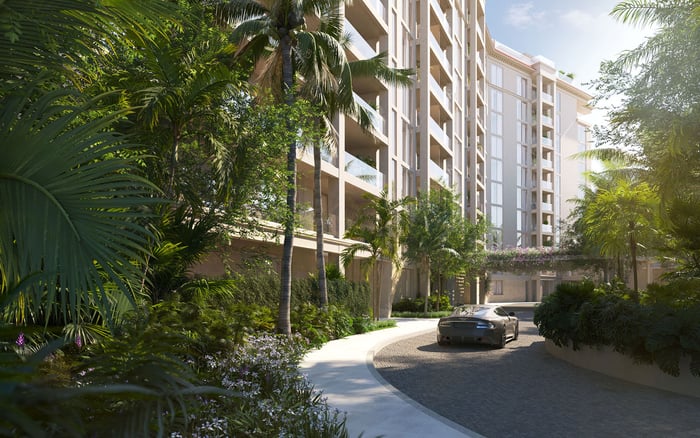
A buyer-focused framework for comparing Fisher Island and Key Biscayne residences through five priorities: homestead timing, permanent-residence records, furnishing access, art handling, and collector-vehicle planning.

For buyers establishing a Florida home, the acquisition and the move deserve equal attention. A residence may suit a collection beautifully on paper, but practical questions arise before the first custom cabinet, painting, or collector vehicle leaves its previous address. The objective is more than an elegant arrival: a move that supports actual occupancy, a consistent residential record, and carefully coordinated handling.
In Fisher Island and Key Biscayne, a top-five shortlist should be tested against five priorities, not presentation alone. Keep the property decision, installation schedule, and permanent-residence assessment connected, while recognizing that none substitutes for the others.
For a buyer considering Palazzo del Sol, the next step is a written discussion of the proposed move with the relevant management team. A project name should never substitute for confirmation that a particular shipment, installation, or vehicle can be accommodated.
1. January 1 readiness: ownership and permanent residence
Place timing first. Miami-Dade homestead eligibility requires legal or equitable title as of January 1, and the property must also be the owner's permanent residence on that date. Florida's homestead application is generally due by March 1.
Assess each candidate against the intended occupancy calendar, not merely the anticipated purchase date. Schedule furnishings around that calendar, but do not mistake a completed delivery for proof of permanent residence. Ownership, residence, and the application deadline are distinct considerations.
2. A consistent residential record: evidence beyond the closing
The second priority is whether the move supports a consistent permanent-residence record. Relevant indicators include a recorded Declaration of Domicile, Florida licensing or identification, voter registration, vehicle registration, and the address used on federal income-tax returns.
Bank-account addresses, utility-payment records, employment location, and termination of a previous out-of-state residence also matter. No single listed factor conclusively establishes or disproves permanent residence for homestead purposes. Evaluate the whole transition rather than treating one document as decisive.
3. Custom-furnishing access: confirm the complete route
Before approving fabrication or dispatch, ask each candidate building's management to confirm the proposed delivery route. Request usable dimensions, elevator arrangements, unloading access, scheduling procedures, and any applicable contractor or insurance documentation. These are questions to resolve, not assumed building features or requirements.
Have the designer and installer compare the packed dimensions of each substantial piece with the confirmed route. If an item requires assembly inside the residence, establish responsibility and timing before shipment. A beautiful specification is no substitute for an installation plan.
4. Art installation: define every handoff
Evaluate art delivery separately from the general household move. Ask who will receive the shipment, where unpacking may occur, how the work will reach the residence, and whether installation requires separate approval. Confirm the applicable arrangements directly rather than assuming a building offers specialist handling.
Request a written sequence covering arrival, condition documentation, unpacking, installation, and removal of packing materials. This is a recommended planning discipline, not a statement of services available at any particular project.
5. Collector vehicles: separate access from registration
For each candidate, ask management to review the actual vehicle and proposed transporter. Request confirmation of relevant clearances, turning access, unloading arrangements, parking permissions, and any restrictions that could affect arrival. Do not infer suitability from the presence of parking alone.
Keep the administrative work separate. Florida vehicle registration is a relevant permanent-residence indicator, but transporting a car to a residence does not itself establish domicile. Coordinate registration questions with the broader residential record and appropriate professional advice.
For Fisher Island, treat every stage between mainland dispatch and the residence as a coordination question. Ask the appropriate transport and building contacts whether advance vehicle and crew information is necessary, how arrival timing should be arranged, and what loading access applies to the move. Obtain current instructions rather than relying on another owner's experience.
When reviewing Palazzo della Luna, frame the discussion around an actual shipment: the carrier, vehicle, crew, packed inventory, and proposed installation date. Ask which approvals belong to the building and which must be confirmed separately. That distinction helps prevent an accepted appointment from being mistaken for approval of the entire journey.
Apply the same discipline when considering The Residences at Six Fisher Island. Request current, residence-specific information before committing to dispatch. Keep a contingency plan for a delayed arrival or incomplete installation without presuming that storage or alternative handling is provided.
For a buyer considering Oceana Key Biscayne, start with the proposed furnishing and collection inventory for the residence. Ask management to review the delivery plan, then have the relevant specialists confirm how their work fits within it. Compare documented arrangements for each candidate, not general expectations about the neighborhood.
Address ordinary furniture, oversized custom pieces, art, and vehicles in separate discussions. A single moving appointment should not be taken as confirmation that every category has been approved. Request one consolidated schedule showing dependencies and outstanding decisions, while keeping each specialist's responsibilities distinct.
For Resale and New-construction candidates alike, establish which documents and approvals apply to the actual residence and proposed move. Ask when access can be confirmed, who can authorize installation, and whether the schedule depends on unresolved work. Treat answers as transaction-specific, not transferable between projects.
If title will be held in a trust, prepare for the homestead review: Miami-Dade requires a copy of the trust document. Discuss ownership structure and the relevant residence requirements with qualified advisers before assuming the arrangement meets the intended objectives.
A considered move brings daily life, possessions, and records into alignment. Maintain a consistent residential paper trail across licensing, registration, voting where applicable, banking, tax filings, and utilities. Homestead concerns permanent residence for that exemption; receiving it does not conclusively resolve every domicile or tax-residency question.
The strongest purchase decision combines a suitable residence with confirmed logistics and a realistic occupancy calendar. Assess each separately, then coordinate them before the move begins.
For a discreet conversation about your next South Florida residence, connect with MILLION.
If branded residences are on your mind — as a home or as an allocation — we would be glad to share what we are seeing, privately.
Begin a quiet conversationThe owner must hold legal or equitable title, and the property must be the owner's permanent residence as of January 1 of the exemption year.
The application is generally due to the county property appraiser by March 1.
No. A recorded Declaration of Domicile is one recognized indicator, but no single listed factor conclusively establishes or disproves permanent residence for homestead purposes.
Relevant indicators include Florida licensing, voter and vehicle registration, federal tax-return addresses, bank-account addresses, and utility-payment records. Employment location and termination of a previous out-of-state residence also matter.
Miami-Dade requires a copy of the trust document for its homestead review. Buyers should discuss the ownership arrangement with qualified advisers.
No. Homestead addresses permanent residence for that exemption and does not conclusively resolve every domicile or tax-residency question.
Ask management to confirm the delivery route, usable dimensions, scheduling arrangements, and applicable documentation. Have the installer check packed dimensions against the confirmed route.
Request a written sequence for receiving, condition documentation, unpacking, installation, and packing-material removal. Confirm arrangements rather than assuming specialist services are available.
Ask management to review the actual vehicle, transporter, clearances, unloading arrangements, and parking permissions. Address Florida registration separately as part of the broader residential record.
No. Confirm current arrangements for the particular building, residence, shipment, and installation rather than transferring assumptions from another property.