Five Hillsboro Beach addresses merit a storm-conscious buyer’s attention, but none has verified mechanical elevations or building-specific flood plans established here. This shortlist separates service, advertised storm features and the documentation needed before purchasing.
For a seasonal owner, the finest waterfront residence should offer more than an effortless arrival. Departure should feel equally considered: responsibilities understood, access arrangements settled and essential building systems evaluated before storm season becomes an immediate concern.
This Hillsboro Beach shortlist separates that aspiration from an engineering conclusion. Mechanical elevations, elevation certificates, flood-design elevations and building-specific flood-response plans are not established for these five candidates. The order reflects an editorial shortlist for due diligence, not a ranking of proven storm performance. Mechanical elevation and flood planning are standards to investigate, not verified attributes of every address below.
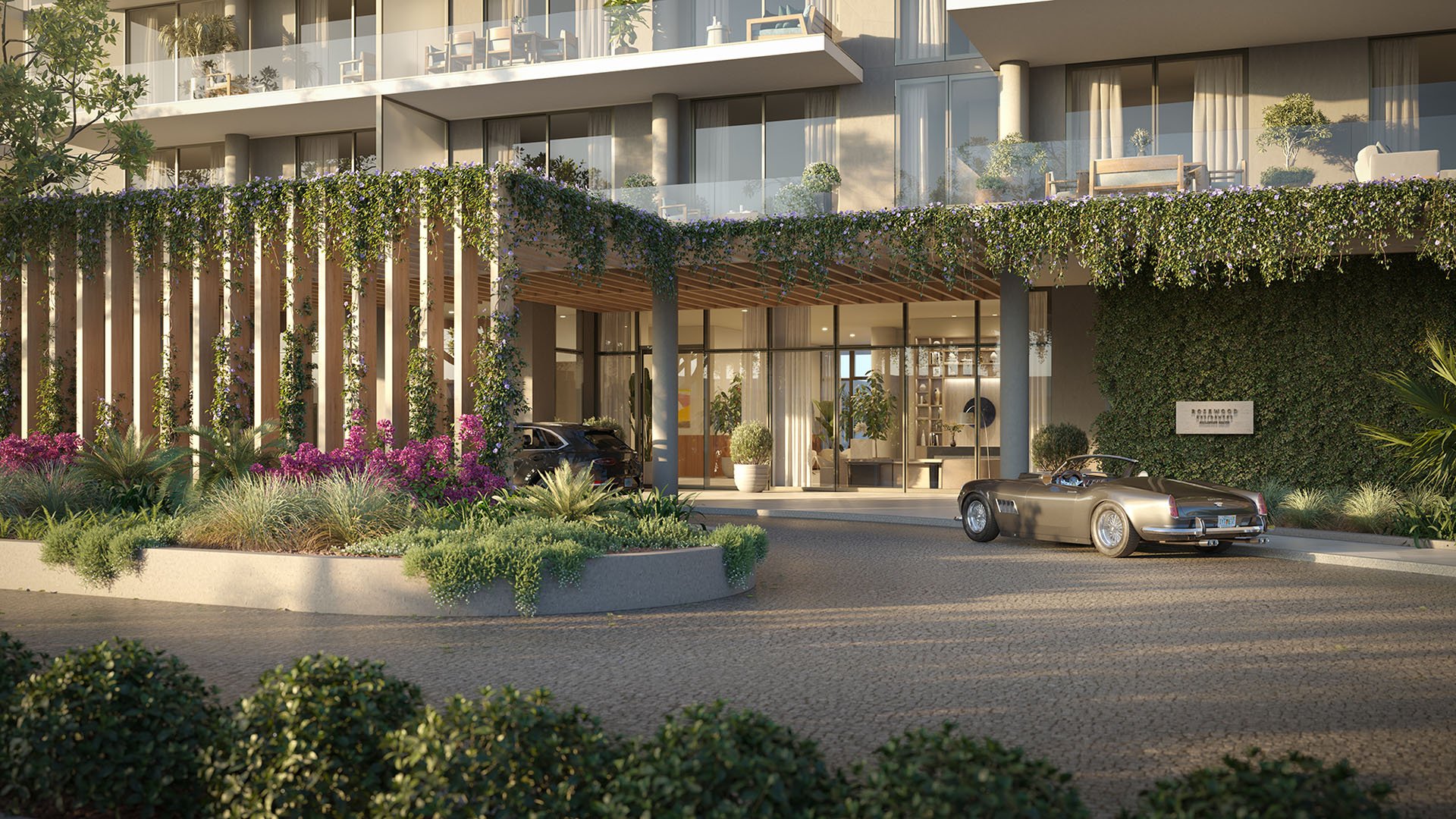
The planned Rosewood Residences Hillsboro Beach brings a hospitality-branded option into that conversation. Existing condominiums offer different points of entry, from documented front-desk services to advertised impact-resistant glazing. Each calls for a separate assessment of daily convenience, unit protection and shared infrastructure.
1. Rosewood Residences Hillsboro Beach: planned ocean-to-Intracoastal living
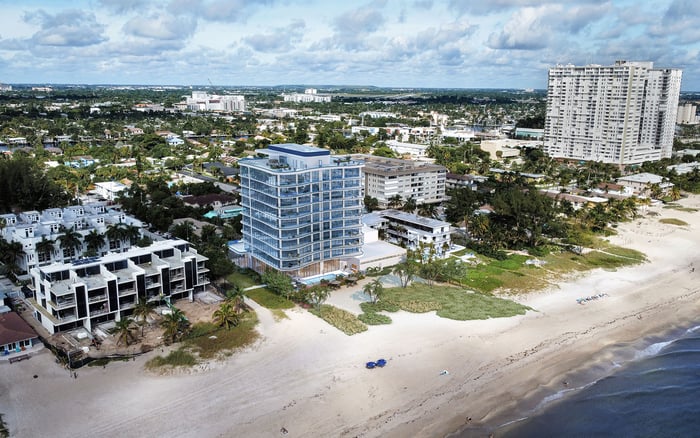
At 1180 Hillsboro Mile, Rosewood comprises 92 planned residences developed by Related Group and Dezer Development with Rosewood Hotels & Resorts. The configuration combines a 10-story oceanfront tower with a three-story Intracoastal-facing condominium. Approximately 605 linear feet of beachfront and 600 linear feet of Intracoastal frontage give the development a substantial two-waterfront setting.
The marketed completion estimate is 2027; it does not confirm occupancy. First position reflects the planned residential offering, not verified flood protection. Before committing, request the proposed critical-equipment elevations, emergency-power scope and eventual operating responsibilities. Neither the brand nor the building configuration establishes that mechanical systems are protected.
2. 1200 Hillsboro Mile: historical ocean-to-Intracoastal development
In February 2010, an 11-unit Intracoastal building was identified as complete, with 18 residences being released in a planned oceanfront building. That development history makes 1200 Hillsboro Mile a candidate for buyers considering a smaller-scale residential setting spanning both waterfront orientations.
Second position does not imply stronger resilience than the properties below. Historical development details do not establish current building conditions, flood planning or equipment placement. Begin with present-day condominium documents. Confirm the configuration and condition of the specific building before assessing its suitability for extended absences.
3. Ocean Grande: full-service convenience with oceanfront amenities
Ocean Grande offers the clearest documented full-service package among the existing-building candidates here: valet parking, concierge service and front-desk staff. Advertised amenities also include covered garage parking, private Intracoastal docks, an oceanfront pool and a fitness center. For an owner dividing time between residences, these services are a concrete reason to investigate further.
Covered parking, however, does not establish elevated parking, and front-desk staffing does not confirm hurricane preparation or uninterrupted attendance. Ask management to distinguish ordinary service from contracted storm duties, including owner communications, authorized unit access and post-event inspections. Equipment elevation and formal hurricane procedures remain unverified.
4. Mediterranea: advertised impact protection and garage parking
On the Intracoastal side of Hillsboro Mile, advertised Mediterranea residences include impact-resistant windows and doors. Two garage parking spaces are also advertised. These are tangible features for a storm-conscious buyer to examine, particularly when comparing individual residences rather than relying on a building’s overall presentation.
The essential distinction is between an advertised feature and documented building protection. Neither the garage’s elevation relative to flood levels nor flood-safe mechanical placement is established. Verify the selected residence’s installed windows and doors, then review the common systems separately. Parking allocation alone says nothing about flood exposure.
5. Opal Towers, selected upgraded units: residence-specific storm features
Selected Opal Towers residences advertise hurricane-impact windows and sliding glass doors. Newer air conditioning is also advertised in one residence. These details support a unit-specific search, but they do not confirm a building-wide glazing retrofit or equivalent upgrades across all available residences.
The inspection brief should therefore address the exact unit being purchased. Confirm the installed protection and investigate equipment location; do not treat newer air conditioning as outage protection. Building-wide mechanical elevation and flood planning remain separate questions, regardless of the quality of an individual renovation.
Move the purchase review from amenity descriptions to documents. Ask the seller or association for the applicable elevation certificate, flood-design information and plans identifying critical electrical and mechanical equipment. Have a qualified professional interpret those materials for the specific building and residence.
Request a comparison of equipment elevations with the relevant design flood elevations. The question is not simply whether equipment is upstairs or inside an enclosure, but whether its placement and protection are documented. Apply that review to shared systems as well as equipment serving the residence.
Emergency power warrants a separate inquiry. Ask what equipment, if any, receives backup power, how that equipment is protected and what maintenance documentation is available. Do not assume a generator would power an entire residence or that a high-floor apartment resolves vulnerabilities elsewhere in the building.
Buyers extending their search to The Ritz-Carlton Residences® Pompano Beach should bring the same questions to that comparison. Its inclusion here broadens the search; it is not a claim of verified storm performance.
A branded address can frame the lifestyle conversation, but the purchase decision should distinguish proposed services from enforceable responsibilities. For a projected-delivery residence, ask which protections appear in the plans, which obligations appear in the purchase documents and how completed systems will be confirmed at delivery.
Apply the same discipline to a comparison with Four Seasons Hotel & Private Residences Fort Lauderdale. Test service expectations against property-specific documentation rather than relying on assumptions attached to the name. No storm-resilience comparison with that property is established here.
For existing buildings, request written answers about who prepares an unoccupied residence, who may enter it and who communicates after a storm. Confirm whether those duties belong to the association, an independently retained caretaker or the owner. A concierge description alone does not settle those obligations.
The strongest purchase is not necessarily the newest building or the most extensively renovated apartment. It is the residence whose verified features, shared infrastructure and written operating arrangements align with the owner’s tolerance for disruption.
Use these five addresses to begin that review. Keep lifestyle preferences in view, but make documented mechanical protection and flood planning conditions of confidence-not assumptions attached to a waterfront address.
For a discreet conversation about your South Florida residence search, connect with MILLION.
If branded residences are on your mind — as a home or as an allocation — we would be glad to share what we are seeing, privately.
Begin a quiet conversationNo. They are a due-diligence shortlist, not a verified engineering ranking; mechanical elevations and building-specific flood plans are not established for any of the five.
The development is marketed with estimated completion in 2027. That projected date does not confirm occupancy.
Rosewood comprises 92 planned residences across a 10-story oceanfront tower and a three-story Intracoastal-facing condominium.
Its historical development details date to February 2010. They do not establish present-day building conditions, mechanical elevations or flood procedures.
Ocean Grande has the clearest documented package among the existing-building candidates, including valet, concierge and front-desk staff. Storm-specific duties still require confirmation.
No. Covered parking does not establish the garage’s elevation relative to flood levels or the protection of electrical and mechanical equipment.
Advertised residences include impact-resistant windows and doors, alongside two garage parking spaces. Flood-safe mechanical placement is not established.
That is not established. Selected residences advertise hurricane-impact windows and sliding glass doors, so buyers should verify the specific residence.
No. The newer system described in one Opal Towers residence does not document backup power or flood protection for the equipment.
Request applicable elevation documentation, critical-equipment plans, emergency-power details and written storm responsibilities. Confirm who prepares, accesses and inspects the residence during an owner’s absence.