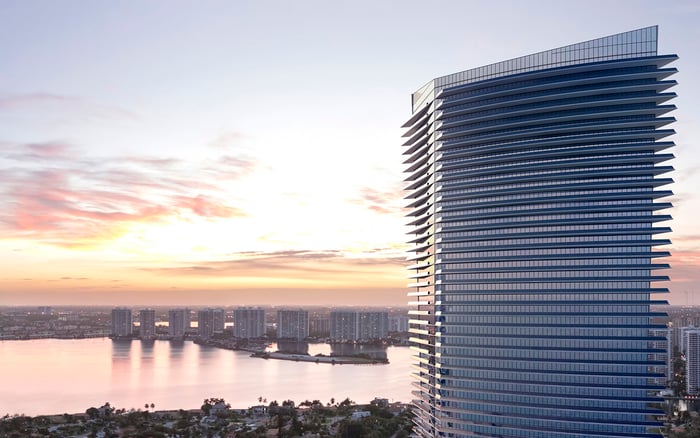
For collection-focused buyers, a residence should earn its place on a shortlist through documented operating procedures. These five priorities frame a discreet review of full-service operations, collection handling, surveillance, access records, and incident preservation without assuming property-specific protections.

For a buyer bringing art, jewelry, watches, or other significant personal holdings into a South Florida residence, the security conversation should begin before moving arrangements are made. A beautifully managed arrival is desirable. It is no substitute for understanding who may enter, what activity is recorded, and how an incident can be reconstructed.
That distinction matters when evaluating the promise of full-service living. Concierge assistance, collection handling, surveillance, and evidence preservation are separate responsibilities and should be examined as such. Do not infer access logging or record-retention policies from a reference to around-the-clock security.
A top-five residence shortlist should be the result of documented qualification, not a substitute for it. The priorities below are ranked buyer requirements, not property endorsements. The central question is whether the operating arrangements fit the collection and the owner's expectations of privacy.
1. Accountable full-service operations: establish who is responsible
Start with the people and authority behind the service promise. Ask management to identify who oversees residential security, who supervises contractors, and who takes responsibility outside ordinary administrative hours. Request a written escalation path rather than relying on an introduction to a single helpful employee.
Have the buyer's adviser distinguish current practices from proposed services. For a purchase involving future delivery, ask which commitments are contractual and which remain subject to operating decisions. The standard should be clear accountability for every responsibility, including when a service provider changes.
2. Collection handling: define custody from arrival to installation
Ask for the procedure governing a valuable delivery from vehicle arrival through acceptance, temporary holding, elevator movement, and handover. Establish whether building staff may receive the item at all, who can authorize release, and how exceptions are documented. Do not assume ordinary package handling is appropriate for a collection.
Request arrangements suited to the actual objects and their specialists. An art installation and a small high-value delivery may require different permissions. Set out who approves handlers, who accompanies them, and where the building's responsibility ends and the owner's arrangements begin.
3. Camera coverage: evaluate the relevant journey
Request a confidential review of camera coverage along the intended collection route, rather than asking only whether cameras exist. Discuss arrival, transfer, temporary holding, and authorized movement with an appropriate representative. Keep the review focused on the buyer's needs without seeking unrestricted circulation of sensitive security layouts.
Separate live observation from recording. Ask who monitors activity, how recording failures are identified, and whether relevant footage can be retrieved for an authorized review. Confirm the applicable procedure in writing; a camera's presence does not confirm every function.
4. Access logs: connect permissions with reviewable events
Ask which access events are recorded and what information each record contains. Distinguish residents, guests, employees, contractors, and delivery personnel. Establish whether temporary credentials have defined expiry arrangements and who can revoke them when a relationship or assignment ends.
Have management explain how an authorized investigator would connect a credential event with a visitor authorization and any relevant footage. Where available, seek a controlled demonstration using non-sensitive sample information. Do not assume electronic access automatically produces a complete, identifiable movement history.
5. Incident-record retention: establish preservation before it matters
Request separate written answers for video, access events, visitor records, and incident documentation. Ask how long each category is ordinarily retained, what triggers deletion, and how a preservation request changes routine handling. Do not substitute an assumed industry-standard period for the property's actual policy.
Identify who is authorized to receive a preservation request and how receipt is acknowledged. With qualified advisers, discuss permitted disclosure, export arrangements, and documentation of who handles the material. A buyer should understand the procedure without expecting unrestricted personal access to security records.
Keep the questions consistent as the residential setting changes. If The Residences at 1428 Brickell is part of a Brickell search, submit the same written operating brief used for every other candidate. The project name alone should imply nothing about collection handling, camera coverage, logging, or retention.
For a Miami Beach search that includes The Perigon Miami Beach, describe the intended delivery and installation sequence before requesting answers. This grounds the discussion in the owner's requirements rather than an undefined expectation of discretion.
Apply the same discipline when considering Bentley Residences Sunny Isles in Sunny Isles Beach. Ask the buyer's representative to distinguish documented commitments from questions still requiring confirmation. A comparison should not quietly turn an unanswered question into a favorable assumption.
Likewise, a review involving Four Seasons Hotel & Private Residences Fort Lauderdale should establish precisely which procedures apply to the residence under consideration. These project references are search contexts, not assertions that any named property satisfies the five requirements.
Lifestyle preferences belong in this assessment, especially for owners who entertain privately, travel frequently, or use specialist household staff. Define who may authorize a guest, whether an assistant may arrange deliveries, and how permissions should be withdrawn. Share only the collection information needed for each decision.
For initial discussions, consider a requirements summary rather than a detailed inventory of objects, values, and locations. Ask counsel and the collection's insurance adviser what further information should be disclosed, to whom, and under what safeguards. Keep sensitive operating documents within an appropriately restricted review.
Before making the final selection, prepare a concise comparison with a written answer beside each requirement. Record the responsible party, the relevant commitment, any unresolved question, and the response date. Keep proposed capabilities clearly separate from confirmed current operations.
Ask counsel which requirements should be addressed in purchase documentation and the insurance adviser which need separate confirmation. If a critical point remains unresolved, treat it as an open purchase issue; do not let presentation quality settle it. The right shortlist is one the buyer can defend through clear responsibilities and suitable procedures.
For a discreet South Florida residence search shaped around your collection and service priorities, connect with MILLION.
If branded residences are on your mind — as a home or as an allocation — we would be glad to share what we are seeing, privately.
Begin a quiet conversationNo. The five ranked entries are buyer requirements, and the named projects are search contexts rather than verified security endorsements.
Do not infer either capability from that description. Request separate written confirmation of the applicable procedures.
Ask who may accept, hold, move, and release an item, and where building responsibility ends. Define the permissions needed for specialist handlers.
Request a confidential assessment of the intended collection route. Ask separately about live monitoring, recording, failure identification, and authorized retrieval.
Ask which events are recorded, what information is captured, and how temporary permissions expire or are revoked. Request an explanation of how records support an authorized incident review.
Do not assume a standard period. Request the property's written policy for each record category and have qualified advisers assess its suitability.
Ask management to identify the authorized recipient and explain the acknowledgment procedure before an incident occurs.
No such access should be assumed. Clarify permitted review and disclosure with management and qualified advisers.
Keep proposed capabilities separate from confirmed current operations. Ask counsel which commitments are contractual and which remain subject to operating decisions.
Consider starting with a requirements summary. Ask counsel and the insurance adviser what further details should be disclosed and under what safeguards.