Auberge and Four Seasons lead a rental-focused Fort Lauderdale shortlist, with non-branded comparisons and a practical framework for evaluating lease limits, resident access and unit-specific rules.
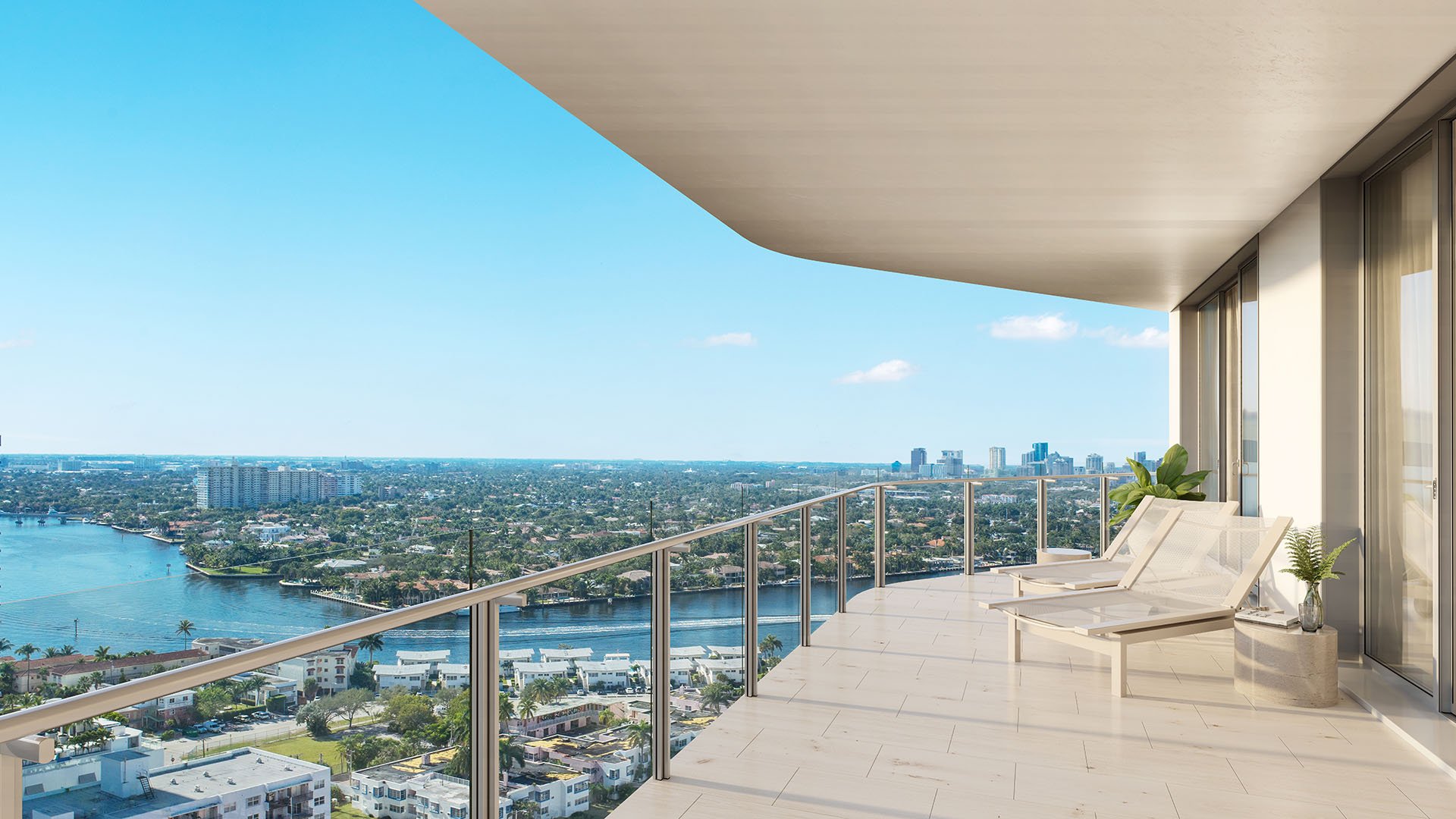
For a buyer seeking a composed coastal retreat, luxury extends beyond the arrival court and ocean-facing terrace. It also means understanding how neighboring residences may be occupied, how often tenants can change and which access arrangements apply to residents and guests. A clear leasing policy deserves the same scrutiny as the floor plan.
In Fort Lauderdale, the meaningful distinction is not simply branded versus unbranded. It is between a specific residence with clear rental restrictions and an address whose hospitality identity leaves important questions unresolved. Longer minimum leases can limit rental turnover; they do not, on their own, establish better security or guarantee quiet.
The five-part shortlist below places branded candidates first, followed by explicitly non-branded comparisons. Read the order as a guide to rental-policy fit and the questions each option raises-not as a ranking of measured safety or acoustic performance.
1. Auberge Beach Residences & Spa: beachfront branded candidate
At 2200 North Ocean Boulevard, Auberge offers the clearest numerical starting point among the branded candidates here. Its reported leasing framework specifies a 90-day minimum rental period and a maximum of four rentals annually. Both figures require confirmation in the current condominium documents before they can be treated as governing terms.
If applicable to the residence being purchased, that minimum excludes nightly and weekly leases. Seasonal rentals are described as possible, with limited availability. For an owner seeking some leasing flexibility without frequent short-stay turnover, Auberge is the strongest initial fit, provided the current rules and any exceptions support it.
2. Four Seasons Hotel and Private Residences Fort Lauderdale: private-residence component
The private-residence component is described as having no short-term rental component, along with a private entrance and resident staff. Separate condo-hotel inventory is described as furnished, with flexible rental participation. That distinction makes the exact unit classification central to the buying decision. No numerical minimum lease term or annual cap is established here for the private residences.
Certain villa-and-residence rental offers carry a two-night minimum stay. Neither the Four Seasons name nor the phrase private residence should therefore be accepted as proof of a building-wide short-term rental prohibition. This remains a conditional choice requiring unit-specific documentation.
3. Las Olas Riverhouse: non-hospitality-branded downtown comparison
Las Olas Riverhouse belongs in the discussion as a non-hospitality-branded alternative, not as another branded residence. The relevant downtown comparison category generally disfavors short-term rentals, with typical minimum leases of six to twelve months.
That range is not a verified Riverhouse restriction. A buyer drawn to the Las Olas corridor should use it to frame questions, then obtain the tower's actual leasing provisions before treating it as a lower-turnover alternative.
4. Galt Mile beachfront condominiums: neighborhood comparison
Galt Mile is a neighborhood category rather than a single development. Most beachfront condominiums in this comparison generally disfavor short-term rentals, with typical minimum lease periods of three to six months.
The area is worth considering when a beachfront setting matters more than a hospitality affiliation. The range is a guide only: each association's minimum term, annual frequency limit and approval requirements must be established separately.
5. Other downtown luxury condominiums: broader residential comparison
Other downtown luxury condominiums offer a broader search category, not a separately identified branded project. Typical six-to-twelve-month minimum leases provide a useful comparison with seasonal or hospitality-oriented occupancy.
This category overlaps the downtown context around Riverhouse and should not be mistaken for an additional confirmed building policy. Its value is strategic: buyers can weigh the service appeal of a branded address against the leasing structure of a conventional residential condominium.
At Auberge Beach Residences & Spa Fort Lauderdale, the reported combination of a 90-day minimum and four rentals annually is more informative than either figure alone. One governs duration; the other, frequency. Confirm both, including how the applicable documents treat renewals and replacement tenants.
For a seasonal owner, the practical question is whether the permitted lease structure aligns with personal use. A residence occupied by its owner for part of the year may require a different leasing calendar from a home held primarily for rental income. Evaluate that calendar before factoring in flexibility the association may not permit.
Do not confuse a seasonal rental allowance with unrestricted rental access. Nor should a longer minimum term be read as a promise that every neighboring residence will be owner-occupied.
At Four Seasons Hotel & Private Residences Fort Lauderdale, the essential question is which ownership and operating category applies to the exact residence. The described private entrance and resident staff are relevant features, but neither establishes the missing numerical lease terms.
The distinction matters on Fort Lauderdale Beach, where residential and hospitality language may surround the same address. Ask for confirmation of the unit's classification, permitted rental participation and applicable access arrangements. Marketing terminology is no substitute for those answers.
Individual booking conditions also have limited reach. An age threshold or identification requirement attached to one rental does not establish association-wide screening standards. Assess building rules and individual booking conditions separately.
Before committing, request the current declaration, amendments and leasing rules. Establish the minimum lease duration, annual lease cap, tenant-approval process and any grandfathering provisions relevant to the unit. Ask a qualified adviser to reconcile inconsistencies before relying on a restriction.
Apply the same discipline if St. Regis® Residences Bahia Mar Fort Lauderdale enters your broader search. Its inclusion should prompt the same document requests-not an assumption that another branded property's rental terms carry over.
Quiet and security require a parallel inquiry. Ask management how guest access is handled, how leasing compliance is monitored and how complaints are addressed. These are questions to investigate, not established performance claims about any property on this shortlist.
The most persuasive choice is the residence whose written terms match your intended use and whose access arrangements meet your expectations. Auberge offers a concrete, reported numerical starting point; Four Seasons requires especially careful attention to unit classification. The non-branded comparisons keep the search focused on residential fit rather than the name alone.
For a discreet, residence-specific discussion of your Fort Lauderdale priorities, connect with MILLION.
If branded residences are on your mind — as a home or as an allocation — we would be glad to share what we are seeing, privately.
Begin a quiet conversationAuberge has a reported 90-day minimum rental period and a maximum of four rentals annually. Both require confirmation in the current condominium documents.
A 90-day minimum would exclude nightly and weekly leases. Buyers should confirm that the provision applies to the residence they intend to purchase.
Seasonal rentals are described as possible, with limited availability. The applicable leasing rules should be checked before planning around that flexibility.
No blanket prohibition should be assumed. Private residences are described separately from condo-hotel inventory, while certain villa-and-residence offers have a two-night minimum.
The private-residence component is described as having a private entrance and resident staff. Buyers should confirm the arrangements applicable to their specific unit.
No, it is included as a non-hospitality-branded comparison. The typical six-to-twelve-month downtown lease range is not a verified Riverhouse rule.
Most are characterized as generally unfavorable to short-term rentals, with typical minimum leases of three to six months. Each association's actual rules must be checked separately.
No. They can constrain rental turnover, but they do not establish comparative noise levels, security performance or enforcement quality.
Request the current declaration, amendments and leasing rules, including minimum terms, annual caps, tenant-screening requirements and any relevant grandfathering provisions.
No. An age threshold or identification requirement attached to an individual rental does not establish association-wide screening or access rules.