Fisher Island resilience begins with a careful distinction between building systems and islandwide operations. Palazzo del Sol leads on disclosed emergency power and hurricane-resistant glazing, while newer and future opportunities require deeper technical verification before purchase.
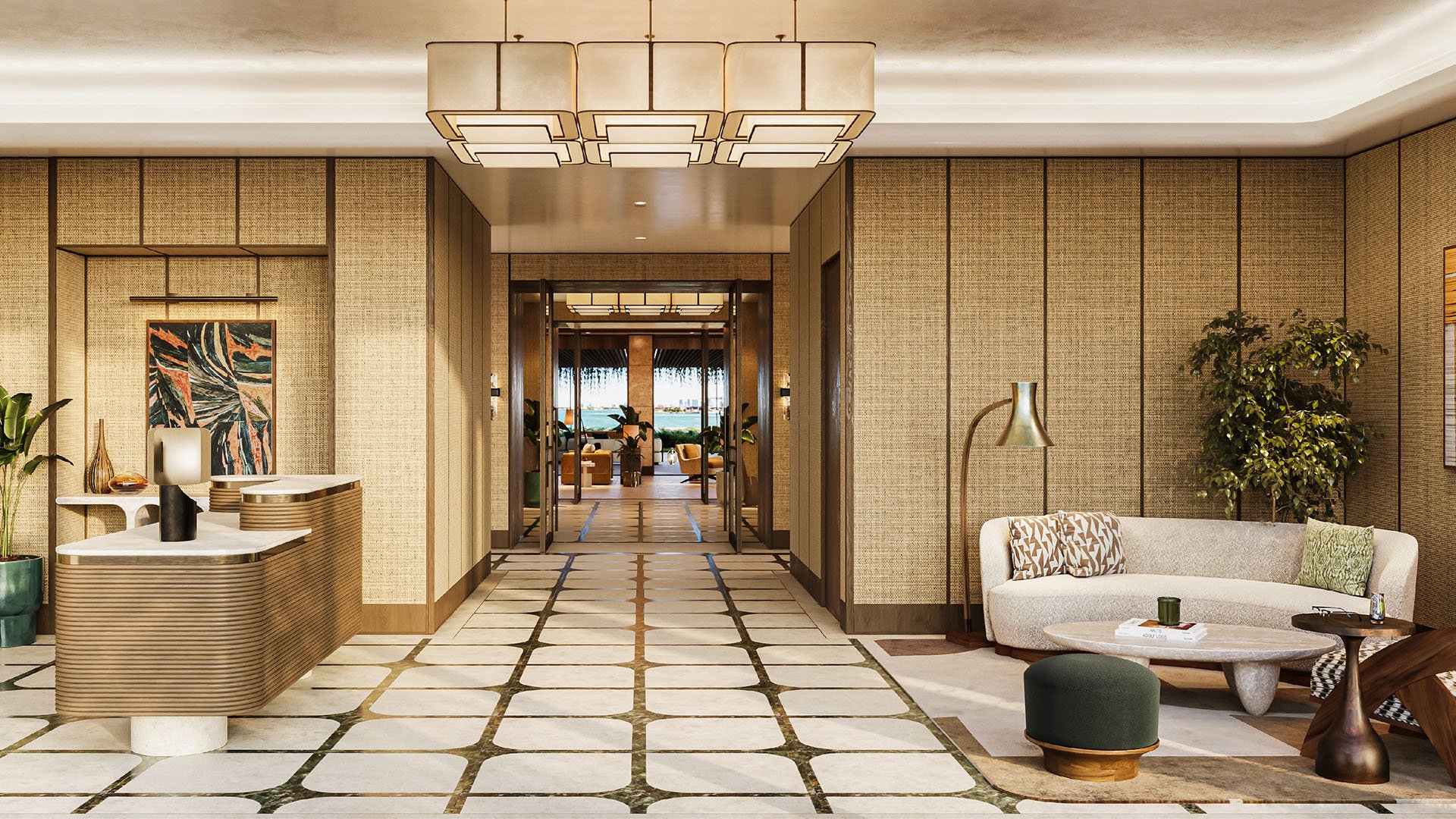
On Fisher Island, privacy has always been inseparable from controlled access. For a buyer considering a primary residence or seasonal retreat, however, the more consequential luxury may be continuity: elevators available for essential movement, life-safety systems supported during an outage, communications equipment that remains energized, and personnel prepared to guide a building through severe weather.
That standard requires a clear distinction among three layers. The first is private-residence power, which is not equivalent to a generator serving common systems. The second is telecommunications resilience, including powered equipment and any redundancy beyond a single service path. The third is operational readiness, from staffing plans to the island transportation network that enables emergency and designated commercial vehicles to arrive.
Fisher Island's Transportation Department operates 24 hours a day, every day of the year. Its ferries can accommodate qualifying private passenger vehicles, emergency vehicles, and designated commercial vehicles. Weekday departures run at 10-minute intervals, with 15-minute intervals during certain other periods. That access matters after a storm, but it should never be mistaken for a building-specific emergency plan.
True residential resilience is the alignment of power, communications, access, and trained personnel.
1. Palazzo del Sol: 7000 Fisher Island Drive
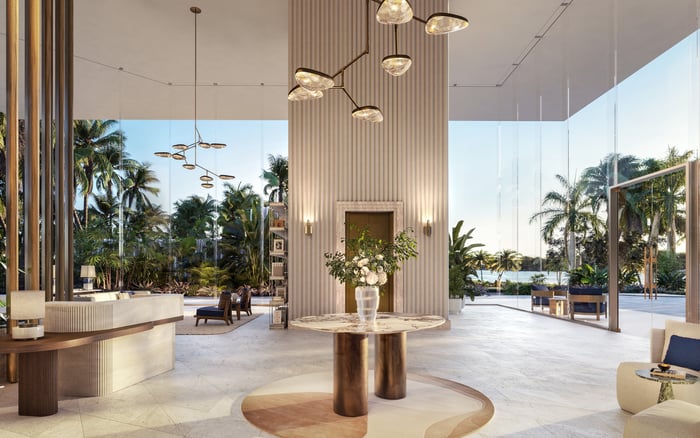
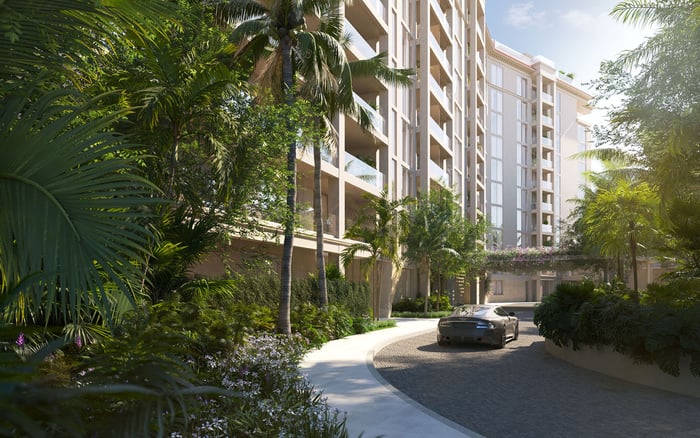
Palazzo del Sol ranks first because its disclosed resilience package is the clearest. An on-site emergency generator serves safety lights and elevators, with additional generator support for life-safety systems. The residences also feature floor-to-ceiling glass window systems by Tecno Glass, while the building has hurricane-resistant windows and sliding glass doors.
The distinction is critical: the advertised generator scope covers essential common and safety functions, not whole-residence power. Buyers should determine what, if anything, remains energized within a specific home and how long common systems can operate under the association's fuel and testing protocols.
2. Palazzo della Luna: Fisher Island Drive
Palazzo della Luna takes second place as a recent Fisher Island candidate connected to the island's continuous transportation and emergency-vehicle network. This shared infrastructure can support access and recovery, particularly when designated commercial traffic is needed for post-storm service.
Its generator coverage, telecommunications redundancy, and building-specific storm staffing are not established in the supplied project details. Buyers should make these items explicit conditions of technical and association-document review rather than infer them from the building's age or positioning.
3. The Residences at Six Fisher Island: under construction
The Residences at Six Fisher Island ranks third as an active construction project. It held an official groundbreaking after securing a $400 million construction loan and remains an ongoing multifamily residential development.
Its construction status creates an opportunity to obtain current technical schedules and operating assumptions. Project details do not specify the generator load schedule or telecommunications-redundancy design, so buyers should request precise written answers covering elevator service, water systems, access controls, communications rooms, transfer equipment, fuel capacity, and planned emergency staffing.
4. Modern Fisher Island condo inventory: Palazzo-era and newer buildings
The fourth position is a search category for buyers prepared to compare Palazzo-era and other newer buildings individually. Palazzo del Sol illustrates why this segment merits attention: a relatively recent completed tower can pair documented support for elevators and life-safety functions with hurricane-resistant glazing.
Yet resilience cannot be generalized across neighboring properties. Each association may have a different generator load, maintenance history, fuel arrangement, communications configuration, and staffing protocol. The proper comparison is document against document, not facade against facade.
5. Future Fisher Island towers: the reported $180 million development lot
The fifth opportunity looks toward the island's next development cycle. A future project tied to a reported $180 million lot has an anticipated 2027 groundbreaking and a completion horizon of approximately three years after work begins.
The potential for next-generation design is compelling, but power scope, telecommunications redundancy, and building-specific storm staffing have not been disclosed. The schedule and technical program should be reconfirmed as planning advances, particularly before a buyer relies on preliminary expectations.
The first request should be the generator load schedule-not a broad assurance that the property has backup power. It should identify every supported elevator, pump, access-control component, safety circuit, communications space, and residential outlet, if any. Buyers should also examine fuel capacity, refueling arrangements, automatic transfer-switch testing, generator exercise records, and the latest maintenance documentation.
At Palazzo del Sol, disclosed support for elevators and safety functions provides a useful starting point, but it does not establish whole-unit backup. At Palazzo della Luna, buyers should seek direct confirmation of the same categories rather than assume comparable coverage. For The Residences at Six Fisher Island, the construction phase makes detailed questions about specified equipment and future operating procedures especially relevant.
Connectivity warrants a separate written inquiry. Ask whether telecommunications equipment rooms, network hardware, building access systems, intercoms, and any distributed cellular components remain powered during an outage. Determine whether service enters through more than one physical path and whether the association has procedures for coordinating repairs. The available details establish physical connectivity through ferry operations more clearly than redundant digital infrastructure within individual towers.
Storm-response staffing should be evaluated by role, shift, and responsibility. A sophisticated plan should identify who remains on site, who can return after restrictions change, which vendor relationships are prearranged, how residents receive updates, and who has authority to prioritize repairs. Buyers should request the association's written hurricane plan, emergency contact hierarchy, resident communication protocol, and any available post-event inspection sequence.
This is where islandwide access and building operations intersect. Continuous transportation can enable emergency vehicles and designated commercial traffic to reach Fisher Island, but each tower still requires its own personnel, communications, and recovery procedures. Neither a prestigious address nor recent construction answers those operational questions.
For Buyer's Guides focused on Fisher Island, the New-construction and Pre-Construction labels should signal deeper technical review, not an automatic conclusion about resilience. The island's proximity to Miami Beach and its Waterfront setting heighten the appeal of ownership while making continuity planning central to a prudent acquisition.
Palazzo del Sol is the most legible first choice for a resilience-focused buyer because its essential generator coverage and hurricane-resistant glazing are expressly described. Palazzo della Luna offers a recent-building alternative supported by Fisher Island's shared access network, subject to verification of tower-specific systems. Six Fisher presents a forward-looking construction opportunity, while broader modern inventory and future towers reward buyers prepared to conduct exacting technical diligence.
The strongest purchase decision will align the residence with a verified building load plan, a credible communications strategy, a practiced staffing protocol, and realistic island access expectations. For private guidance on selecting and evaluating a Fisher Island residence, connect with MILLION.
If branded residences are on your mind — as a home or as an allocation — we would be glad to share what we are seeing, privately.
Begin a quiet conversationPalazzo del Sol ranks first because its disclosed emergency generator supports safety lighting, elevators, and life-safety systems.
Whole-residence backup is not established. Publicly described coverage is limited to essential common and life-safety functions.
The building has been described as having hurricane-resistant windows and sliding glass doors, with floor-to-ceiling Tecno Glass window systems.
It is a recent Fisher Island candidate with access to the island's continuous transportation and emergency-vehicle network, although tower-specific resilience details require verification.
Yes. It is identified as an ongoing multifamily residential project and held a groundbreaking after securing a $400 million construction loan.
The available project details do not specify its generator load schedule or telecommunications-redundancy design.
The Transportation Department operates 24 hours a day, every day of the year.
Yes. The ferries accommodate emergency vehicles as well as qualifying private passenger and designated commercial vehicles.
Request the load schedule, fuel capacity, transfer-switch test records, maintenance history, and a precise list of supported elevators, pumps, controls, and communications equipment.
Ask for the written hurricane plan, staffing roles and shifts, emergency contact hierarchy, resident communication protocol, vendor arrangements, and post-event inspection sequence.