A discreet buyer-focused guide to the Coconut Grove residence types best suited to private fitness routines, with emphasis on access, acoustics, floor plan separation and wellness-minded daily living.
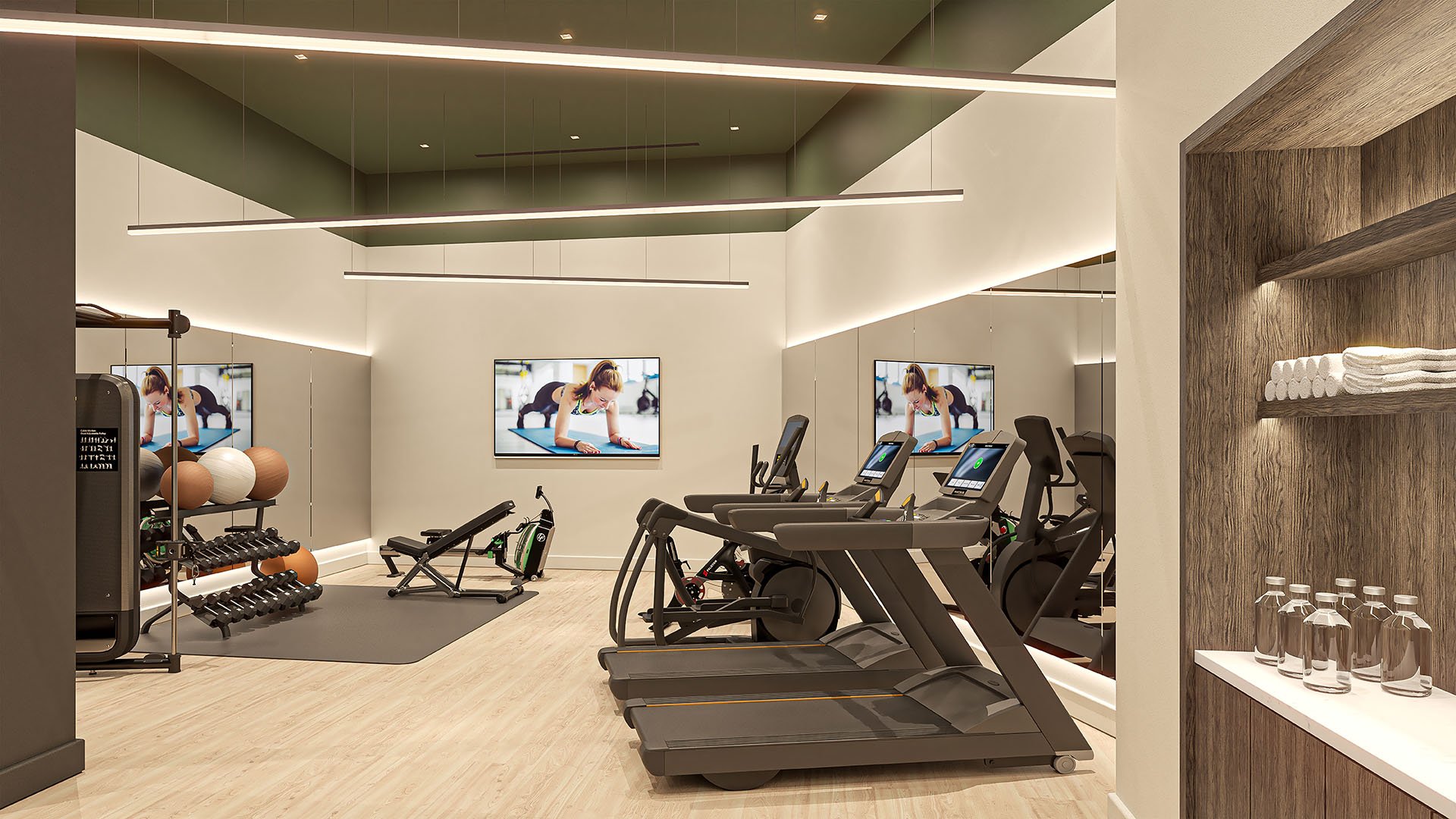
For a certain Coconut Grove buyer, the home gym is not an amenity. It is a private ritual. The value is not simply a room for equipment, mirrors and mats. It is the quiet support of a daily rhythm, whether the owner trains before sunrise, works with a personal instructor, follows a recovery protocol or simply wants movement without an audience.
That distinction matters in Coconut Grove, where buyers often prize a more residential, gardened and discreet version of Miami living. The right residence should allow a wellness routine to unfold without crossing social spaces, greeting staff unnecessarily or turning exercise into part of the home’s public performance. Privacy is created by planning, not square footage alone.
In the Coconut Grove conversation, names such as Arbor Coconut Grove, Four Seasons Residences Coconut Grove, Grove at Grand Bay, Mr. C Tigertail Coconut Grove and The Well Coconut Grove may sit beside townhouse-style homes, penthouses and estate-scale residences. The practical question is not which name sounds most wellness-oriented. It is whether the actual layout, access pattern and acoustic conditions protect the buyer’s routine.
1. Full-floor residence - maximum separation
A full-floor residence is often the cleanest match for buyers who want a private gym without compromising the rest of the home. The appeal is control. With fewer immediate adjacencies and a more defined arrival sequence, a buyer can often separate fitness, recovery, family life and entertaining with greater precision.
The strongest version places the workout room away from primary entertaining zones and bedrooms that require silence. A private elevator entry, generous corridor or secondary room can make the gym feel intentional rather than improvised. For buyers who train with a coach, the key issue is whether a guest can arrive and move directly to the fitness area without passing through the home’s most personal rooms.
2. Penthouse with dedicated wellness room - vertical privacy
A penthouse can be compelling for buyers who want privacy through elevation and separation. The best configuration is not simply a larger residence at the top of a building. It is a residence with a room that can function as a true wellness studio, ideally with enough distance from sleeping areas, formal dining and delicate finishes.
For this buyer, ceiling height, ventilation, storage and sound control matter as much as views. A beautiful room that echoes, overheats or sits directly beside a primary suite may not be ideal for daily use. A penthouse works best when the gym feels like part of a larger private retreat, not a leftover room assigned to equipment.
3. Townhouse-style residence - discreet daily access
A townhouse-style residence can serve buyers who want the feeling of a private home with the convenience of a managed setting. For home gym privacy, the draw is simple: circulation can feel more personal. If the residence offers a logical lower-level, garden-level or secondary-zone fitness room, the owner may avoid the exposure that comes with shared amenity spaces.
This profile is particularly attractive for buyers who value early workouts, family use and flexible routines. The question is how movement flows through the residence. A gym near a service entry, garage connection or secondary stair can be practical. A gym that requires crossing the living room in workout attire may feel less discreet over time.
4. Estate-scale condominium residence - service without exposure
Some buyers want condominium service without condominium visibility. An estate-scale residence can bridge that preference when it offers enough internal planning to keep fitness private while still providing the ease of building operations. The home gym can become part of a private wellness suite, paired with stretching, massage, recovery or storage.
This profile depends heavily on internal zoning. Buyers should examine whether staff, trainers and family members can move through the residence without conflict. A gym placed near a laundry or utility zone may be practical for towels and maintenance, while a gym placed near formal entertaining rooms may require more discipline to keep the home feeling composed.
5. Low-density boutique residence - quieter shared circulation
A low-density boutique residence may appeal to buyers who do not need the largest footprint but still want discretion. Fewer daily encounters can make a meaningful difference for owners who prefer not to turn every workout into a social moment. Even when the home gym is inside the residence, quieter lobbies, elevators and corridors can enhance the sense of privacy.
The strongest boutique option is one where the residence itself still has a credible room for fitness. A den, secondary bedroom or flexible studio may work if the dimensions, flooring strategy and acoustics can support the intended routine. The buyer should be honest about intensity. Yoga, Pilates and strength training each place different demands on the room.
A private gym begins with the floor plan. The best homes create a quiet triangle among arrival, fitness and recovery. A trainer should not need to cross the dining room. A family member should not be awakened by early weights. A guest should not see equipment from the main salon unless the owner wants the gym to be part of the design statement.
Acoustics deserve special attention. Sound travels differently through concrete, glass, stone and millwork. Even a refined residence can feel less private if weights, music or machines disturb adjacent rooms. Buyers should consider impact, vibration and how the intended workout style interacts with neighbors, household members and below-grade or above-grade spaces.
Storage is equally important. A private gym loses its elegance when bands, benches, towels and recovery tools spill into circulation. The most successful layouts include concealed storage, durable surfaces and a maintenance plan for cleaning, humidity and equipment servicing. Privacy is not only visual. It is operational.
The private home gym sits within a larger idea of Coconut Grove living: calm, convenience and control. Buyers drawn to the area often want proximity to Miami’s cultural and commercial energy without surrendering the feeling of retreat. In that context, a gym should help the residence function as a sanctuary.
That is why the right choice may not be the residence with the most dramatic marketing language. It may be the one where the plan is quiet, the circulation is logical and the room can evolve as the owner’s wellness priorities change. A stretching studio today may become a strength room later. A recovery room may need to accommodate equipment, massage and meditation over time.
For privacy-first buyers comparing options such as Arbor Coconut Grove, Four Seasons Residences Coconut Grove, Grove at Grand Bay, Mr. C Tigertail Coconut Grove or The Well Coconut Grove, the most useful lens is experiential. Walk the likely route from entry to gym. Imagine the trainer’s arrival. Consider the hour of use, the sound level and the view from adjoining rooms. The answer usually reveals itself in the plan.
What makes a Coconut Grove residence good for a private home gym? The strongest fit offers a dedicated or flexible room with discreet access, acoustic control and separation from entertaining and sleeping areas.
Is a larger residence always better for home gym privacy? Not always. A smaller residence with better zoning can feel more private than a larger home where the gym sits in a visible or noisy location.
Should the gym be near the primary suite? It can be convenient, but it may compromise quiet if workouts happen early or involve weights, music or machines.
Are full-floor residences ideal for private fitness? They can be especially effective because they often allow stronger separation between arrival, wellness and entertaining zones.
Can a den become a credible home gym? Yes, if the room has appropriate dimensions, ventilation, flooring potential, storage and enough acoustic separation for the intended routine.
What should buyers ask about acoustics? Buyers should evaluate impact noise, vibration, music levels and whether adjacent rooms or neighboring residences could be affected.
Does trainer access matter? Yes. A trainer should ideally reach the gym without moving through the most private or formal areas of the home.
Is a building gym still useful if the residence has a private gym? It can be useful for variety, but privacy-led buyers usually prefer an in-residence option for daily routines.
Which residence profile is best for quiet workouts? Full-floor, penthouse, townhouse-style and boutique low-density profiles can all work when the internal plan supports discretion.
How should buyers compare Coconut Grove options? They should focus on floor plan, circulation, sound, storage and whether the gym can remain private during normal household life.
When you're ready to tour or underwrite the options, connect with MILLION.
If branded residences are on your mind — as a home or as an allocation — we would be glad to share what we are seeing, privately.
Begin a quiet conversation