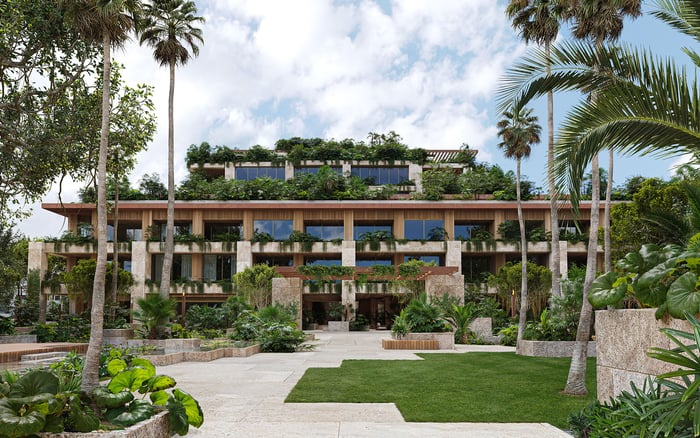
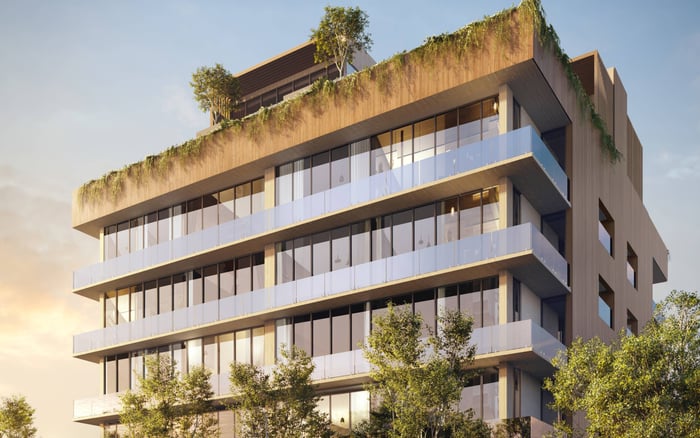
Vita at Grove Isle and Mr. C Residences offer different arguments for lasting buyer appeal. This residence-level shortlist weighs island scarcity, transaction depth and upper-tier comparables without confusing early activity with proven long-term returns.
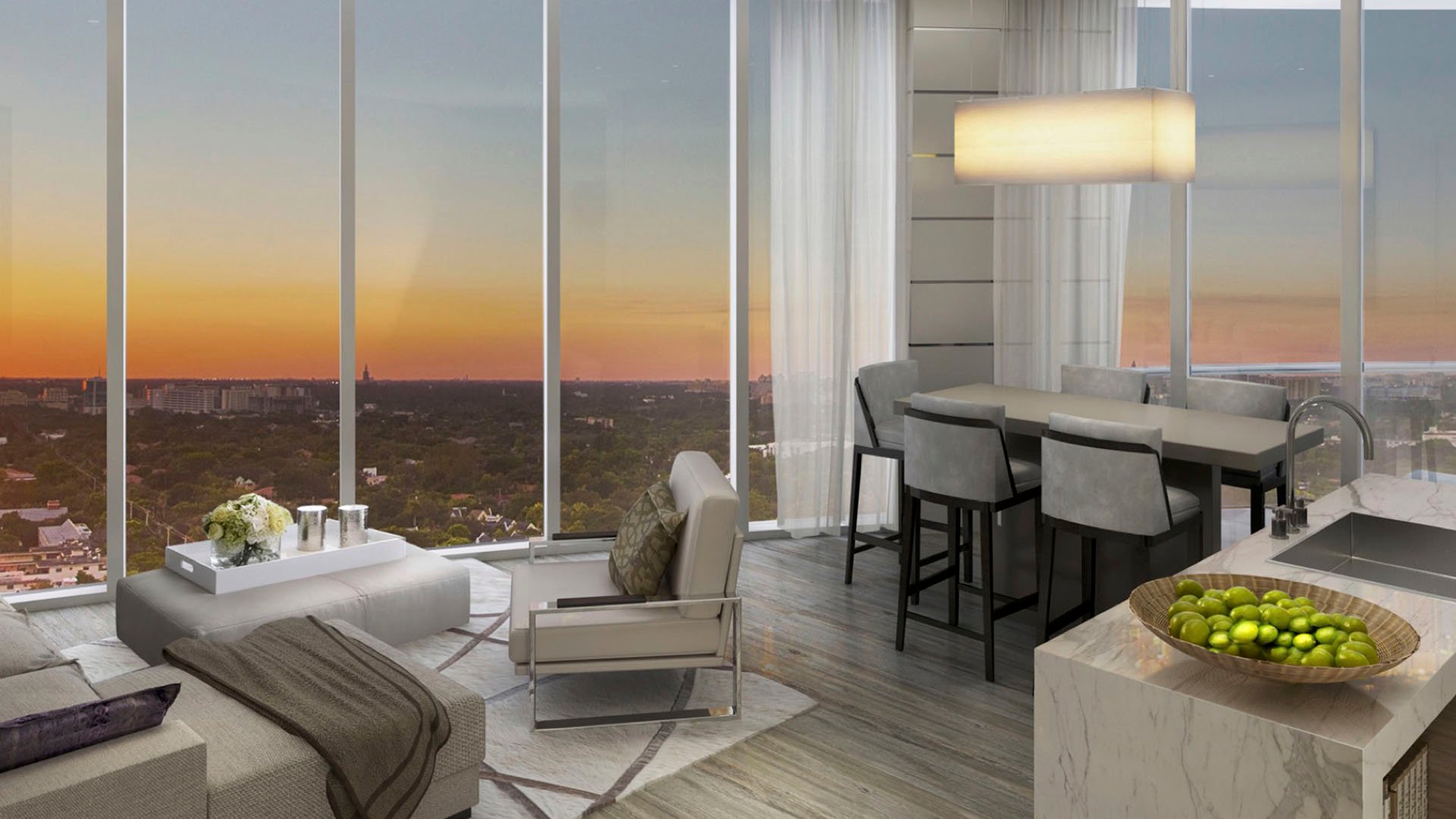
The most useful question in Coconut Grove is not which new condominium makes the strongest first impression. It is which residence will remain compelling after the original sales campaign fades. For a buyer planning a long hold, that means separating the pleasure of ownership from the evidence supporting an eventual exit price.
At Vita at Grove Isle, the central argument is physical: 65 residences, a seven-story profile and a setting on the 20-acre private island of Grove Isle. At Mr. C Residences, a larger recorded resale count offers a different starting point for comparison.
Neither argument proves future appreciation. Nor does the available transaction history isolate a brand premium from the effects of location, layout, views, finishes or market timing. The ranking below therefore prioritizes purchase cases, distinguishing core residences from specialized, upper-tier configurations.
1. Vita at Grove Isle: core residences, island scarcity
Vita leads on the strength of its setting and scale. Listed at 5 Grove Isle Drive, the development combines a low-rise building with a private-island address-tangible characteristics a future buyer can evaluate independently of launch marketing. For an owner who values that setting, they provide the clearest qualitative argument for enduring appeal in this comparison.
The transaction snapshot records 40 condominium sales since 2025, including nine resales, with a $7.4 million median sale price and an average price of $2,234 per square foot. The displayed window runs from December 19, 2025, through April 29, 2026. That represents meaningful early activity, but a short interval for judging durability. Buy for the residence and setting, not on the assumption that these figures establish a long-term price floor.
2. Mr. C Residences Coconut Grove: core residences, resale depth
Mr. C offers the stronger secondary-market comparison base: 126 recorded condominium sales since 2024, including 31 resales. The snapshot shows an approximately $1.6 million median sale price and an average price of $1,566 per square foot. These measures describe different aspects of the market; the latter is an average, not a median.
For buyers looking beyond branding, the advantage is a larger set of resale observations to examine-not proof of faster exits or superior returns. The practical task is to identify genuinely comparable residences, then review their original purchase prices, subsequent sale prices and selling costs. A building-wide average should begin the discussion, not settle the offer.
3. Vita at Grove Isle: large-format residences, a concrete closing benchmark
Vita's larger homes warrant separate analysis within the same development. Residence M401, with four bedrooms, 4.5 bathrooms and 3,904 square feet, sold on March 27, 2026, for $9.4 million, approximately $2,408 per square foot. That gives buyers a specific large-format transaction to examine rather than relying entirely on project-wide averages.
The distinction between closed and advertised pricing matters here. M204 was advertised at $9.95 million for 3,610 square feet, while S503 was advertised at $8.94 million for 4,117 square feet. Those asking prices are not achieved values. M401 is a closing benchmark, but it is not established as a secondary-market sale. Its strongest use is as a starting point for comparing individual homes, not as evidence of an enduring resale premium.
4. Mr. C Residences: combined residences, an upper-tier benchmark
Combined residence 1702-1706 at 2655 South Bayshore Drive closed for approximately $8.62 million, or $2,371 per square foot, after 133 days on market. The January 2025 transaction establishes an achieved price for a combined configuration well above the project's median sale price.
It does not establish the economics of every combined residence, and the transaction is not explicitly classified as a resale. A buyer considering a similar configuration should assess whether its arrangement serves daily life as convincingly as it serves a particular owner's preferences. Treat the closing as a specific upper-tier reference, not a universal valuation rule or a promise of immediate liquidity.
The distinction between transaction volume and investment performance is essential. Thirty-one resales provide more observations than nine, but counts alone cannot establish appreciation, price stability or profitability. Initial developer closings and subsequent owner-to-owner transfers should remain separate when assessing performance.
When considering Mr. C Tigertail Coconut Grove, match each comparable to the precise building, residence configuration and transaction type under review. The aggregate Mr. C figures are a starting point, not a basis for treating every home as interchangeable.
Apply the same discipline at Vita. Its $7.4 million median and M401's $9.4 million closing answer different questions. One identifies the midpoint of a transaction set; the other records the price paid for one specific home. Neither establishes what a different residence should command without adjustment for its characteristics.
Vita's advertised examples illustrate why presentation and evidence must remain distinct. M204's asking price equated to $2,756 per square foot, while S503's equated to approximately $2,171. That spread warrants closer examination of the residences; it is not enough to label either one expensive or inexpensive.
Ask what accounts for the difference. Evaluate layout efficiency, outlook, condition and the relevance of available closings before deciding whether the asking price is defensible. Do not substitute a project's highest advertised figure for a comparable sale.
These figures are snapshots, not live inventory. A disciplined offer should rest on refreshed transaction evidence and current ownership documents, not an assumption that earlier asking prices remain available or representative.
A recognizable name may be part of the ownership experience, but the purchase decision should remain defensible without assigning that name a separate resale value. If Four Seasons Residences Coconut Grove is also on your broader shortlist, apply the same questions before drawing any performance comparison: what are you paying for the residence itself, and what evidence supports the anticipated exit?
Before committing, obtain the association budget, reserve information, insurance details, assessment history and rental rules. Model carrying costs alongside acquisition and eventual selling costs. A compelling address can still be an undisciplined purchase at the wrong basis.
The central distinction is between Vita's location-and-scarcity argument and Mr. C's deeper set of resale observations. Large-format and combined homes add useful benchmarks but require narrower comparisons. Choose the residence whose appeal remains clear without a launch presentation, then insist that its price and ownership economics support the same conclusion.
For a tailored discussion of Coconut Grove residences and purchase strategy, connect with MILLION.
If branded residences are on your mind — as a home or as an allocation — we would be glad to share what we are seeing, privately.
Begin a quiet conversationVita at Grove Isle's core residences lead for their seven-story scale and private-island setting. This is a qualitative appeal argument, not a forecast of appreciation.
Vita has 65 residences and is listed at 5 Grove Isle Drive in Coconut Grove.
It records 40 condominium sales since 2025, including nine resales, with a $7.4 million median sale price and $2,234 average price per square foot.
The window runs from December 19, 2025, through April 29, 2026. That interval does not establish performance across market cycles.
Its snapshot records 126 condominium sales since 2024, including 31 resales. The larger resale count offers more observations to investigate, not proof of better returns.
The snapshot shows an approximately $1.6 million median sale price and $1,566 average price per square foot. The square-foot measure is an average, not a median.
M401 sold on March 27, 2026, for $9.4 million, approximately $2,408 per square foot. The four-bedroom, 4.5-bathroom residence measures 3,904 square feet.
Residence 1702–1706 closed for approximately $8.62 million at $2,371 per square foot after 133 days on market. It provides a specific upper-tier benchmark, not a general resale guarantee.
No. They do not isolate brand value from location, layout, views, finishes or market timing.
Review matched closed sales, association budgets, reserves, insurance, assessments and rental rules. Include carrying costs and transaction costs when evaluating the purchase.