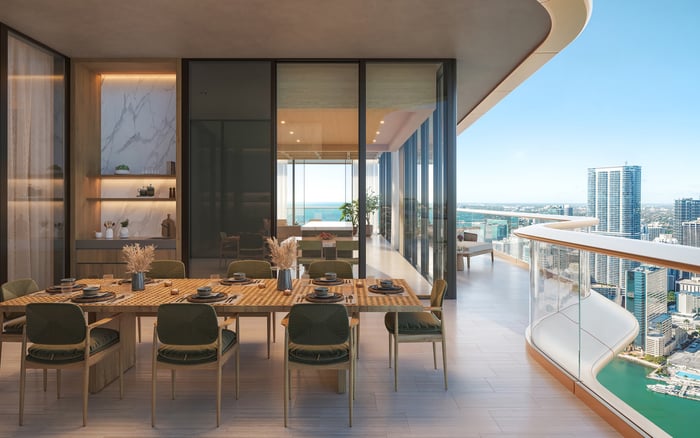
A terrace-first guide to evaluating five Boca Raton luxury condominium options through layout, circulation, exposure, privacy and building rules.
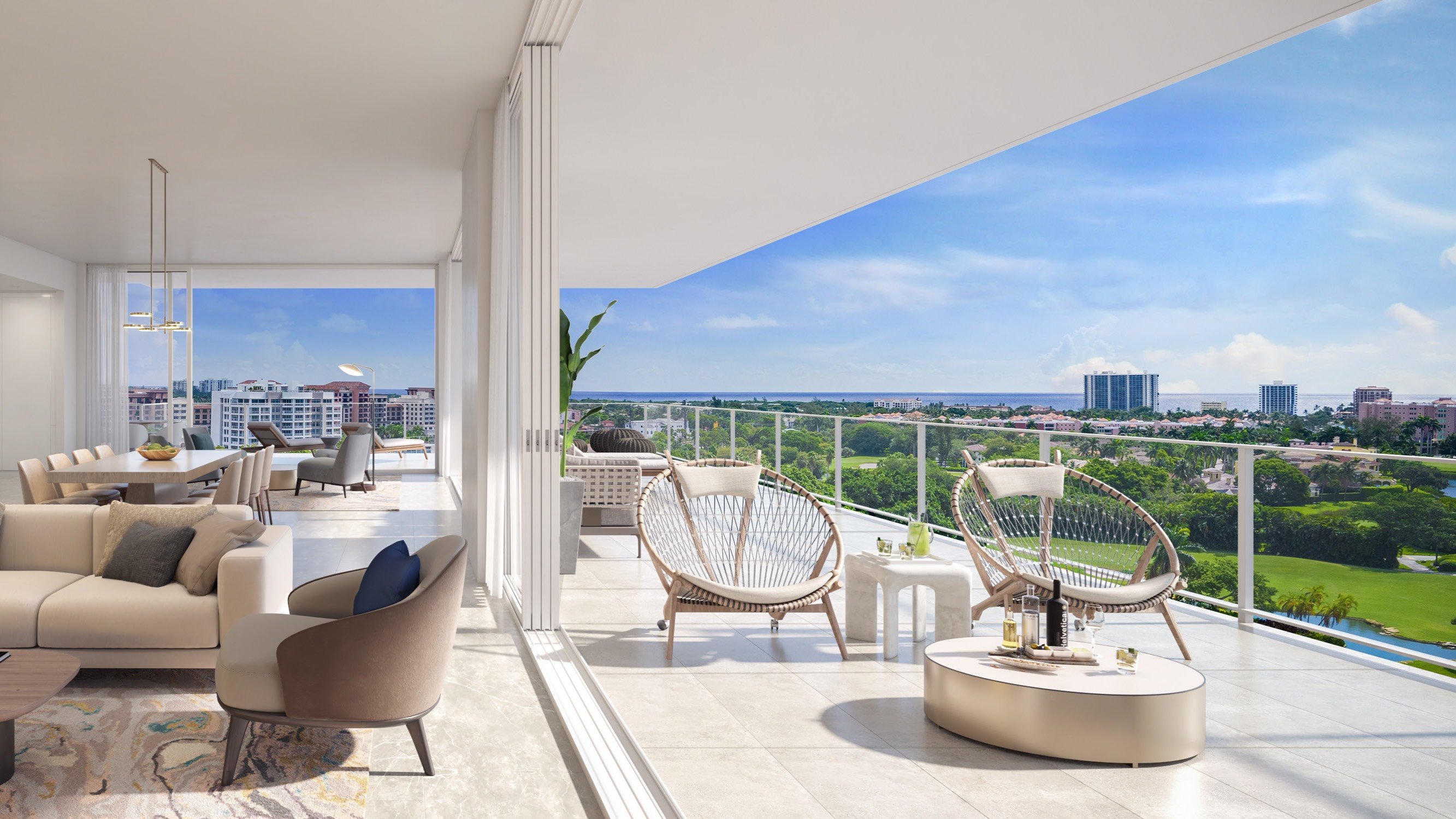
For terrace-focused buyers, the key question is not whether a condominium has outdoor space, but whether that space supports the intended lifestyle. Dining, lounging, entertaining and quiet time each require a practical relationship among depth, shape, access and circulation.
A disciplined comparison should treat every terrace as an extension of the floor plan. Door placement, structural elements, furniture zones, sightlines and privacy can matter as much as the overall dimensions. Buyers should evaluate these details at the residence level rather than relying on broad building descriptions.
The following shortlist reflects the five Boca Raton options carried through this terrace-first review. Its order is an editorial framework for due diligence, not a substitute for verifying current plans, features, rules or availability.
Review the precise terrace configuration attached to the residence under consideration. Confirm usable depth, access points, furniture placement, exposure and any rules affecting cooking or improvements.
2. 200 East
Compare each outdoor area separately when a residence has more than one exterior zone. Buyers should determine whether the arrangement supports distinct uses or creates unnecessary separation from the interior living spaces.
3. Boca Beach House
For a waterfront-oriented search, assess how the terrace relates to the outlook, interior plan and desired daily routine. Any boating, marina or waterfront feature should be verified directly during due diligence.
4. Royal Palm Residences
Examine the transition from the residence entrance to the principal living areas and terrace. Privacy, circulation and sightlines should work together rather than being evaluated as isolated features.
Use residence-specific plans to test whether the outdoor space can accommodate the intended furniture and entertaining pattern. Confirm all dimensions, exposures and permitted uses before relying on marketing descriptions.
Start by sketching the furniture arrangement. A dining table, lounge seating and walking paths should fit without blocking doors or narrowing circulation. Note whether columns, corners or changes in width divide the terrace into useful zones.
Next, review the relationship between indoor and outdoor areas. A terrace may feel more functional when it connects logically to the kitchen, dining room or primary living area. Buyers should also inspect views from both seated and standing positions.
Exposure deserves its own review. Visit at different times when possible and consider sunlight, shade, wind and neighboring sightlines. These conditions can affect comfort and privacy even when two terraces appear similar on a floor plan.
Buyers expanding the search can review The Residences at Mandarin Oriental Boca Raton and Mr. C Residences Boca Raton. Each comparison should remain residence-specific, with no assumptions about terrace dimensions, equipment, views or availability.
The same standard applies across every candidate: request current plans and governing documents, inspect the actual outdoor area when possible and confirm which features are included. A building name alone cannot establish whether a particular terrace will perform as a usable outdoor room.
Confirm terrace dimensions and identify any areas that are difficult to furnish. Review doors, thresholds, railings, drainage, utility connections and fixed equipment with the appropriate professionals.
Ask which outdoor furnishings, planters, coverings, grills or improvements are permitted. Building rules may shape how the space can be used, so buyers should review applicable documents rather than assume that a visible feature is allowed for every residence.
Finally, consider maintenance and day-to-day practicality. The strongest choice is the terrace that supports the buyer’s actual routine while fitting the residence, exposure and applicable restrictions.
What makes a terrace a usable outdoor room? It should support the intended furniture, activities and circulation without obstructing access or compromising comfort.
Why is terrace depth important? Depth influences whether dining, lounging and walking paths can coexist in a practical layout.
Should total square footage determine the ranking? No. Shape, access, privacy, exposure and restrictions can be as important as overall area.
How should buyers compare multiple terraces? Evaluate each zone by purpose, connection to the interior and ability to support furniture comfortably.
Why should buyers inspect a terrace at different times? Changing sunlight, shade, wind and sightlines can affect how the space feels and functions.
What should buyers verify about outdoor cooking? Confirm installed equipment, utility connections and the rules governing grills or outdoor kitchens.
Do building-level descriptions provide enough detail? No. Buyers should verify the plan, dimensions, features and restrictions for the specific residence.
How can furniture planning improve due diligence? Mapping furniture and circulation can reveal narrow areas, blocked doors or inefficient zones before purchase.
What documents may affect terrace use? Applicable condominium documents and building rules may address furnishings, planters, coverings, cooking and alterations.
What is the most important final check? Confirm that the actual terrace supports the buyer’s routine and that every material feature has been independently verified.
For a confidential assessment and a building-by-building shortlist, connect with MILLION.
If branded residences are on your mind — as a home or as an allocation — we would be glad to share what we are seeing, privately.
Begin a quiet conversation