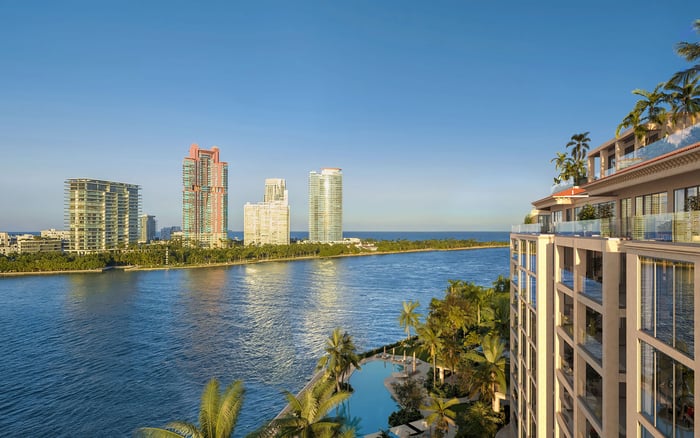
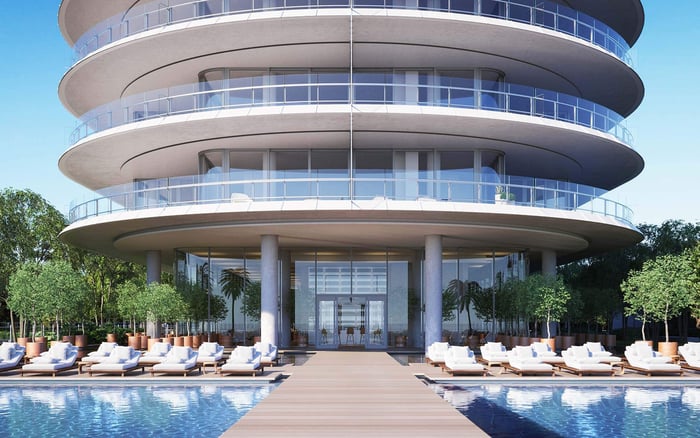
From Zaha Hadid Architects’ sculptural Downtown Miami tower to Alfred Browning Parker’s Woodsong, five residences reveal distinct approaches to architecture, setting, and daily life.
For a design-led buyer, architectural distinction should mean more than a recognizable silhouette. It should define a relationship between structure, setting, and the experience of living in a residence. A sculptural tower and a private house organized around outdoor circulation can both meet that ambition while offering very different versions of Miami life.
This selection moves from Downtown Miami to Coconut Grove, Sunny Isles Beach, Surfside, and Miami Beach. The ranking reflects architectural authorship and distinction, not investment performance or a hierarchy of prices. The central question is which architectural idea deserves to shape everyday life.
At One Thousand Museum Downtown Miami, that idea is immediately legible in the building’s structural expression. Elsewhere, it emerges through the arrangement of separate volumes, an orientation toward coastal views, or the individuality of a smaller residential collection.
1. One Thousand Museum - Downtown Miami
Designed by Zaha Hadid Architects, One Thousand Museum takes first place for its sculptural exoskeleton, which integrates structure and façade. This is not applied decoration: the building’s architectural identity is inseparable from its structural expression. For a buyer seeking a home within a singular architectural composition, that is the essential attraction.
Reported resale pricing spans approximately $6 million to more than $30 million. That range offers context, not a verified picture of current availability. The architectural merits should be assessed separately from the particular residence under consideration, including how its spaces relate to the building’s larger design language.
2. Woodsong - Coconut Grove
At 3003 Seminole Street, Woodsong offers a markedly different proposition. Designed by South Florida modernist Alfred Browning Parker, the private residence comprises three architectural pods connected by an exterior breezeway. Rather than concentrating its identity in a tower’s outline, it makes the passage between volumes part of the residential experience.
A roughly 90-foot lazy river is integrated into the property, adding another distinctive element to the composition. Woodsong sold for a reported $4.2 million-a historical transaction, not a current offering. Its second-place position recognizes an individual approach to the private house, with circulation and outdoor space treated as central design decisions rather than secondary features.
3. Jade Signature - Sunny Isles Beach
Jade Signature is an oceanfront residential tower designed by Herzog & de Meuron. Its contemporary architecture and residences oriented toward coastal views distinguish it within Sunny Isles Beach. It takes third place for an approach that makes the oceanfront setting central to the experience of the home.
For the design-led buyer, the useful question is not simply whether a residence has a view, but how the plan brings that view into daily life. Jade Signature belongs on this shortlist for the relationship between architecture and coastal outlook. No project-specific price benchmark is presented here; pricing remains a separate, residence-level consideration.
4. Arte - Surfside
Designed by Antonio Citterio, Arte combines modern architecture with Mediterranean references in an oceanfront Surfside setting. Its distinction lies in that combination: a contemporary residential expression informed by a different architectural vocabulary. For buyers comparing oceanfront addresses, it offers a basis for choosing beyond tower profile or elevation alone.
A duplex villa at Arte was marketed at $15.5 million. That figure is an asking price, not a reported closed sale, and should not be treated as a valuation for the wider project. Arte takes fourth place for its specific architectural character and Mediterranean-inflected interpretation of modern coastal living.
5. Surf Row - Miami Beach
Surf Row comprises 24 individually designed residences by Rene Gonzalez Architects. Its place in the ranking rests on architectural individuality within a smaller collection, rather than a single monumental form. That distinction matters for buyers who want the identity of a particular home to carry weight alongside that of the development.
Lighting design, premium finishes, and indoor-outdoor integration are key themes to examine at Surf Row. They provide an agenda for detailed review, not a substitute for one. The buyer’s task is to establish how each proposed residence expresses them, especially where differences between individual designs may influence the preferred layout and experience.
The first decision is not necessarily between architects. It is between scales of living. One Thousand Museum offers the identity of a sculptural tower; Woodsong makes the private house itself the complete architectural work. Surf Row introduces a third proposition: individual designs within a collection of 24 residences.
These are different purchase briefs. A buyer drawn to Woodsong’s exterior breezeway should consider whether moving outdoors between volumes suits daily routines. Someone attracted to a tower’s expressive structure should examine the individual floor plan with equal care. Admiration for a building does not automatically make every residence within it suitable.
Architectural authorship is a compelling starting point, but the more revealing test is personal: which design decisions would still feel meaningful after the first impression has faded?
At Jade Signature Sunny Isles Beach, residences oriented toward coastal views make the relationship between outlook and interior use a natural focus. During a review, consider where time would actually be spent, how rooms address the setting, and whether the plan supports the intended pattern of living. These are questions to investigate, not qualities to assume from an address.
The comparison with Arte Surfside is useful because the architectural emphasis changes. Here, Mediterranean references within a modern design provide another basis for preference. A buyer may respond more strongly to that vocabulary than to the expression of a contemporary tower. Neither preference requires a claim that one approach is universally superior.
The available price references describe different things: an approximate reported resale range at One Thousand Museum, a historical sale at Woodsong, and a marketed duplex asking price at Arte. They are not directly comparable measures, and none establishes current availability across this selection.
A disciplined shortlist keeps two conversations separate. First, identify the architectural qualities worth owning. Then assess the specific residence, its condition, documentation, and current terms. Distinctive design can justify sustained attention without establishing investment performance or an appropriate purchase price on its own.
The strongest choice is the one whose architectural ideas remain persuasive at the scale of daily life, not merely in the view from outside.
Explore a design-led South Florida property search with MILLION.
If branded residences are on your mind — as a home or as an allocation — we would be glad to share what we are seeing, privately.
Begin a quiet conversationOne Thousand Museum ranks first for Zaha Hadid Architects’ sculptural exoskeleton, which integrates the building’s structure and façade.
No. The ranking reflects architectural authorship and distinction, not investment performance or relative value.
South Florida modernist Alfred Browning Parker designed Woodsong at 3003 Seminole Street.
Woodsong comprises three architectural pods linked by an exterior breezeway. A roughly 90-foot lazy river is also integrated into the property.
It is a reported historical sale price, not a current asking price or confirmation of availability.
Herzog & de Meuron designed Jade Signature, an oceanfront residential tower in Sunny Isles Beach distinguished by contemporary architecture and coastal-view-oriented residences.
Antonio Citterio’s design for Arte combines modern architecture with Mediterranean references in an oceanfront Surfside setting.
No. The figure was a marketed asking price for a duplex villa, not a reported closed sale.
Surf Row comprises 24 residences in Miami Beach, described as individually designed by Rene Gonzalez Architects.
No. The approximately $6 million to more than $30 million reported resale range is contextual and is not a verified current availability range.