A buyer-focused examination of Five Park’s advertised wellness offering and the operating questions to resolve at both Five Park and Setai before placing value on booking access, guest privileges, or a preferred practitioner.
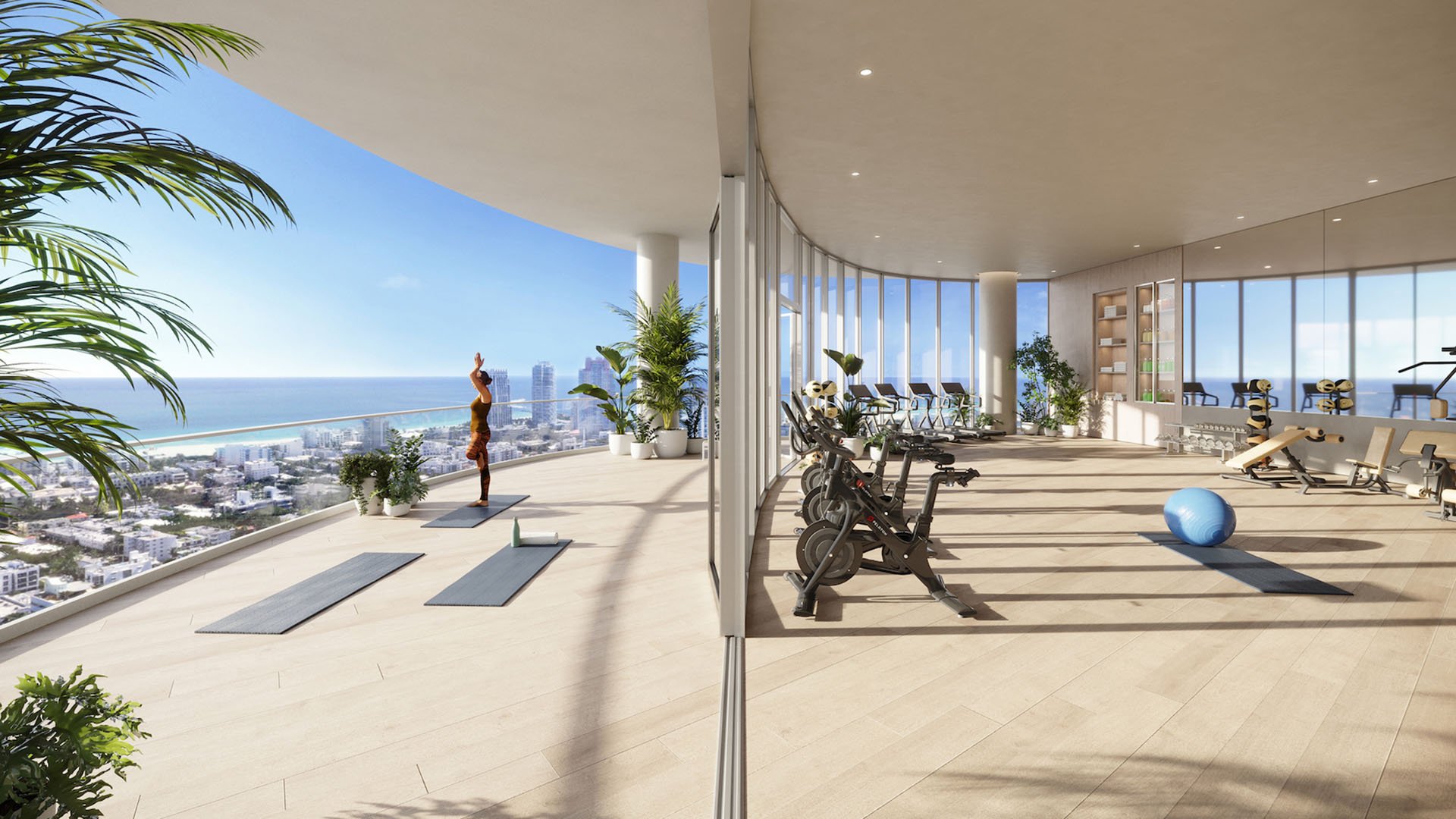
For a Miami Beach buyer, the most consequential wellness amenity may be the appointment that fits the day. A treatment room, private training area, or yoga deck becomes genuinely useful when it accommodates a resident’s routine, visiting family, and preferred practitioners. The distinction is between an attractive collection of spaces and dependable access to them.
At Five Park Miami Beach, the advertised offering provides a substantial starting point: approximately 50,000 square feet of total amenities, dedicated spa facilities, and in-house wellness professionals. That figure measures the total amenity footprint-not spa or fitness space alone-and establishes nothing about appointment availability.
For buyers also considering Setai Residences Miami Beach, the comparison should turn on three questions: when residents can book, whom they can bring, and whether their own practitioners can work on-site. Neither a familiar name nor residents-only positioning should substitute for written operating terms.
Five Park’s advertised offering includes dedicated Park Club spa facilities on the sixth level. Separately, the Canopy Club is described as residents-only and occupies the entire 26th floor, with offerings that include wellness activities, a signature spa, private dining, cocktail bars, and lounges. These descriptions should not be read as a single wellness floor plan or a uniform entitlement to access.
The advertised wellness lounge includes private training areas and exercise bikes, while outdoor components comprise a workout zone, yoga deck, and juice bar. Spa amenities include separate women’s and men’s lounges with saunas, plus dedicated massage and treatment facilities. In-house personal trainers and wellness coaches are also advertised.
This range of settings can appeal to residents with different routines. Yet a private training area is not necessarily a reservable studio, and a treatment facility does not establish how many staffed appointments are available. Buyers should identify which facilities are available to the specific residence under consideration and which services require separate payment or reservations.
The broader offering includes adult and family pools, cabanas, a pool bar/café, and a private beach club. Those features broaden the lifestyle appeal without answering the narrower question: can a resident secure a preferred therapist at a preferred hour?
A meaningful capacity comparison requires more than room counts. Ask each management team for current operating hours, staffed treatment schedules, class limits, reservation windows, and any restrictions on recurring bookings. Request an explanation of waitlists, cancellation charges, no-show rules, and procedures when a practitioner becomes unavailable.
The most useful test is to present the same hypothetical week at both properties: two early personal-training sessions, a weekend treatment, and a visiting partner seeking a simultaneous appointment. Ask how each request would be handled, what could be reserved in advance, and what would remain subject to availability. A sample booking exercise is informative, not a guarantee of future access.
Five Park’s advertised offering includes a dedicated program director, club-style programming, and an app providing access to amenities, services, events, concierge, and management. None of these features alone establishes a particular spa-booking function, appointment quota, or preferential reservation window. Ask for a demonstration of the current process rather than assuming the app completes every transaction.
At Setai, seek the same specificity about resident entitlements and any distinctions among eligible user groups. Do not assume that hotel guests receive priority over residents or that Five Park experiences less congestion. A defensible preference rests on confirmed rules and availability relevant to the buyer’s routine.
Residents-only language signals positioning, not a complete guest policy. For Five Park’s Canopy Club, buyers should confirm how that designation applies to spouses, household members, visiting friends, overnight guests, and rental occupants. Each category warrants an explicit answer, not a general assurance that guests are welcome.
Five Park’s advertised short-term guest suites introduce another distinction: accommodation and amenity access are separate questions. A suite’s availability does not establish that its occupant can independently reserve a treatment, enter a fitness area, or join a class.
At both properties, request a written guest-access schedule identifying registration requirements, accompaniment rules, age restrictions, fees, and any limits on frequency or party size. Confirm whether a resident must remain present and whether an eligible guest can charge services independently.
For buyers who entertain regularly, these terms can matter more than the breadth of the amenity offering. A household should assess the experience of a visiting parent or adult child, not only the access granted to the owner named on the residence documents.
Five Park’s advertised in-house trainers and wellness coaches may appeal to residents seeking on-site support. Their presence does not establish whether outside trainers or therapists are permitted, prohibited, or subject to approval.
A buyer with an established practitioner should request the applicable policy at both properties before treating continuity of care as part of the purchase proposition. Ask whether the rules distinguish between a session inside the residence and one in a shared training or treatment space.
Other questions concern professional licensing where applicable, insurance documentation, advance registration, access hours, facility charges, and any exclusivity arrangements. These are matters to investigate, not requirements to presume. If management offers approval, establish its scope and duration in writing, including whether it applies to the individual practitioner or a broader practice.
Second-home ownership makes scheduling especially important. A buyer arriving for a short stay should ask whether reservations can be made before arrival, whether access requires advance activation, and how late travel changes affect cancellation charges. Test the intended pattern of use rather than an idealized full-time routine.
The same discipline can inform a wider search that includes The Perigon Miami Beach: carry the household’s booking, guest, and practitioner questions from one evaluation to the next, without assuming equivalent facilities or policies.
Before committing, assemble the current amenity rules, applicable governing documents, service fee schedules, guest policies, and outside-practitioner requirements. Ask management to resolve discrepancies and identify which terms apply to the exact residence. Separate durable entitlements from discretionary accommodations and services subject to change.
Five Park’s advertised amenities create a compelling wellness proposition, but they do not establish superior booking capacity. Evaluate Setai against the same practical standard, without presuming either priority or disadvantage. The stronger choice is the residence whose documented access best supports the life the buyer intends to lead.
For a discreet perspective on aligning your residence search with your daily priorities, connect with MILLION.
If branded residences are on your mind — as a home or as an allocation — we would be glad to share what we are seeing, privately.
Begin a quiet conversationNo. Five Park advertises approximately 50,000 square feet of total amenities, not spa and fitness space alone.
Dedicated Park Club spa facilities are identified on the sixth level. This description is separate from the Canopy Club’s 26th-floor location.
Yes. It is described as residents-only and occupies the entire 26th floor, but that designation does not resolve specific guest privileges.
A superior booking experience cannot be established from advertised amenities alone. Compare current schedules, reservation rules, and availability for your intended routine.
That priority should not be assumed. Request current written terms explaining resident booking rights and any distinctions among eligible user groups.
Advertised guest suites do not establish independent spa or fitness booking rights. Confirm eligibility, registration, and accompaniment requirements with management.
Yes. Its advertised offering includes in-house personal trainers and wellness coaches, without establishing their current schedules or guaranteed availability.
Permission is unresolved at both properties and should be confirmed in writing. Ask separately about sessions inside the residence and use of shared facilities.
No such guarantee is established. The advertised app provides access to amenities and services, but specific spa-booking functions and reservation limits require confirmation.
Request current amenity rules, governing documents, fee schedules, guest policies, and practitioner requirements. Confirm that the stated entitlements apply to the specific residence.