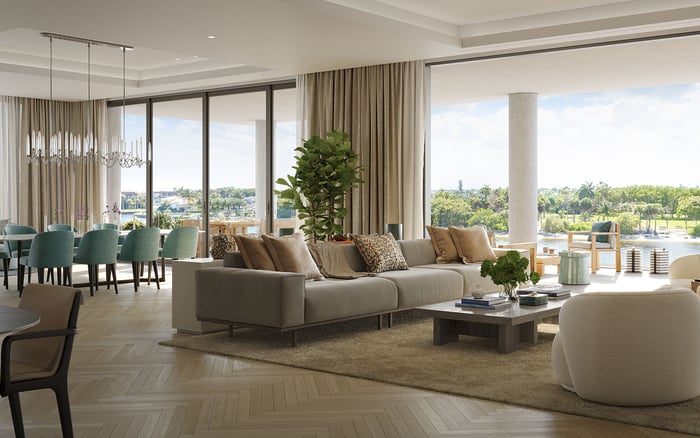
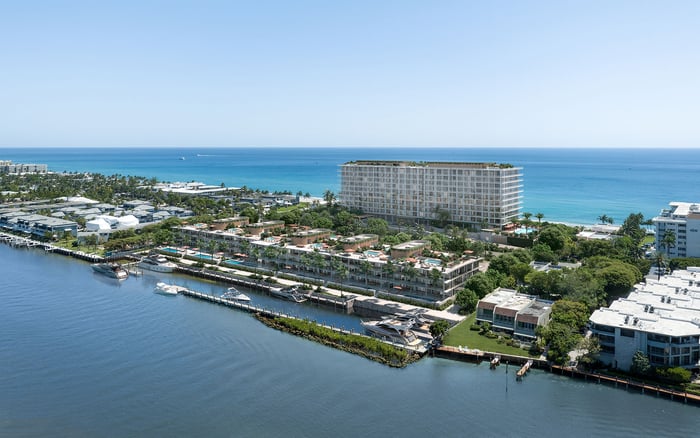
Five active developments across Hallandale Beach, Pompano Beach, and Hillsboro Beach offer distinct opportunities for private-client diligence on connectivity, cybersecurity, and emergency-powered network equipment. The priority is documented performance, not assumptions based on branding.
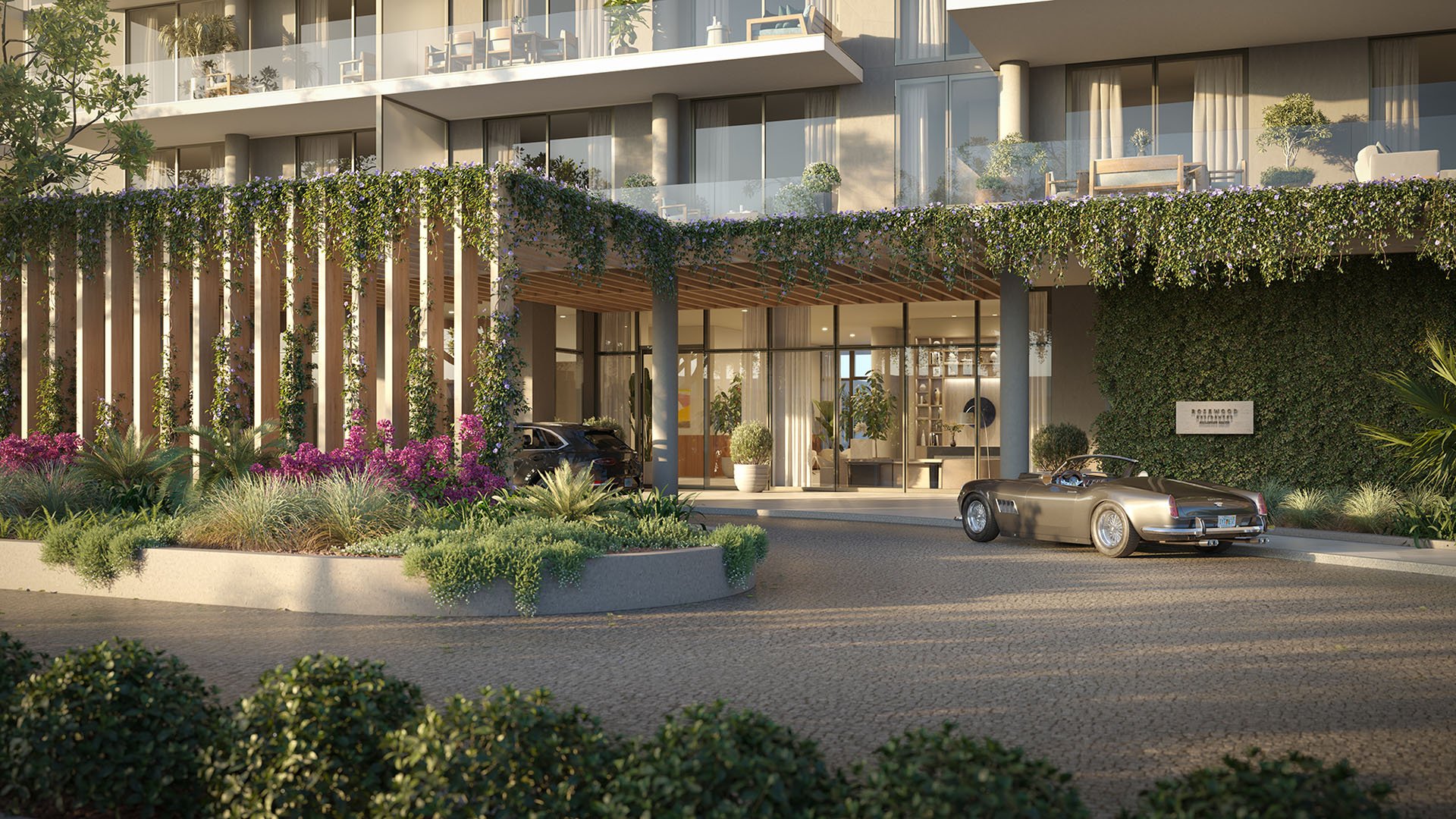
For a buyer whose residence must support confidential conversations and uninterrupted work, connectivity deserves the same scrutiny as architecture and service. The question is not simply whether a building offers fast internet, but what remains available when a carrier connection, electrical supply, or network component fails.
These five developments in Hallandale Beach, Pompano Beach, and Hillsboro Beach offer different opportunities to examine that question. Their order reflects development activity, buyer-relevant scale, and suitability for operational or construction-stage diligence. It is not a ranking of cybersecurity or network resilience.
Project-specific telecom redundancy, cybersecurity architecture, generator capacity, fuel autonomy, and emergency-powered network loads remain unverified. The milestones below reflect dated 2026 information; delivery targets remain forecasts. A luxury name should begin the conversation, never conclude it.
1. Oasis Hallandale: operational diligence in Hallandale Beach
At 1000 East Hallandale Boulevard, Oasis Hallandale ranks first because its west tower had received a full temporary certificate of occupancy, with closings underway in August 2026 and approximately 85% sold. Its east tower reportedly topped out at 25 stories. The broader mixed-use development comprises approximately 500 residences and 95,000 square feet of commercial space.
The transition toward occupancy makes operating documentation the priority. Request commissioning records, carrier activation details, and an emergency-load schedule identifying network equipment. Clarify where residential and commercial technology responsibilities begin and end. The occupancy milestone does not, by itself, establish continuity performance.
2. The Residences at Shell Bay: construction-stage review in Hallandale Beach
The condominium component reportedly reached its top-off milestone, with 108 residences in a 20-story tower. Led by PPG Development and Witkoff Group, the development also includes an Auberge-branded, 60-room hotel.
The residential and hospitality mix makes system boundaries an important briefing topic. Ask whether resident, guest, staff, and building-management networks are separated, who controls vendor access, and which entity handles incidents. These are diligence questions, not assertions about the installed architecture.
3. Waldorf Astoria Residences Pompano Beach: a defined construction review window
Planned as a 28-story tower with 92 residences, the development involves Related and Merrimac Ventures. As of September 2026, completion was expected in summer 2027, providing a construction-stage window for reviewing planned infrastructure.
Prioritize carrier commitments, entrance and riser drawings, and the proposed emergency-power scope. Distinguish documents that describe design intent from commitments to be validated through commissioning. A completion forecast is not evidence that connectivity systems have been installed or tested.
4. Ritz-Carlton Residences, Pompano Beach: two building environments
The planned development totals 205 residences: 117 in a 32-story Beachfront Tower and 88 in a 14-story Marina Tower. Its beachfront and marina settings make it a particularly relevant candidate for examining multi-building communications and emergency-power coordination.
Request separate answers for each tower on carrier entrances, network rooms, backup-power dependencies, and any shared infrastructure. Do not assume that a capability described for one tower applies to the other. A delivery date is not established for this briefing.
5. Rosewood Residences Hillsboro Beach: ocean-to-Intracoastal diligence
Rosewood occupies a 12-acre site between the Atlantic Ocean and Intracoastal Waterway. Its 10-story structure topped out in February 2026. As of September 2026, the 92-residence development had pricing from approximately $5.95 million and an early-2027 delivery target. Related Group and Dezer Development are the joint-venture partners, with Coastal Construction as general contractor.
The site's breadth makes equipment locations and protected pathways central to the review. Request drawings showing telecom rooms, emergency-power distribution, and connections between relevant facilities, along with the planned testing scope. Neither waterfront positioning nor price establishes technical resilience.
At Shell Bay by Auberge Hallandale, the mixed residential and hospitality program warrants detailed governance questions. Who administers residential connectivity? Who authorizes remote maintenance? Who communicates with owners during an incident?
Request segmentation diagrams, firewall architecture, remote-vendor access controls, and incident-response procedures. Draw a clear distinction between the building's responsibilities and the equipment or services an owner must arrange within the residence. Sensitive technical material should be reviewed discreetly with the client's qualified adviser, not circulated casually.
For Oasis Hallandale, focus the same conversation on the west tower's occupancy-stage arrangements. Identify the party responsible for each system and request evidence of its operational status. A private-client briefing should distinguish a contractual commitment from an installed component-and both from a tested capability.
For Waldorf Astoria Residences Pompano Beach, construction-stage review should begin with the proposed telecom path. Request carrier commitments, entrance diagrams, riser layouts, telecom-room locations, and evidence of physical route diversity. Ask whether nominally separate services depend on a common entrance, pathway, or equipment.
At The Ritz-Carlton Residences® Pompano Beach, extend that review across both towers. Ask which communications systems, if any, are shared and how a disruption in one building would affect the other. Insist on tower-specific answers rather than a development-wide assurance.
For both projects, request generator one-line diagrams, emergency-load schedules, and UPS runtimes. The decisive question is which network equipment receives backup power, not simply whether generator equipment is contemplated. Request commissioning, failover, and load-bank testing documentation-or the planned scope and timing if testing is still ahead.
Ask the team to define the coverage boundary through to the residence. Building-level backup does not confirm that an owner's connection or in-residence equipment will remain available.
At Rosewood Residences Hillsboro Beach, the ocean-to-Intracoastal setting warrants questions about flood-resistant equipment placement, protected pathways, corrosion protection, and generator-fuel logistics. These measures require confirmation; neither the setting nor the development team establishes that they are in place.
Request the assumptions behind any stated backup duration and the loads that calculation covers. Ask how maintenance access and fuel replenishment are intended to work during a disruption. Apply the same discipline to other waterfront candidates without presuming identical site conditions or designs.
A useful comparison separates documented capabilities, future commitments, and unanswered questions. Record each claim against a drawing, schedule, contractual provision, or test result, with a responsible party and follow-up date. Where continuity is essential, have a qualified technical adviser assess the evidence before considering that purchase criterion satisfied.
For a discreet property conversation shaped around your priorities, connect with MILLION.
If branded residences are on your mind — as a home or as an allocation — we would be glad to share what we are seeing, privately.
Begin a quiet conversationNo. It prioritizes development activity, scale, and opportunities for diligence, not verified cybersecurity or network resilience.
Its west tower had received a full temporary certificate of occupancy, with closings underway and approximately 85% sold in August 2026. That stage makes operational documentation a priority.
Its 108-residence condominium sits within a development that also includes a 60-room Auberge-branded hotel. Buyers should ask about network separation and responsibilities across residential and hospitality operations.
As of September 2026, completion was expected in summer 2027. The date is a forecast, not a confirmed delivery milestone.
The planned total is 205 residences, with 117 in the 32-story Beachfront Tower and 88 in the 14-story Marina Tower.
In September 2026, pricing started at approximately $5.95 million and delivery was targeted for early 2027. Both should be reconfirmed before a purchase decision.
Request carrier commitments, entrance and riser diagrams, telecom-room locations, and evidence of physical route diversity. Ask whether separate services share any infrastructure.
Request generator one-line diagrams, emergency-load schedules, UPS runtimes, and commissioning, failover, and load-bank testing documentation. Confirm exactly which network equipment and residence-level dependencies are covered.
Request segmentation diagrams, firewall architecture, remote-vendor access controls, and incident-response procedures. Clarify who administers each system and communicates with owners during an incident.
Ask about flood-resistant equipment placement, protected pathways, corrosion protection, and generator-fuel logistics. None of these measures is established as a project-specific capability in this briefing.