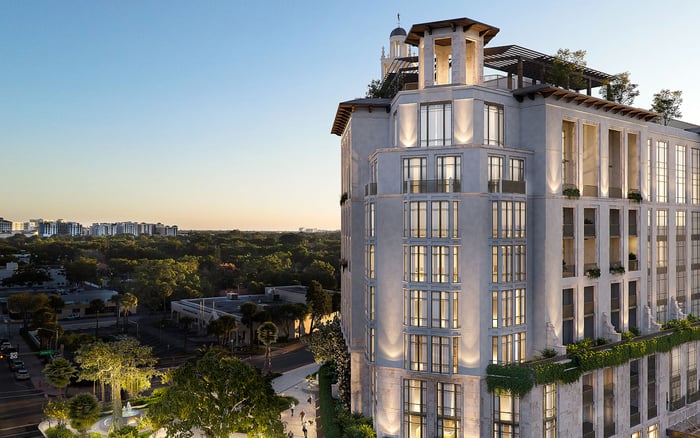
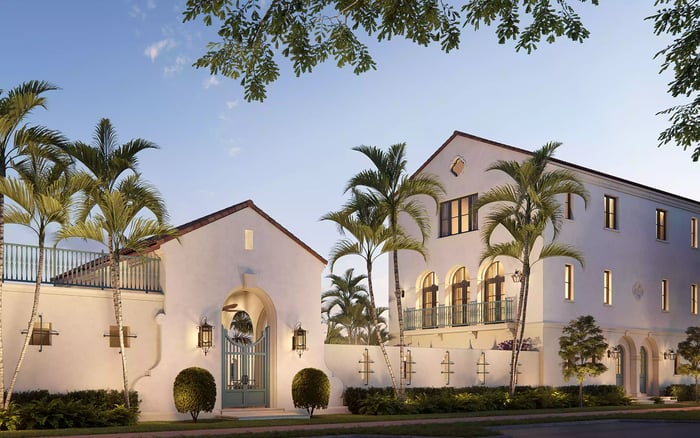
Five Coconut Grove and Coral Gables developments frame a private-client briefing on the documents, voting safeguards, financial disclosures, and operating responsibilities that deserve attention before purchase.

For a luxury residence, the quality of ownership extends beyond architecture and service. It also depends on whether owners can examine decisions, understand operating costs, and participate from elsewhere. In Coconut Grove and Coral Gables, those questions belong alongside floor plans and finish schedules-not at the end of the purchase conversation.
The five projects below offer distinct settings for that discussion: a furnished condominium, an emerging Gables development, branded residences, a wellness-focused program, and a mixed-format enclave. Their order reflects development milestones and governance-diligence priorities, not demonstrated board transparency. Financing and construction activity do not establish that an association has adopted electronic voting, digital records, or remote meetings.
“Active” should therefore be understood through dated milestones, not as confirmation that all five are currently under construction. Delivery schedules, association formation, and the division between developer and owner control each require separate confirmation.
1. Cassia, The Residences at Coral Gables - 4011 Salzedo Avenue
Cassia leads the shortlist for its documented development milestones in the Merrick Park District. Construction on the 12-story condominium was reported underway on March 12, 2025, and $94.2 million in construction financing was announced on May 27, 2025. The program comprises 174 fully furnished residences, with architecture by Behar Font & Partners and interiors by RH. March 2027 remains a completion target, not a delivered milestone.
For a purchaser, the immediate priorities are the proposed association structure, opening budget, and owner-access procedures. Ask which documents are final, which remain projections, and how developer-control and turnover provisions will shape early decisions. A furnished residence still calls for careful scrutiny of shared operating obligations.
2. Seventeen Gables - Coral Gables
Seventeen Gables reportedly secured a $60 million construction loan through BAM Development and Ascendra Capital, with construction scheduled to begin immediately after closing. That financing milestone makes it a relevant candidate for early-stage diligence, but does not establish its current construction stage.
The private-client briefing should distinguish planned procedures from adopted policies. Request governing documents, the proposed budget, and a clear explanation of how owners will receive notices and request records. Any promise of remote participation should specify what is already authorized and what remains a future intention.
3. Four Seasons Private Residences Coconut Grove - branded-residential ownership
The project reportedly obtained a $323.8 million construction loan. Its brand affiliation provides context for the residential offering, but does not establish the availability of an electronic-voting platform, an owner portal, or a particular board-transparency policy.
The central diligence task is to separate service expectations from association authority. Ask who approves expenditures, which responsibilities rest with the association, and how owners can review the financial information behind those decisions. Confidence in the brand should complement, not replace, documentary review.
4. THE WELL Coconut Grove - wellness-focused operating diligence
This Terra and AB Asset Management venture reportedly secured $410 million in construction financing. Its wellness-focused program places amenity costs and operating responsibilities at the center of the ownership discussion. This entry concerns Coconut Grove, not THE WELL Bay Harbor Islands.
Request a written explanation of which wellness-related costs fall within association assessments and which, if any, fall under separate arrangements. Review the proposed allocation of maintenance, staffing, and replacement responsibilities; the amenity presentation alone should not be assumed to answer those questions.
5. The Village at Coral Gables - a 48-residence enclave
MG Developer's 48-residence development combines condominiums, townhomes, lofts, and villas near downtown Coral Gables. It offers a smaller-scale comparison with the larger condominium projects. Confirm its delivery and association-operating status before relying on a purchase timetable or requesting an established operating history.
The central issue is legal structure. Establish which association governs the specific residence, whether a master association applies, and how shared expenses and voting rights are allocated. A mixed-format enclave should not be treated as though every component necessarily falls under Chapter 718.
Florida condominium associations may conduct elections and other owner votes online under Section 718.128, subject to owner consent and statutory safeguards. Permission under state law does not mean a particular association offers the service.
An online voting system must authenticate participating owners. Electronic board-election ballots must preserve secrecy and integrity. The system must also provide a method to confirm, at least 14 days before the voting deadline, that an owner's device can communicate with it.
Ask for any resolution authorizing electronic voting, the consent procedure, and instructions for the compatibility check. These are document requests, not assumed project features.
Remote attendance is a separate question. The applicable video-conference meeting provisions require notices to identify the remote format and include a hyperlink, conference telephone number, and physical attendance location. For clients considering Four Seasons Residences Coconut Grove, distinguishing meeting access from ballot submission is especially useful when planning ownership from abroad.
Chapter 718 establishes condominium owners' access rights to official association records, including minutes and accounting documents. Those rights do not confirm the availability of a searchable portal or a particular digital-delivery policy. Prospective buyers should request documents through the appropriate transaction channels and establish how access will work after closing.
At The Village at Coral Gables, first identify the relevant governing entity. Then request its records-access procedure and, where available, budgets, financial statements, minutes, and reserve materials. The documents should clarify both what owners fund and who holds decision-making authority.
A useful briefing separates available documents from materials expected as the association develops. An opening budget is not an operating history; a planned access system is not an adopted policy.
Florida condominium governance requirements address financial reporting, budgets, reserves, meeting notices, and minutes. They establish an accountability baseline, not a verdict on an individual board's performance.
For The Well Coconut Grove, the practical task is to connect the wellness offering to documented financial responsibilities. Ask which entity contracts for services, where recurring costs appear, and how future replacement obligations are addressed. These are diligence questions, not claims about its arrangements.
Before committing, assemble governing documents, developer-control and turnover provisions, budgets and reserves, records-access procedures, meeting notices, and any electronic-voting authorization. Have counsel distinguish applicable requirements from contractual promises. The objective is not merely convenient participation, but a clear understanding of authority, expenditure, and recourse throughout ownership.
For a discreet conversation about your Coconut Grove or Coral Gables shortlist, connect with MILLION.
If branded residences are on your mind — as a home or as an allocation — we would be glad to share what we are seeing, privately.
Begin a quiet conversationNo. The order reflects development milestones and governance-diligence priorities, not verified board performance or technology adoption.
No. The briefing uses dated construction and financing milestones; current construction, delivery, and association-operating status require separate confirmation.
Cassia has documented construction activity from March 2025 and a $94.2 million financing announcement from May 2025. Those milestones make opening budgets and association procedures timely diligence subjects.
March 2027 is the stated completion target. It is not a confirmed delivery milestone.
Section 718.128 permits online elections and other owner votes subject to owner consent and statutory safeguards. That authorization does not establish that any listed project offers electronic voting.
Systems must authenticate participating owners and preserve board-election ballot secrecy and integrity. They must also provide a method to confirm device compatibility at least 14 days before the voting deadline.
No. Remote meeting access and electronic ballot submission are separate procedures, and buyers should confirm each independently.
Request governing documents, available minutes and financial materials, budgets, reserves, and records-access procedures. Also review developer-control and turnover provisions and any electronic-voting authorization.
No. Brand affiliation does not establish a voting platform, owner portal, or board-transparency policy; those arrangements need documentary confirmation.
Its 48-residence program combines condominiums, townhomes, lofts, and villas. Buyers should establish which condominium, HOA, or master-association structures apply rather than assuming Chapter 718 governs every component.