A buyer-focused guide to owner’s title coverage, Florida’s premium tiers, endorsements, and the policy exceptions that deserve attention before a luxury closing.

A South Florida luxury acquisition is both a lifestyle decision and a substantial capital commitment. Beyond the architecture, views, and quality of execution lies a less visible consideration: the legal ownership interest being acquired. Title insurance belongs in that conversation before the closing figures are finalized-not as an unexplained charge on the settlement statement.
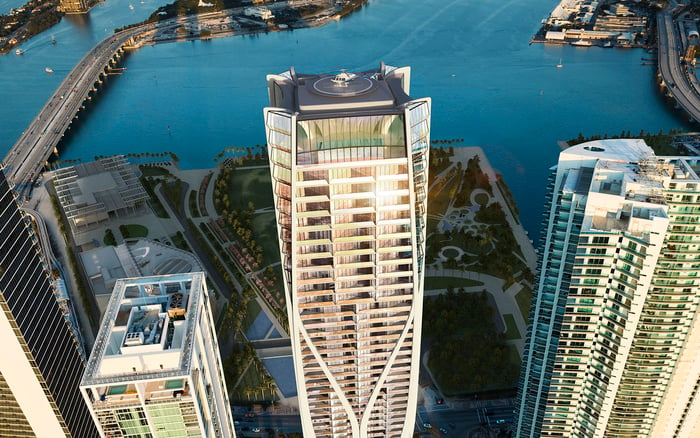
An owner’s title policy protects the buyer’s ownership interest against covered title defects. A lender’s policy protects the lender’s mortgage interest, not the buyer’s equity. That distinction matters whether the purchase is a residence at The Residences at 1428 Brickell or a single-family estate elsewhere in South Florida. Financing and ownership require separate consideration.
The objective is not simply to obtain a policy. It is to understand the insured amount, the covered risks, the exceptions that remain, and any endorsements needed for the acquisition.
Title insurance addresses covered pre-existing title defects. These can include undisclosed liens, defective deeds, forgery, and competing ownership claims, subject to the policy’s terms and exceptions. The distinction between a possible title problem and an insured title problem is essential: policy language determines whether a particular risk falls within coverage.
For a high-value buyer, that means reviewing more than the premium. Ask the closing agent to explain the proposed coverage and identify the exceptions that would remain in the issued policy. Each exception deserves scrutiny on its own terms, rather than acceptance as routine language without consequence.
Cash does not eliminate these concerns. An all-cash buyer has no lender requiring protection for a mortgage interest, but ownership risks remain. The decision to obtain an owner’s policy should therefore be evaluated independently of the decision to borrow. A purchase without financing is not necessarily a purchase without title exposure.
Florida’s rate rule requires an owner’s policy to cover the property’s full insurable value. Confirm the appropriate insured amount with the closing agent rather than assuming that a loan amount, an initial estimate, or another figure is the correct measure.
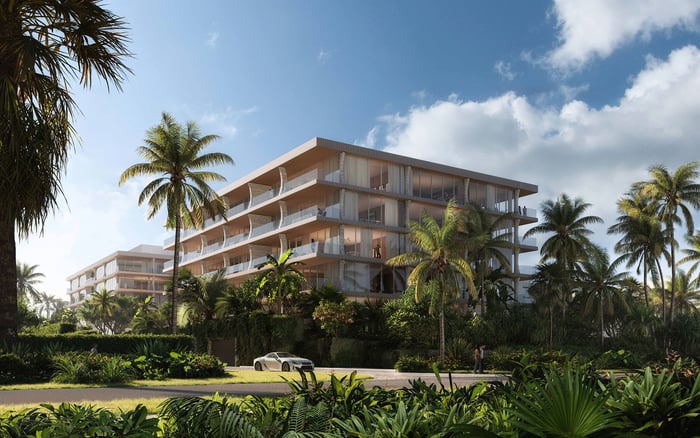
For someone considering Alina Residences Boca Raton, the practical question is the same as for any other luxury acquisition: what ownership interest and value will the proposed policy insure? The property’s appeal does not answer that question; the transaction documents and policy review must do so.
Keep valuation and scope separate. Confirming an appropriate insured amount does not establish that every concern is covered. A policy can carry the correct coverage amount while retaining an exception that matters to the buyer. Both deserve explicit attention before closing.
Florida’s title-insurance premium rates are established by administrative rule, rather than freely negotiated by individual title companies. For an original owner’s policy, the coverage tiers are:
$5.75 For each $1,000 of the first $100,000.
$5.00 For each $1,000 above $100,000 through $1 million.
$2.50 For each $1,000 above $1 million through $5 million.
$2.25 For each $1,000 above $5 million through $10 million.
$2.00 For each $1,000 above $10 million.
Applied cumulatively, these tiers produce standard original owner-policy premiums of $15,075 for $5 million, $26,325 for $10 million, and $36,325 for $15 million of coverage. These examples exclude endorsements, other closing charges, and applicable credits. They illustrate policy premiums, not complete closing costs.
The cumulative calculation matters. The highest-tier rate applies only to the portion of coverage within that tier, not to the entire insured amount. Request an itemized quote separating the base policy premium from endorsements and other charges so the proposed cost is clear.
Financed buyers should request a simultaneous-issue quote rather than assume that owner’s and lender’s policies each require a separate full premium. When both policies cover identical land and are issued simultaneously, the rule provides for a minimum $25 lender-policy premium if the lender’s coverage does not exceed the owner’s coverage.
If the lender’s policy exceeds the owner’s policy amount, the excess is charged under the applicable mortgage-policy rate schedule. The $25 figure is therefore not a universal total for every financed transaction.
A buyer evaluating Andare Residences Fort Lauderdale with financing should ask the closing agent to show how both policies are being quoted. The aim is to clarify the relationship between the policies, not to assume that one substitutes for the other. Each protects a different interest.
An endorsement amends a title policy by adding coverage or removing an exception. Buyers should not assume that every available endorsement is automatically included, or that requesting one guarantees its availability for the transaction.
Florida requires endorsements, affirmative coverages, and their applicable risk-premium rates to receive regulatory approval before issuance. The endorsement rule specifies $25 minimum charges for certain listed one-to-four-family residential endorsements and $100 for other listed risks. Those figures are not universal prices for every endorsement. Ask which endorsements are proposed, what each changes, and what each costs.
For a Miami Beach acquisition such as The Perigon Miami Beach, keep waterfront expectations separate from confirmed insurance coverage. Do not assume that waterfront rights, docks, seawalls, survey discrepancies, zoning, or permit violations are covered without reviewing the actual policy form, endorsements, and exceptions.
The same discipline applies in Surfside or West Palm Beach. A waterfront setting is a reason to ask precise questions, not evidence of broader protection. Title insurance is not comprehensive property insurance.
A useful final review returns to four essentials: the buyer’s ownership interest, the full insurable value, the exceptions that remain, and the endorsements actually included. For financed purchases, also confirm how simultaneous issuance affects the quoted premiums.
Ask the closing agent and your legal adviser to distinguish matters covered by the proposed policy from concerns requiring separate review. When a feature is central to the purchase decision, seek an explanation tied to the policy language-not a general assurance that title insurance will address it.
At the luxury level, precision is part of good stewardship. The strongest outcome is not merely a completed closing, but a clear understanding of what has been insured and what has not.
For a considered approach to your next South Florida acquisition, explore MILLION.
If branded residences are on your mind — as a home or as an allocation — we would be glad to share what we are seeing, privately.
Begin a quiet conversationIt protects the buyer’s ownership interest against covered pre-existing title defects, subject to the policy’s terms, exclusions, and exceptions.
No. A lender’s policy protects the lender’s mortgage interest, while an owner’s policy protects the buyer’s ownership interest.
Yes. Ownership risks can exist even when there is no mortgage and no lender requiring a policy.
Covered defects can include undisclosed liens, defective deeds, forgery, and competing ownership claims. The actual policy determines whether a particular problem is insured.
Florida’s rate rule requires coverage for the property’s full insurable value. Confirm the appropriate insured amount with the closing agent.
The tiered calculation produces a $26,325 premium before endorsements, other closing charges, or applicable credits.
Florida’s premium rates are established by administrative rule rather than freely negotiated by individual title companies. Request an itemized quote separating the premium from endorsements and other charges.
It is the simultaneous issuance of owner’s and lender’s policies covering identical land. When lender coverage does not exceed owner coverage, the rule provides for a minimum $25 lender-policy premium.
Buyers should not assume they are. Confirm which endorsements are proposed, how they change coverage, and their applicable charges.
No automatic coverage should be assumed. Review the actual policy form, endorsements, and exceptions before relying on protection for those concerns.