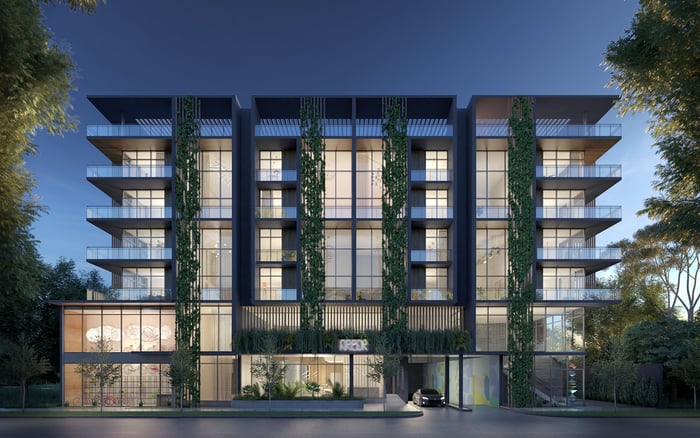
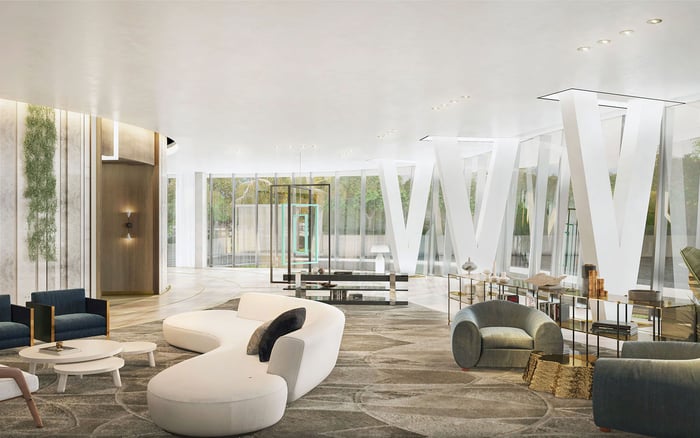
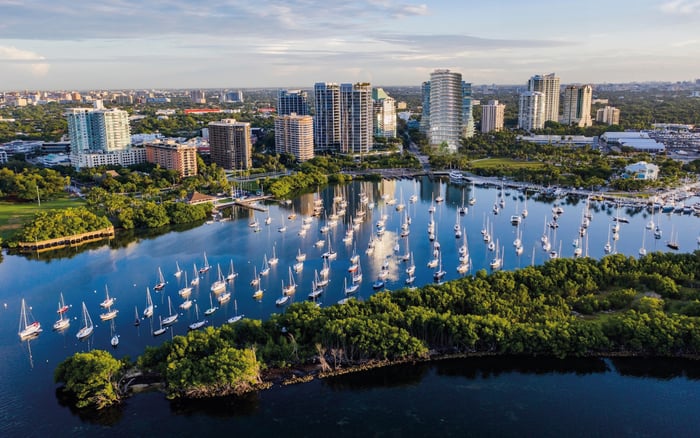
A refined wellness concept does not remove the practical demands of South Florida ownership. At THE WELL Coconut Grove, buyers should examine balcony waterproofing, drainage, penetrations, inspection planning and reserve assumptions as closely as visible finishes and amenities.
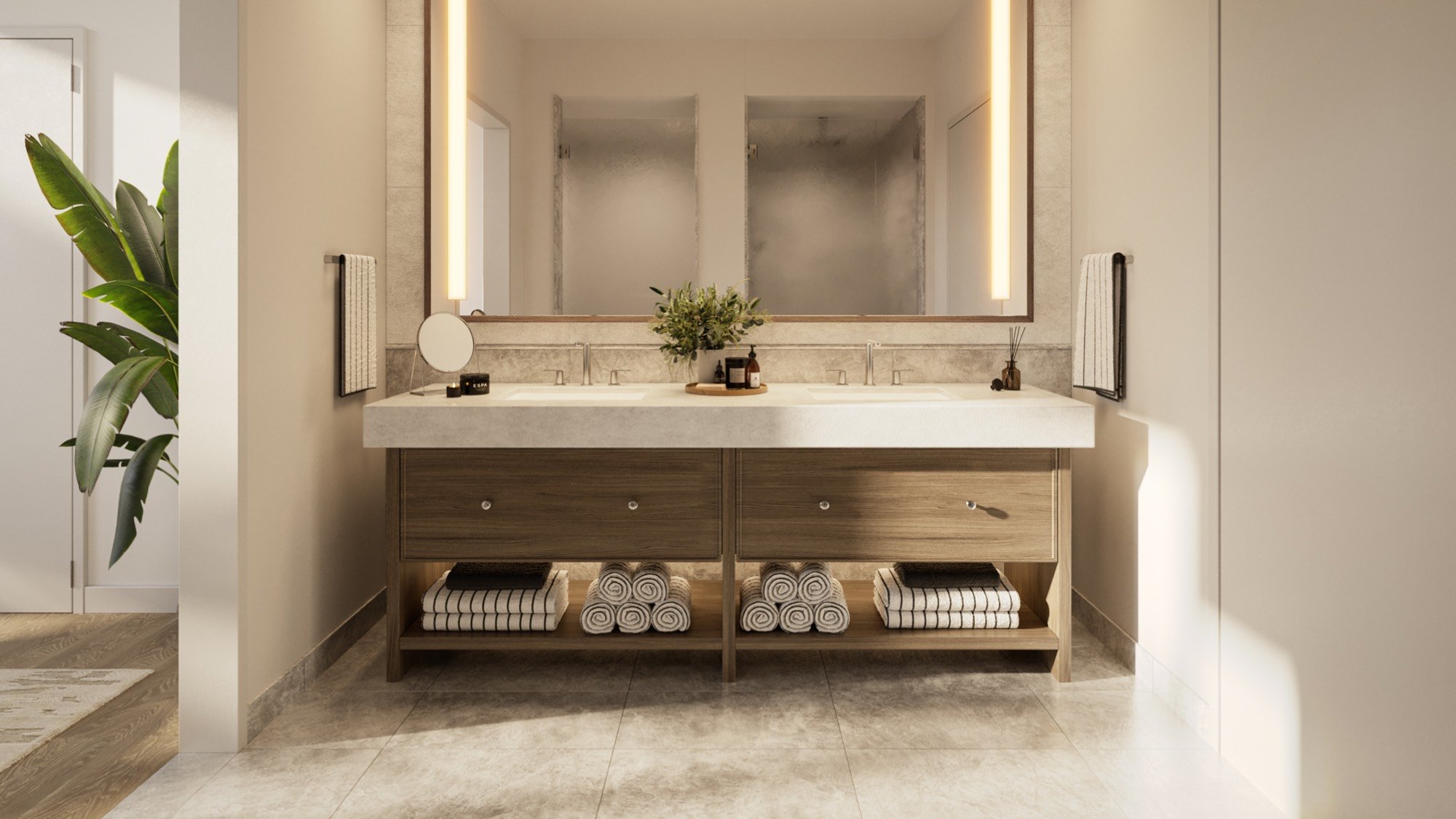
The Well Coconut Grove is planned for 2855 Tigertail Avenue as an eight-story, 194-residence development scheduled to open in early 2028. Arquitectonica is credited with the architecture and Meyer Davis with the interiors. The marketed one- to four-bedroom residences span approximately 960 to 4,200 square feet, placing the project firmly within Coconut Grove's increasingly design-conscious luxury market.
The proposition centers on wellness. Public materials emphasize air and water purification, spa and fitness amenities, and wellness-oriented design. Yet in South Florida, healthy residential design extends beyond filtered interiors. It also encompasses the less visible systems that keep water and chlorides from migrating into concrete, railing anchors, door thresholds and other vulnerable points.
For a buyer building a long-term cost model, this is neither cause for alarm nor a project-specific prediction. It is a reason for disciplined inquiry. Available project materials describe the residences and amenities but do not publish a detailed balcony-waterproofing specification or long-term reserve model. Final offering documents, project specifications, budgets, warranties and contracts should govern the analysis.
In coastal ownership, the most consequential wellness systems may be the ones hidden beneath the finish.
Airborne salt and periods of heavy rainfall can move moisture into concrete slabs and around railing anchors. On reinforced-concrete balconies, moisture and chlorides may eventually reach embedded steel. Once corrosion begins, expanding reinforcement can contribute to cracking, delamination and spalling, creating a cycle far more consequential than a surface blemish.
Waterproofing is therefore an assembly, not simply a decorative coating. Effective performance depends on full membrane coverage, positive drainage, carefully sealed penetrations at railings and doors, and detailing that limits ponding. A minimum slope of one-quarter inch per foot toward drains, with no ponding remaining 48 hours after rainfall, can serve as a diligence reference. Buyers should then confirm the project's actual design criteria in its controlling documents.
The same ownership lens applies across the Grove's luxury landscape, from Mr. C Tigertail Coconut Grove to established residential towers. These projects are not interchangeable, and no comparison should imply identical assemblies. Their shared geography simply makes envelope performance, rain management and maintenance access relevant throughout the neighborhood.
New-construction diligence should move beyond the visible terrace finish to the complete section beneath it. Ask for the proposed waterproofing assembly, substrate preparation, membrane type, protection layer and finish system. Request balcony slope and drainage details, including the location of drains, scuppers and overflow paths where applicable. Confirm how water is directed away from door thresholds and whether transitions preserve continuous waterproofing.
Penetrations warrant equal attention. Railing posts, guard systems, door frames and other attachments can interrupt an otherwise continuous barrier. Buyers should ask how these points are sealed, how they can be inspected and whether future sealant renewal can occur without extensive demolition. Access matters because even a well-designed assembly requires observation and maintenance over time.
Warranty language should identify coverage, duration, exclusions, reporting procedures and the party responsible for corrective work. The association's anticipated maintenance schedule should also address inspections, sealant renewal and eventual membrane replacement. If documents use broad phrases such as routine maintenance, counsel and a qualified building professional can help clarify what that means in scope and dollars.
This document-level approach is equally useful when assessing nearby offerings, including Four Seasons Residences Coconut Grove. Architecture, service and branding may shape the experience, but durable ownership also depends on how exterior systems are specified, funded and maintained.
After delivery, owners and boards should watch for recurring cracks, rust stains, mineral streaks, bubbling coatings, leaks below a balcony, spalling and hollow-sounding areas that may indicate delamination. A single observation does not establish a diagnosis. It should prompt timely professional assessment rather than cosmetic concealment.
A durable repair may require structural evaluation, removal of deteriorated concrete, treatment or replacement of corroded reinforcement, concrete restoration and a new waterproof membrane. Applying a fresh coating without addressing damaged concrete or reinforcement can leave deterioration unresolved beneath an improved surface.
That sequence explains why deferred work can become disproportionately disruptive. Early inspection and targeted maintenance may preserve options. Delay can allow moisture pathways and corrosion damage to expand, increasing the potential scope of access, demolition and restoration. Buyers evaluating a resale at Park Grove Coconut Grove or any coastal condominium should review current conditions alongside association records rather than assume an attractive terrace finish reveals the state of the underlying assembly.
Florida's Structural Integrity Reserve Study framework includes waterproofing among eight major structural or building-system categories for qualifying condominium and cooperative buildings. That treatment reinforces a crucial point: balcony membranes and related envelope work may affect long-term association funding, not merely annual cosmetic maintenance.
A useful ownership model separates recurring operations from periodic capital needs. It should account for inspection costs, sealant renewal, membrane replacement, concrete repair and reserve contributions. Expected service intervals should derive from project-specific specifications, warranties, observed conditions and professional analysis-not from a generic assumption applied to every coastal building.
Healthy reserves can help an association address deterioration involving concrete, balconies, roofs, elevators and waterproofing without relying as heavily on unexpected owner contributions. Conversely, Florida condominium boards may levy special assessments for costs outside the operating budget, including repairs arising from structural or reserve-study findings. For an investment purchase or second home, that possibility belongs alongside taxes, insurance, association charges and planned interior upkeep.
MILLION Buyer's Guides favor this broader view of value. The relevant question is not whether maintenance will ever occur, but whether the building has a credible inspection rhythm, realistic funding assumptions and clear responsibility for acting before small failures widen.
At THE WELL Coconut Grove, wellness amenities and refined design form the visible promise. Long-term luxury, however, also depends on dry thresholds, functioning drains, protected reinforcement and an association prepared to fund the envelope throughout its life. These elements rarely dominate a sales presentation, but they influence comfort, disruption and cost after closing.
Buyers should verify the legal address and parcel information in final contract documents, particularly because public-facing materials can vary. They should also insist that project specifications, association budgets, reserve assumptions, warranties and offering documents control over preliminary marketing descriptions.
The most sophisticated purchase decision joins aspiration with stewardship. In a salt-air climate, balcony waterproofing is not a footnote to the residence. It is part of the architecture's financial performance and a necessary line in any credible long-term cost model.
For discreet guidance on South Florida luxury real estate, connect with MILLION.
If branded residences are on your mind — as a home or as an allocation — we would be glad to share what we are seeing, privately.
Begin a quiet conversationThe project is planned for 2855 Tigertail Avenue in Coconut Grove, Miami, Florida 33133. Buyers should verify the legal address and parcel details in final contract documents.
It is marketed as an eight-story development with 194 residences and an anticipated opening in early 2028.
The marketed offering includes one- to four-bedroom layouts spanning approximately 960 to 4,200 square feet.
Moisture and chlorides can reach embedded steel and initiate corrosion. Expanding reinforcement may then contribute to cracks, delamination and spalling.
Key elements include positive drainage, full membrane coverage, sealed railing and door penetrations, and detailing that prevents ponding.
Relevant signs include rust stains, recurring cracks, spalling, mineral streaks, leaks below, bubbling coatings and hollow-sounding areas.
Not necessarily. Deteriorated concrete and corroded reinforcement may require assessment and repair before a new membrane or coating is installed.
Buyers should request assembly specifications, slope and drainage details, penetration details, warranties, inspection provisions, replacement assumptions and reserve information.
Yes. Waterproofing is included among the major categories addressed by Florida's reserve-study framework for qualifying condominium and cooperative buildings.
No. It presents a coastal ownership framework, not a project-specific cost forecast; controlling documents and qualified professional reviews should guide the analysis.