THE WELL Coconut Grove’s planned wellness amenities offer a compelling framework for multigenerational living, provided buyers distinguish shared gathering spaces from age-restricted services and confirm access rules before purchasing.
For a multigenerational household, the most useful amenity collection is not necessarily the longest. It is one that lets family members pursue different interests without making time together difficult. At The Well Coconut Grove, the planned combination of residences, fitness, movement, gathering spaces and wellness services invites a more practical reading of luxury.
The appeal is not that children, parents and grandparents would participate in every activity together. It is that one community could accommodate an energetic workout, a quiet afternoon and a family gathering within the same daily rhythm. That distinction matters: the amenity program does not establish universal access for every age group, and specialized facilities should not be treated as interchangeable family spaces.
For buyers, the central question is less about how many amenities appear on a plan than how comfortably a household could move between individual pursuits and shared time.
The approximately 40,000-square-foot rooftop is planned as an outdoor wellness setting with pools, plunges, cabanas and recreation. Its scale is notable, but the more relevant consideration for families is the variety of ways to spend time there.
Two planned pools serve distinct purposes: a low-toxin lap pool and an adjacent circular heated pool intended for muscle relaxation and circulation. Those descriptions convey the intended wellness experience, not guaranteed health outcomes. Families should not assume that either pool will permit every age group or every form of play.
Private cabanas, ergonomic loungers and an open-air kitchen offer potential places to regroup between activities. A household might value these less specialized spaces as much as the exercise facilities, particularly when one family member wants to swim and another simply wants company. Confirm reservation procedures, guest access and any restrictions before treating that scenario as part of everyday ownership.
The planned hot and cold plunges warrant separate questions about suitability, supervision and access. They should not be assumed to offer all-ages recreation.
A planned Children’s Room with indoor and outdoor wellness activities gives younger residents a place within the broader concept. For families considering a wellness-led residence, that is a meaningful inclusion: the program extends beyond adult fitness and treatment spaces.
It does not, however, establish a childcare service. Buyers should not infer drop-off arrangements, staffing ratios, supervised programming or permission to leave children unattended. Those operational questions require explicit answers.
The clearest way to assess the room is against a realistic family schedule. Ask what activities are intended, which ages may participate, whether a parent or caregiver must remain present and whether any sessions require booking or additional payment. The same questions apply to grandparents spending time with younger relatives. A dedicated room becomes genuinely useful only when its rules align with the household’s expectations.
The planned resident-exclusive fitness center and small-group movement studio provide indoor exercise options. Outdoors, a rooftop Fitness Forest and planned pickleball court broaden the choices beyond conventional gym training. Their value for families lies in offering different forms of activity, not in promising that every generation will use the same equipment or class.
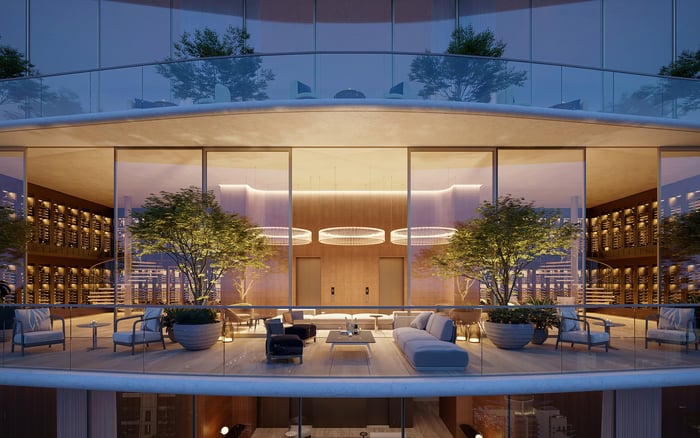
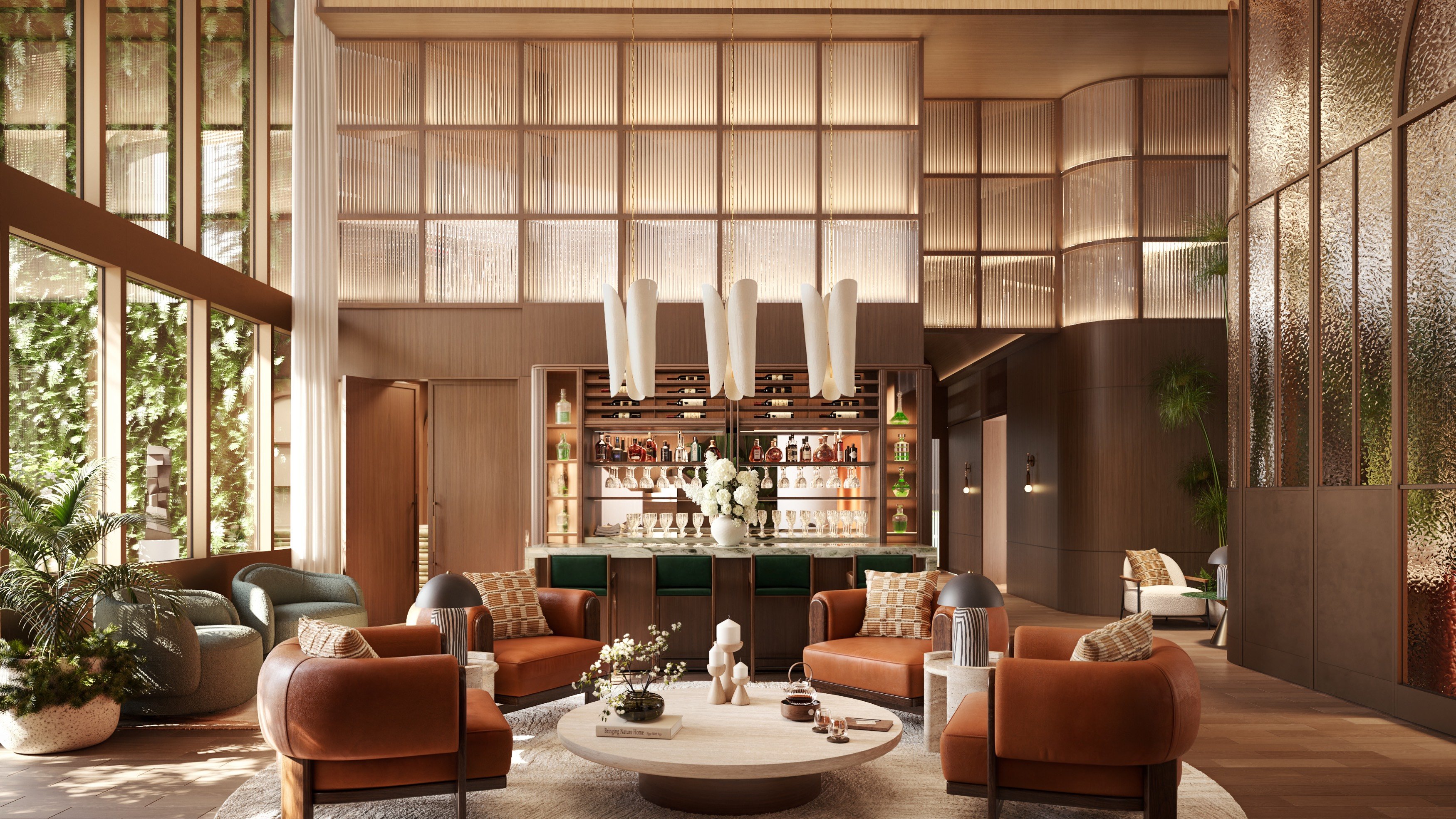
The resident-exclusive conservatory introduces a quieter setting: a double-height, glass-enclosed space overlooking an indoor-outdoor tea garden. It could appeal to buyers who want daily life in the community to extend beyond exercise.
The conservatory program also includes a wellness lounge for co-working and IV therapy, plus a Shiftwave Recovery Chair. These functions deserve separate consideration. A lounge may suggest informal time together, while treatment and recovery services require their own eligibility, booking and fee checks. Physical proximity does not make every service a shared family activity.
When considering Four Seasons Residences Coconut Grove alongside THE WELL, buyers can apply the same test: which spaces would the household actually use together, and which would serve individual routines? A project name alone cannot answer that question.
THE WELL’s residential membership offering connects homeowners with club-based fitness, movement, bathhouse and customized longevity services. The approximately 13,000-square-foot wellness club includes planned communal bathhouse experiences with steam, sauna, cold plunge and caldarium-style facilities.
The boundary between residential amenities and club services deserves close attention. Buyers should establish which spaces are reserved for residents, which may be shared with club members, what membership includes and which services carry additional charges. Ownership should not be read as an automatic entitlement to unlimited treatments or unrestricted family access.
The planned wellness team spans physicians, lifestyle coaches, nutritionists, personal trainers and movement specialists. That breadth may appeal to adults seeking coordinated support, but it does not establish pediatric services or suitability for every older adult. Individual care, age eligibility and any clinical requirements need separate confirmation. Wellness positioning is not a substitute for personal medical advice.
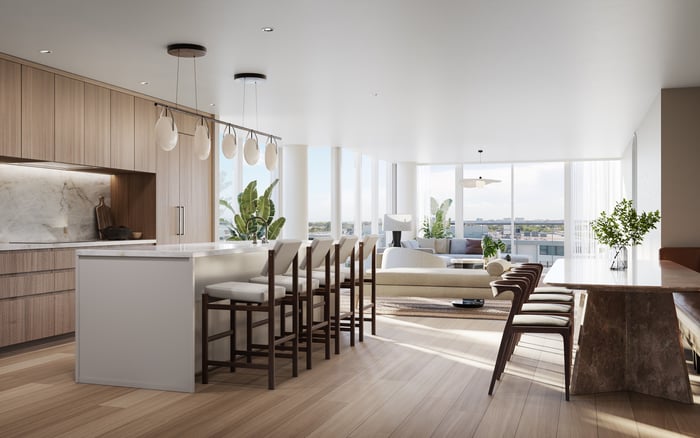
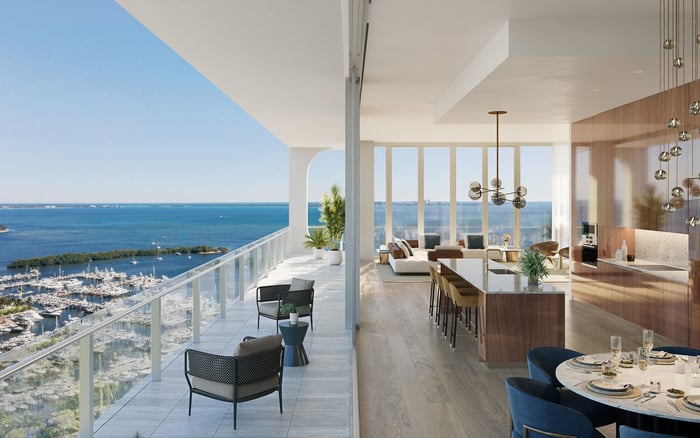
Shared amenities work best when the home itself supports different routines. All residences are planned with private balconies or terraces, while select homes include flex spaces for meditation, workouts or massage. The distinction between all and select matters when comparing floor plans.
A flex room could allow one person to maintain a private routine without making a communal facility essential to the day. A balcony or terrace offers another setting for time at home, although its practical usefulness should be assessed residence by residence. Natural light, natural materials, floor-to-ceiling glass, air purification and subtle aromatherapy form part of the residential design approach.
For buyers also considering Park Grove Coconut Grove, the useful comparison is not an unsupported amenity ranking. It is how each candidate home would accommodate privacy, visiting relatives and the family’s actual habits.
Before committing, request written clarification of age restrictions, operating hours, supervision requirements, visiting-family privileges, reservations and additional fees. Ask specifically whether grandparents, adult children and grandchildren visiting an owner receive the same access as household residents. Confirm planned amenities and their delivery expectations rather than assuming they are already operating.
THE WELL Coconut Grove’s multigenerational appeal is strongest when understood as choice with opportunities to reconnect. Different generations need not follow identical wellness routines to enjoy the same community. The purchase decision should turn on whether the eventual rules preserve that flexibility.
For a considered approach to your family’s next Coconut Grove residence, connect with MILLION.
If branded residences are on your mind — as a home or as an allocation — we would be glad to share what we are seeing, privately.
Begin a quiet conversationIts planned mix of children’s activities, fitness, quieter gathering spaces and wellness services could accommodate different routines within one community. Access for every age group is not established.
The amenities discussed are planned. Buyers should confirm delivery expectations and operational details before relying on them.
The planned Children’s Room includes indoor and outdoor wellness activities, but childcare is not confirmed. Supervision, staffing and drop-off arrangements require clarification.
Plans include a low-toxin lap pool and an adjacent circular heated pool positioned around relaxation and circulation. These descriptions do not guarantee health outcomes or all-ages access.
The rooftop is described as approximately 40,000 square feet, with planned pools, plunges, cabanas and recreational amenities.
The program includes a resident-exclusive fitness center, a small-group movement studio, a rooftop Fitness Forest and a pickleball court. Buyers should verify age restrictions and booking requirements.
The resident-exclusive conservatory is designed as a double-height, glass-enclosed space overlooking an indoor-outdoor tea garden. Its program includes a wellness lounge for co-working and IV therapy, plus a Shiftwave Recovery Chair.
All residences are planned with private balconies or terraces. Flex spaces for meditation, workouts or massage are offered only in select residences.
The residential membership offering connects homeowners with wellness services, but buyers should confirm inclusions and additional charges. Unlimited treatments or unrestricted family access should not be assumed.
Ask about guest privileges, age limits, supervision, operating hours, reservations and fees. Clarify whether visiting relatives have different access from household residents.