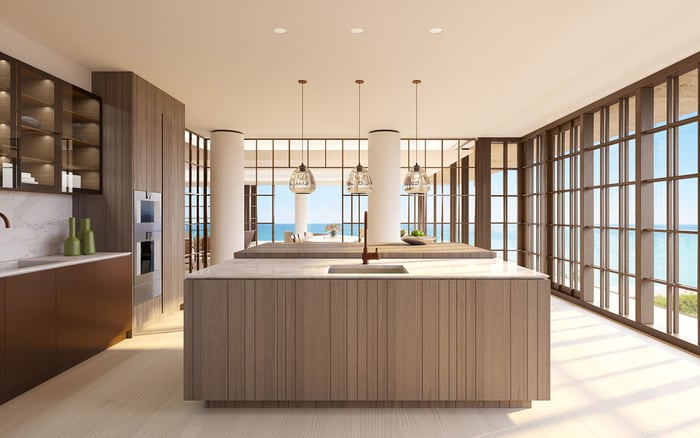
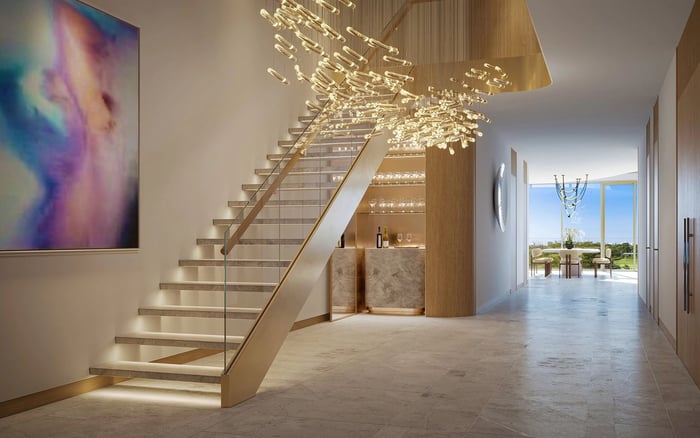
In Surfside, privacy depends on more than an elevator opening at the residence. This 2026 framework helps buyers examine access permissions, service circulation, valet performance, parking rights, equipment resilience, and the documents behind each promise.
In Surfside, private elevator access and valet service are often presented as effortless extensions of the residence. For a buyer, however, the relevant luxury lies beyond brochure language. It is the reliability of the complete journey from Collins Avenue to the front door, encompassing vehicle screening, key custody, lobby access, elevator permissions, service circulation, and backup procedures.
This entry in MILLION's Buyer's Guides treats that journey as an operating system. The objective is to establish what is physically private, what is merely access-controlled, and what happens when staffing, traffic, maintenance, or an equipment outage disrupts the ideal sequence.
The term is not standardized. It may describe a dedicated elevator car, a shared car programmed for a restricted floor, or a common car opening into a private vestibule. Each arrangement can feel discreet, but its security logic, waiting times, redundancy, and maintenance exposure differ.
At Arte Surfside, full- and half-floor residences feature direct elevator entry and fingerprint-recognition access. A buyer should still ask who can authorize or revoke credentials, whether permissions are stored locally or managed by staff, how guests are admitted, and how the home is reached when the primary passenger elevator is unavailable.
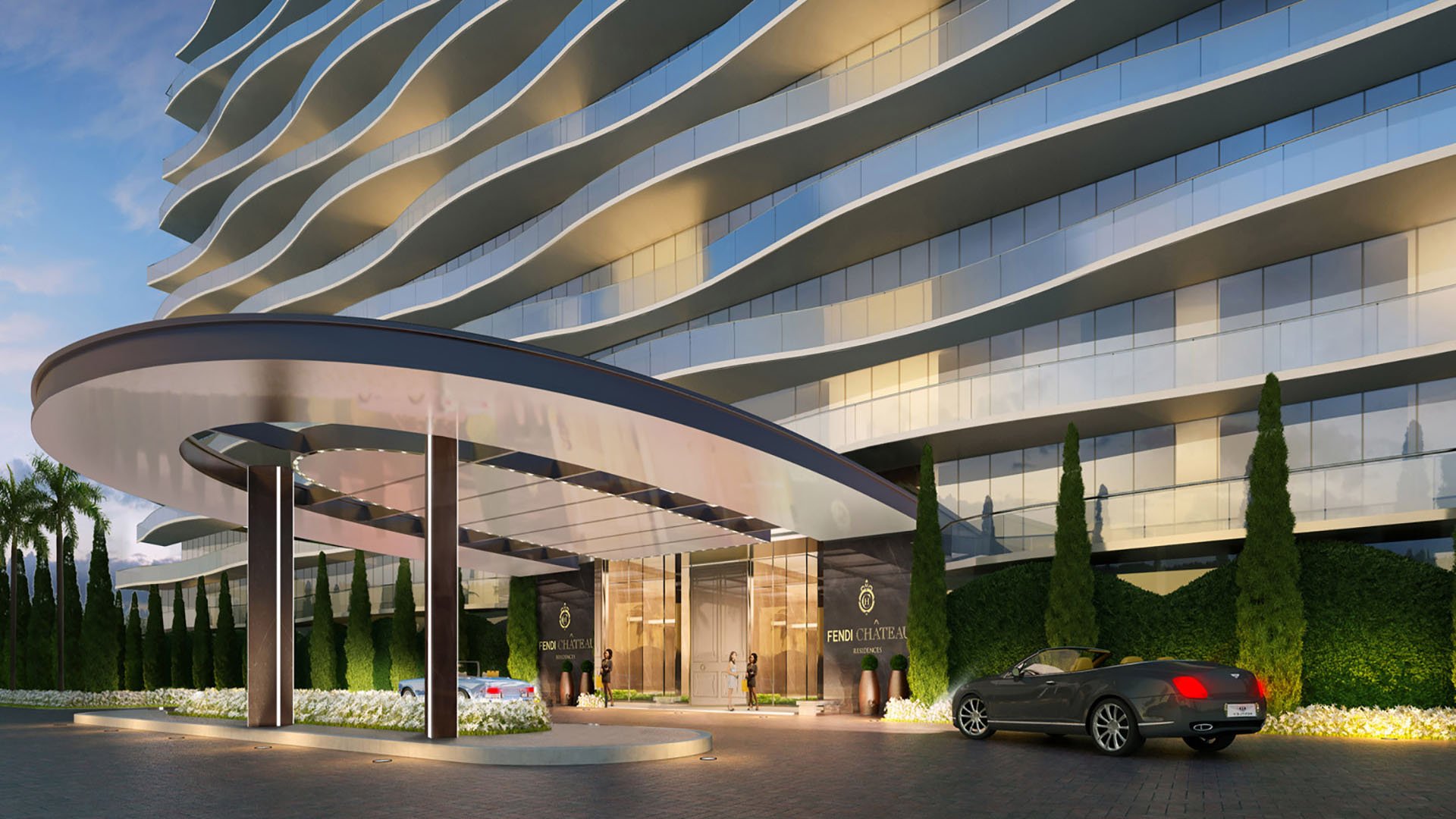
Fendi Château Residences Surfside combines private elevator entry with guard-gated access, a doorman, valet, and garage parking. That layered model makes it essential to test the handoff among the gate, porte-cochere, lobby, elevator, and residence rather than assess each feature in isolation.
Request a physical walk-through of every circulation path serving the unit. Follow the resident route, then repeat the exercise as a guest, housekeeper, contractor, food courier, and package delivery. Confirm which elevator each person uses, where screening occurs, who releases the floor, and whether a service arrival can intersect the private foyer.
At The Surf Club Four Seasons Surfside, the residential experience includes dedicated entrances, valet service, controlled elevator access, separate tower entrances and porte-cocheres, and service elevators for staff and deliveries. The property spans 9001 and 9111 Collins Avenue, making tower-specific operations material. Buyers should identify the precise passenger and service stack supporting the residence rather than rely on a property-wide description.
Emergency access also requires precision. For a full- or half-floor home, establish the alternate route during planned service, an unexpected shutdown, or an emergency response. Ask whether that route reaches the same private foyer and how management protects privacy when normal controls are bypassed.
A quiet daytime showing reveals little about evening arrivals, weekend guests, weather-related surges, or simultaneous residential and hospitality traffic. Visit at more than one time. Observe vehicle stacking, double-parking, guest screening, pedestrian conflicts, and whether residents have a distinct arrival lane or must merge with other users.
Record actual retrieval times during each visit, but do not treat a single trial as conclusive. Ask management about registered-vehicle limits, guest-car rules, extra-vehicle charges, overnight staffing, key storage, authorization for family members or drivers, and the damage-claim process. If a residence is presented with multiple-vehicle accommodation, require the applicable right and any cap to be identified in writing.
The distinction between valet convenience and parking control is essential. At The Surf Club, secure self-parking and valet parking are offered, while private locked garage spaces are limited. Availability within the building does not establish that a particular residence owns, controls, or may acquire one.
Parking language may refer to ownership, an assigned right of use, unassigned access, or valet-only accommodation. Review the declaration, unit schedule, current rules, resale contract, and management confirmation together. The documents should align on vehicle count, guest parking, oversized vehicles, storage, transfers, fees, and enforcement.
Ocean House Surfside pairs direct private-elevator access with valet, concierge service, EV charging, and bicycle storage. An EV owner should verify whether charging is assigned or shared, how sessions are scheduled, which equipment is compatible, and whether valet personnel may move vehicles into and out of charging bays.
Where a Shabbat elevator is relevant, confirm its operating schedule and the stacks and floors it serves. A building-level feature may not provide the route or timing a specific household requires.
Private access is only as dependable as the equipment and service plan supporting it. Review elevator maintenance contracts, current inspection records, incident history, downtime logs, emergency-response procedures, and the escalation protocol for after-hours failures. Identify planned modernization, reserve funding, special assessments, and insurance treatment related to elevator equipment.
For valet, examine written operating rules and staffing commitments rather than assume that advertised around-the-clock service defines every shift. Buildings with broad service rosters may still operate with different staffing levels overnight. Ask who responds when a vehicle, access credential, package, or elevator issue arises after normal hours-and what response standard applies.
Convert every material representation into a concise written schedule: elevator type, credential method, alternate access, service route, vehicle allowance, parking status, EV rights, overnight coverage, and open capital work. Compare that schedule with condominium documents, management records, and the purchase contract.
The best private-arrival experience is not merely theatrical. It is legible, repeatable, and resilient. In Surfside, that operational clarity can be as consequential to daily ownership as the view, floor plan, or finish package.
Does private elevator entry mean the elevator car is dedicated to one home? No. A shared car may have a restricted floor stop or open into a private foyer.
Which access controls should a buyer verify? Confirm whether the system uses a key fob, biometric credential, coded card, or concierge release-and who administers permissions.
What happens if the primary elevator is out of service? Identify the alternate passenger or service route and determine how privacy and security are maintained during the outage.
Should buyers inspect service elevators? Yes. Trace how staff, contractors, packages, and food deliveries reach the residence and whether they enter its private foyer.
When should the porte-cochere be observed? Visit during evenings and weekends, as well as a quiet period, to assess stacking, screening, and traffic separation under different levels of demand.
Which valet terms require written confirmation? Confirm vehicle caps, guest rules, added fees, key custody, overnight staffing, retrieval procedures, and damage claims.
Does advertised garage parking establish a deeded space? No. Determine whether parking is owned, assigned for use, unassigned, or accommodated only through valet.
What should an EV owner ask? Verify charger allocation, scheduling, access rules, compatibility, fees, and whether valet staff may move the vehicle for charging.
Which elevator records deserve review? Examine maintenance contracts, inspections, incident and downtime histories, emergency procedures, modernization plans, and reserve funding.
Is one staged tour enough for due diligence? No. Repeat the arrival and elevator journey during quiet and peak periods, then reconcile those observations with governing documents and written confirmations.
To compare the best-fit options with clarity, connect with MILLION.
If branded residences are on your mind — as a home or as an allocation — we would be glad to share what we are seeing, privately.
Begin a quiet conversation