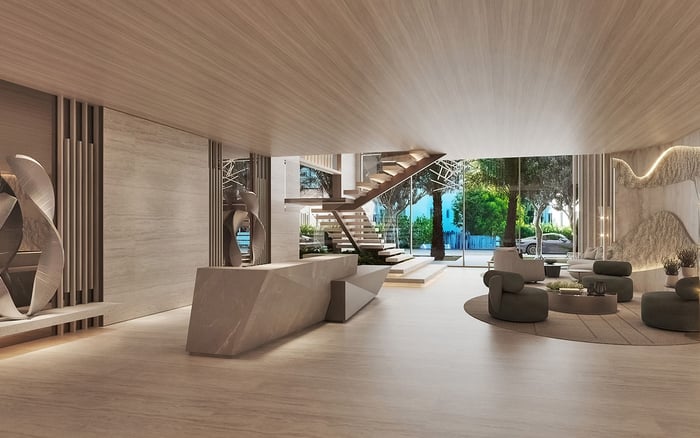
A document-led comparison framework for evaluating service, privacy, and long-term ownership cost across Origin, The Well, and Alma in Bay Harbor Islands.

Buyers comparing Origin Bay Harbor Islands, The Well Bay Harbor Islands, and Alma Bay Harbor Islands can use the same disciplined framework: What services are documented? How will access and circulation affect privacy? What expenses could shape total ownership cost over time?
Marketing language and renderings cannot answer those questions alone. A meaningful comparison should begin with the documents available for each property and distinguish confirmed terms from estimates, assumptions, and items that remain subject to change.
For each property, buyers should identify the proposed staffing model, coverage hours, management responsibilities, package procedures, guest coordination, maintenance response, and any services billed separately. The goal is to understand what the ownership structure is expected to provide in daily practice.
A useful comparison separates physical amenities from the labor and recurring expenses required to operate them. Buyers should ask who manages each service, when it is available, whether access is limited to residents, and how its cost appears in the proposed budget or other governing documents.
The same questions should be applied consistently to all three projects. A buyer should not infer service depth from design, branding, residence count, or general positioning without supporting documents.
Privacy depends on more than the number of residences. Buyers should review access controls, elevator and corridor arrangements, parking circulation, delivery procedures, guest access, amenity use, and any rules affecting occupancy or rentals.
The practical inquiry is how residents, visitors, staff, vendors, and deliveries move through the property. Buyers should determine whether entrances, elevators, parking areas, corridors, or amenities are shared and how access is expected to be managed.
These details can be organized in a side-by-side circulation map or checklist. That exercise helps translate an abstract promise of privacy into specific questions that can be answered through plans, rules, and management terms.
Purchase price and an initial association estimate do not provide a complete ownership-cost picture. A broader review should consider proposed common charges, insurance information, reserve assumptions, maintenance obligations, separately billed services, and the possibility of future capital needs or assessments.
Buyers should also identify which expenses are included, which are optional, and which could vary with usage. Where figures are estimates, the comparison should clearly label them as such rather than treating them as fixed commitments.
A five- to ten-year model can test how different assumptions affect total carry. It can include alternative scenarios for operating expenses, reserve contributions, insurance costs, maintenance, and capital work without claiming that any particular increase will occur.
The best comparison is therefore not limited to the lowest opening figure. It asks whether the available budget and reserve information appear consistent with the services, amenities, and maintenance obligations described in the project documents.
Before committing, buyers should request and review the available condominium declaration, proposed operating budget, reserve information, insurance information, management agreement, rental restrictions, access rules, and any membership or service terms. Legal and financial professionals can help interpret how those materials apply to a buyer's circumstances.
The documents should be read together because service, privacy, and cost can interact. Management terms may describe staffing responsibilities, use rules may affect traffic, and budget materials may show how proposed operations are expected to be funded.
A comparison matrix for Origin, The Well, and Alma can track documented staffing, service hours, access arrangements, shared circulation, amenity obligations, insurance information, reserves, rental rules, separately billed items, and projected total carry. Any unanswered item should remain marked as unresolved until supported by current project documentation.
Can branding determine which property offers the strongest service? No. Compare documented staffing, coverage hours, management duties, included services, and separately billed services.
Does a lower residence count guarantee greater privacy? No. Privacy also depends on access controls, circulation, guests, deliveries, amenity use, and occupancy rules.
What should an Origin buyer review first? Start with the available service plan, access arrangements, proposed budget, insurance information, reserve assumptions, and use rules.
What should a buyer ask about The Well? Ask which services and amenities are documented, who may access them, how they are managed, and how related expenses are allocated.
What should a buyer ask about Alma? Ask how staffing, access, shared spaces, operating expenses, reserves, and maintenance obligations are addressed in current documents.
Can a lower initial association estimate indicate better value? Not by itself. Buyers should compare what is included, what is billed separately, and which assumptions support the estimate.
How can buyers evaluate nonresident traffic? Review guest, rental, parking, delivery, amenity, and access rules, then identify any shared entrances and circulation areas.
Why model ownership costs over five to ten years? A longer model helps buyers test possible changes in operating expenses, insurance, reserves, maintenance, and capital needs.
Which documents are central to the comparison? Review the available declaration, proposed budget, reserve and insurance information, management agreement, use restrictions, and service terms.
How should unresolved differences among the projects be handled? Mark them as unanswered rather than making assumptions, then seek current documentation and appropriate professional review.
For a tailored shortlist and next-step guidance, connect with MILLION.
If branded residences are on your mind — as a home or as an allocation — we would be glad to share what we are seeing, privately.
Begin a quiet conversation