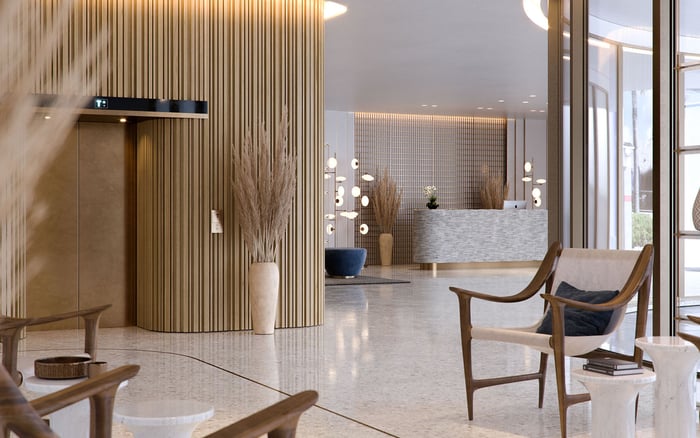
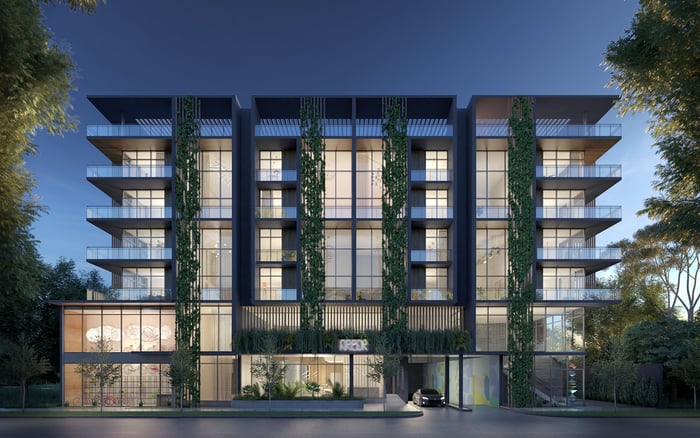
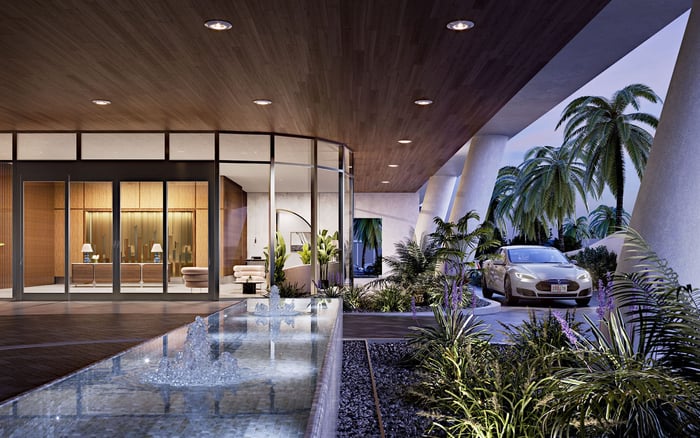
Three prominent Coconut Grove residential choices invite the same essential due-diligence questions. Buyers should compare how services operate, where privacy begins, and what the complete ownership structure costs before deciding which model best suits daily or seasonal life.
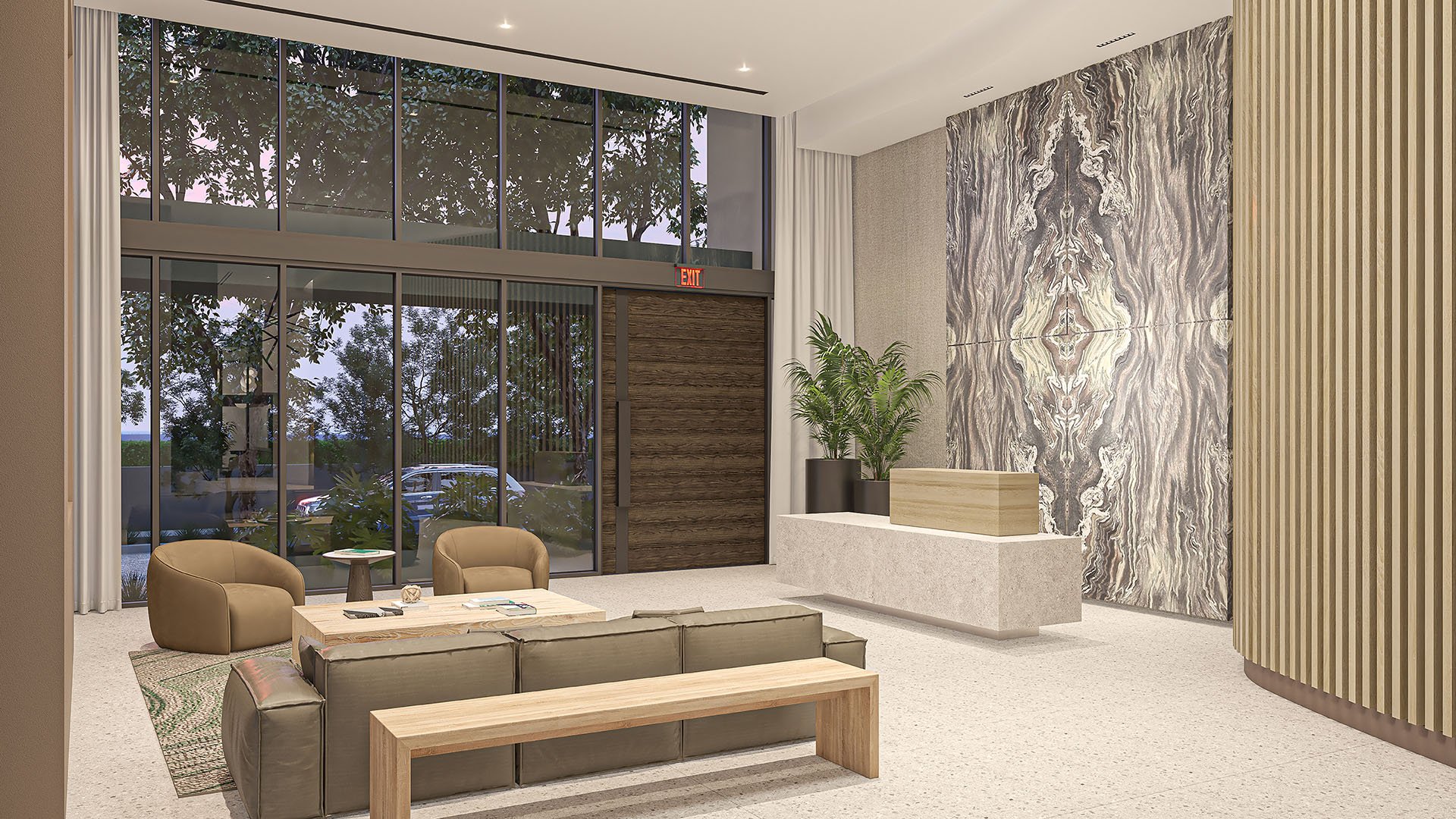
Coconut Grove buyers are choosing more than a floor plan. They are selecting an operating model: how they arrive, how guests are received, how packages are handled, which spaces feel private, and what level of service their recurring payments support.
That makes Arbor Coconut Grove, Four Seasons Residences Coconut Grove, and Park Grove Coconut Grove useful points of comparison. Their identities differ, but the decisive questions are shared. Service must be evaluated in practice, privacy traced throughout the property, and ownership cost reconstructed from current documents rather than a headline assessment.
For readers of MILLION's Buyer's Guides, the central principle is straightforward: even the most impressive feature is only as valuable as the rules, staffing, access, and budget behind it.
Arbor, at 3034 Oak Ave, offers 24-hour concierge and valet service. Its shared amenities include a courtyard pool, fitness center, social lounge, and rooftop terrace. Other conveniences include parking, storage, electric-car charging, and pet-friendly features.
Those details establish the service framework, not its daily performance. Buyers should test response times, overnight staffing, guest screening, package security, elevator procedures, parking access, and valet retrieval. Seasonal owners should also ask how the team manages prolonged absences and whether authorization protocols can accommodate family, household staff, or vendors without weakening security.
At Four Seasons Residences Coconut Grove, the brand naturally elevates expectations for concierge attention, housekeeping, arrival management, and amenity access. Buyers should confirm the precise scope of residential services in current project documents. They should also determine whether operations are standalone or shared with a hospitality component, since that distinction can shape visitor movement, valet activity, privacy, and recurring charges.
This is the essential test for Branded Residences: identify which services are included, which are optional, who delivers them, and how their costs reach the owner.
Privacy is not synonymous with a limited residence count or prestigious address. It results from thoughtful circulation and consistently enforced access rules. Buyers should follow the path from curb to residence, noting where residents, guests, staff, delivery personnel, and valet teams intersect.
Arbor offers an intimate, house-like environment with high ceilings, floor-to-ceiling windows, and flexible dens. Penthouses feature private terraces, while townhomes offer private gardens and ceilings exceeding 20 feet. Residence counts vary between 45 and 52, with the latter profile encompassing two- and three-bedroom residences, two-story lofts, townhouses, and penthouses. Current condominium and offering documents should establish the final inventory.
At Park Grove Coconut Grove, the privacy inquiry is building-specific. Buyers should establish which pools, lounges, elevators, arrival areas, and other shared spaces are reserved for residents of a particular building and which serve the wider development. A multi-building setting can offer breadth, but its access rules determine whether that scale feels expansive or busy.
Association dues are only the opening line of an ownership model. A meaningful comparison among the three properties should account for regular dues, reserve funding, insurance pass-throughs, parking or valet costs, storage charges, and any disclosed hospitality- or club-related fees. Optional services should be separated from mandatory obligations.
One three-bedroom Arbor listing identifies monthly HOA dues of $1,472. That figure should not be treated as a building-wide rate. Assessments can vary by residence size, allocation formulas, parking, storage, and other unit-specific rights. The relevant comparison is the current charge for the exact residence under consideration, together with the services and reserves it supports.
At Park Grove, buyers should review the budget and access rules for the specific building, along with any shared development obligations. At Four Seasons, they should separate included residential services from optional housekeeping or other branded offerings, then identify any charges connected to hospitality or club operations in the controlling documents.
For a second-home purchaser, reliability may justify a richer service structure. A full-time resident may place greater value on predictable access, quiet circulation, and transparent reserves. Neither preference is inherently superior, but each demands a different reading of value.
Before comparing true monthly costs, request the current budget, estoppel, reserve study, declaration, bylaws, and pending-assessment disclosures for each property. Read them together. The budget reveals current operations, while the reserve study and assessment disclosures help show whether present dues reflect the property's longer-term obligations.
Then connect the documents to the physical experience. Visit at different times, observe the arrival sequence, ask how packages are secured, and test the elevator and valet processes. Confirm storage dimensions and parking rights rather than assuming an amenity description creates a deeded or exclusive entitlement.
The best choice is the property whose operating character matches the owner's habits. Arbor may appeal through its intimacy and house-like residence types. Four Seasons may attract buyers who prioritize a clearly defined branded-service proposition. Park Grove may suit those who value the breadth of a larger luxury setting, provided its shared-space and cost structure aligns with their expectations.
What is the most important service question to ask? Ask precisely what regular dues include, what is optional, who provides each service, and when it is available.
Does a 24-hour concierge guarantee the same service experience everywhere? No. Buyers should verify staffing coverage, response procedures, guest handling, package security, and the concierge team's practical authority.
How should buyers evaluate privacy at Arbor? Test guest screening, delivery access, elevator controls, parking procedures, and valet operations, then confirm those practices against current governing documents.
What should Four Seasons buyers clarify about hospitality operations? Determine whether residential operations are standalone or shared, and how that structure affects arrivals, visitor flow, amenity access, privacy, and recurring charges.
Why are Park Grove costs potentially more complex? A multi-building development can involve building-specific budgets alongside shared amenities and expenses, making both allocation and access rules important.
Can the reported Arbor HOA figure be used for every residence? No. The $1,472 monthly figure applies to one three-bedroom listing and should not be treated as a universal building assessment.
Which documents should a buyer request? Request the current budget, estoppel, reserve study, declaration, bylaws, and all available pending-assessment disclosures for the property and specific residence.
How should parking and storage be compared? Confirm the number, location, access rights, dimensions, transferability, and recurring charges associated with each parking or storage entitlement.
Which property is best for lock-and-leave ownership? The answer depends on verified staffing, absence-management procedures, package controls, parking, storage, and the owner's preferred balance of service and privacy.
Should buyers rely on the published Arbor residence count? No. Because available counts vary between 45 and 52, buyers should treat current condominium and offering documents as the controlling reference.
For a tailored shortlist and next-step guidance, connect with MILLION.
If branded residences are on your mind — as a home or as an allocation — we would be glad to share what we are seeing, privately.
Begin a quiet conversation