Shell Bay pairs an extensive private-club wellness environment with a medical day spa and Auberge residential service. Buyers should not treat that offering as a substitute for a personal physician unless the governing documents expressly establish clinical access, scope, pricing, and accountability.

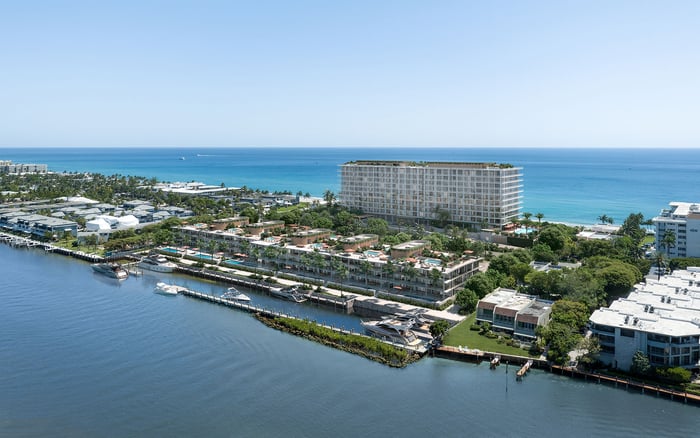
At Shell Bay by Auberge Hallandale, wellness is not a peripheral amenity. The fully gated community at 501 Diplomat Parkway in Hallandale Beach is built around a private-club lifestyle spanning golf, racquet sports, fitness, spa, recovery, and marina access. Its broader club offering includes a Greg Norman-designed 18-hole course, a 12-acre practice facility, a nine-hole par-3 course, and a 48-slip marina.
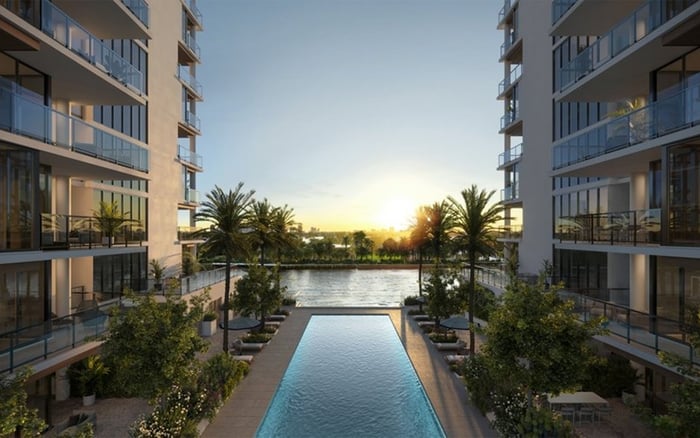
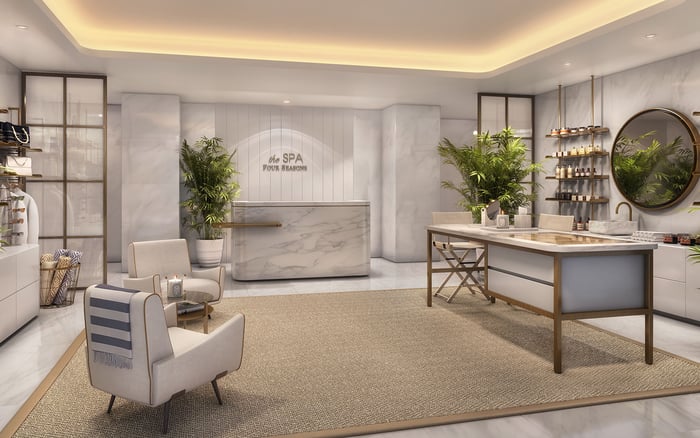
The residential proposition also encompasses 18,000 square feet of wellness and fitness amenities, indoor-outdoor workout areas, wellness specialists, spa facilities, rooftop pools, and private cabanas. Within that setting is a “full-service medical day spa.” That phrase matters: it describes a wellness amenity, but does not, on its own, establish an onsite primary-care office, urgent-care center, hospital facility, or conventional concierge-medicine membership.
A medical day spa and a personal physician relationship are not interchangeable benefits.
For a serious buyer, the question is not whether Shell Bay has a wellness dimension. It plainly does. The issue is where hospitality, performance, and recovery end-and regulated medical care begins.
The Auberge service model includes a Director of Residences, concierge support, personalized fitness and wellness assistance, room service, lifestyle help, pre-arrival provisioning, contactless valet-closet deliveries, and butler service. These privileges can make ownership exceptionally fluid, particularly for a second-home resident arriving between demanding travel schedules.
They should still be understood as residential and hospitality services. Room service is not nutritional medicine. Butler assistance is not a clinician house call. A concierge who arranges an appointment is not necessarily providing medical triage, managing records, or accepting responsibility for continuity of care. References to tailored or around-the-clock service should not be read as guaranteed 24/7 access to a doctor.
The offering does not establish a physician-retainer relationship, name a primary-care group, or identify specific medical specialties. Nor does it promise emergency response, hospital privileges, priority admission, or hospital navigation. Buyers accustomed to branded residences may recognize the service vocabulary, but healthcare language demands a more exact reading than hotel-style amenity language.
Before executing a contract, request the complete medical-day-spa menu in writing. The phrase “full-service” is no substitute for a treatment schedule. The concept is a private wellness spa with a holistic menu envisioned by experts in sports, medicine, nutrition, and wellness, yet individual procedures and clinical pathways remain undefined.
Ask for the operator’s legal name and determine whether Auberge, the club, or an independent clinical entity manages the spa. Obtain the names, professional roles, and Florida licensure details of every provider category expected to deliver medical services. Clarify who supervises treatment, holds the clinical record, and responds if a complication occurs.
The same diligence applies when comparing a club-centered proposition with nearby options such as 2000 Ocean Hallandale Beach or a hospitality-led coastal residence such as Auberge Beach Residences & Spa Fort Lauderdale. The purpose is not to assume equivalence, but to compare written service scope, operating structure, access, and cost on a like-for-like basis.
A wellness facility can operate within a private club while treatments remain appointment based, capacity constrained, or separately billed. Request written answers covering operating hours, appointment response times, resident booking priority, guest access, cancellation rules, and after-hours procedures. Ask which offerings, if any, are included in residential or club dues and which are self-pay.
Insurance participation also requires confirmation. Determine whether providers bill insurance, require direct payment, or operate through another arrangement. Ask how estimates, invoices, consent forms, prescriptions, test results, and medical records will be handled. If ownership is planned through an entity or family office, confirm who may schedule services and receive protected information.
This is especially relevant for buyers considering wellness-oriented concepts across South Florida, including The Well Bay Harbor Islands. Amenity branding can frame the experience, but the purchase decision should rest on contractual rights and current operating terms-not inference.
The offering does not include a stated promise of onsite imaging, laboratory services, chronic-disease management, pediatrics, obstetrics, oncology, or cardiology. It does not promise urgent or emergency care, an ER-style response, hospital admission assistance, or direct access to a physician at all hours. Nor does it define whether the residential concierge can coordinate telemedicine, outside specialists, private nursing, or off-property appointments.
None of these omissions diminishes the private-club wellness proposition. They simply place it in the correct category. Shell Bay’s medical day spa may provide valuable, bookable services within a sophisticated performance and recovery ecosystem. It should not automatically be treated as comprehensive care management by a personal doctor.
A buyer who needs house calls, medication oversight, chronic-care coordination, rapid specialist referrals, or hospital advocacy should expect to retain a separate concierge-medicine relationship unless signed documents explicitly provide otherwise. In every case, emergency planning should remain independent of spa access.
The most consequential advice is often the simplest: convert attractive amenity language into precise contractual answers. Follow the sales discussion with written confirmation of these points:
The medical day spa’s complete treatment menu and opening schedule.
The operator’s legal identity and applicable Florida licenses.
Provider names, credentials, specialties, and supervision structure.
Resident priority, booking windows, response times, and cancellation terms.
Services included in dues versus treatments billed separately.
Insurance participation, self-pay terms, and billing procedures.
Consent, privacy, record custody, and record-transfer protocols.
The residential concierge’s authority to coordinate outside medical care.
Any availability of telemedicine, specialist scheduling, or private nursing.
Written confirmation that emergency and hospital services are outside scope, if applicable.
The buyer should also ask what happens if the operator, provider roster, treatment menu, or hours change after closing. Determine whether a service standard appears in binding purchase or club documents or remains an operational amenity subject to revision. For golf-focused owners, the recovery ecosystem may be a compelling extension of club life. For medically complex households, it is only one layer of a broader care plan.
Shell Bay presents an unusually integrated vision of private-club living, with sport, wellness, spa, recovery, hospitality, and residential service organized around convenience. Its medical day spa belongs within that vision. The supportable interpretation, however, is access to a wellness program and bookable spa services supported by Auberge hospitality-not automatically included concierge medicine in the conventional personal-doctor sense.
That distinction allows buyers to value the amenity on its actual merits while preserving appropriate medical coverage beyond the property. Precision before closing protects both expectations and continuity of care.
For discreet guidance on evaluating Shell Bay and South Florida’s ultra-premium residences, connect with MILLION.
If branded residences are on your mind — as a home or as an allocation — we would be glad to share what we are seeing, privately.
Begin a quiet conversationNot automatically. The disclosed offering is a medical day spa within a private-club wellness program, not a defined physician-retainer membership.
No onsite primary-care practice is identified in the public project description. Buyers should request written confirmation of the precise clinical scope.
Doctor house calls are not publicly promised. Auberge concierge and butler services are presented as residential hospitality benefits.
No reviewed project description guarantees round-the-clock direct access to a physician. Continuous medical access should be arranged separately unless documents state otherwise.
Request the treatment menu, hours, provider credentials, operator identity, booking priority, pricing, cancellation terms, and record procedures in writing.
Public materials do not specify which treatments are included or separately billed. Buyers should confirm dues coverage and self-pay terms before signing.
No public amenity description promises urgent care, emergency response, ER-style services, priority admission, or hospital navigation.
Onsite imaging and laboratory services are not publicly advertised. The same applies to several forms of specialty and chronic-disease care.
The public description does not define whether concierge staff can arrange telemedicine, specialists, outside physicians, or private nurses. This should be confirmed directly and in writing.
Yes, unless signed documents provide the required clinical services. Buyers needing house calls, chronic-care management, or hospital advocacy should plan for separate coverage.