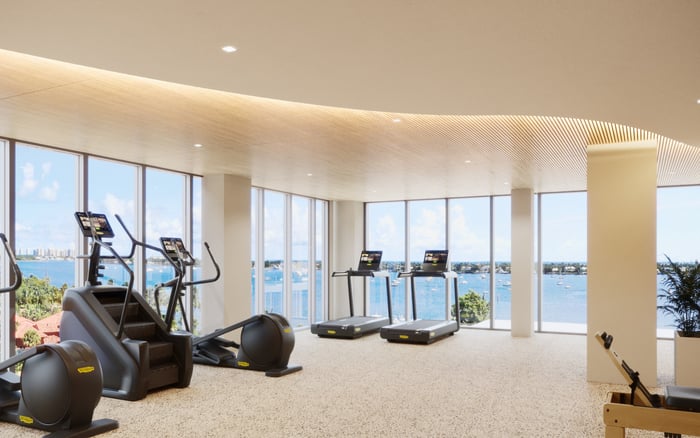
A disciplined Edgeworth West Palm Beach review separates association assessments, optional services, mandatory charges, and discretionary gratuities before estimating annual ownership costs.

At Edgeworth West Palm Beach, a buyer’s financial review should extend beyond the residence itself. The central question is not simply what an association assessment covers, but how the complete service environment could affect annual ownership costs.
A reliable answer requires written project documents. Without a final operating budget, staffing plan, service matrix, vendor schedule, and gratuity policy, a precise estimate would create false certainty. The better approach is to build a flexible model that can be updated as formal information becomes available.
Staff tipping belongs in that model, but it should not be blended casually into the association assessment. Some costs may be fixed, others may depend on service use, and certain charges may be collected by outside providers rather than the condominium association.
The real annual carry is a layered operating budget, not a single monthly figure.
A clear underwriting model divides service-related ownership costs into distinct categories.
Association assessments.
Start with the recurring amount established through the condominium budget. Review the budget and governing documents to determine which building operations, common-area services, personnel, utilities, maintenance functions, and amenity costs are included. Do not assume that every service described in marketing materials is covered by the assessment.
À-La-carte services.
Personal requests may be billed separately even when a residence offers a hospitality-oriented experience. Buyers should ask for an itemized list of optional offerings and confirm how labor, materials, administrative fees, and outside vendors are treated.
Mandatory service charges.
A charge attached to a particular service is different from a voluntary tip. The invoice or service agreement should explain whether the amount goes to the provider, is distributed among staff, or serves another purpose. Buyers should also verify whether an additional gratuity is expected, permitted, or unnecessary.
Discretionary gratuities.
Voluntary tipping can arise through repeated interactions with valet, concierge, housekeeping, porter, wellness, delivery, or guest-support personnel. Its annual effect depends on how frequently an owner uses those services and on the building’s written policy.
Separating these categories makes it easier to identify overlap, avoid double counting, and revise the model when formal budgets or service terms change.
A polished residential experience can involve association employees, management personnel, contractors, and third-party hospitality providers. Each group may operate under different payment and gratuity arrangements. A serious buyer should therefore map both the service and the party responsible for delivering it.
For each anticipated offering, ask who employs the personnel, who sends the bill, whether a service charge is automatic, and whether tipping is addressed in writing. This review is especially important when a request passes through more than one party, such as a concierge arranging a service performed by an outside provider.
The comparison with EDITION Edgewater can help buyers frame questions about hospitality-oriented residential operations, but it should not be used as a fee proxy for Edgeworth. Every condominium can have its own budget, contracts, staffing structure, and resident policies.
The objective is not to predict etiquette from branding or positioning. It is to understand how each service reaches the owner’s ledger and whether the associated payment is fixed, optional, mandatory, or discretionary.
Service use varies by owner. A part-time resident may rely on arrival assistance, valet, deliveries, home oversight, or departure support during limited visits. A full-time resident may create more frequent touchpoints through daily vehicle retrieval, recurring household requests, appointments, guests, and personal services.
Create low-, medium-, and high-use scenarios based on anticipated behavior. For each scenario, list the services likely to be used, estimate frequency without assigning unsupported project-specific rates, and note which pricing or policy details remain subject to written confirmation.
The low-use case can reflect occasional occupancy and limited personal requests. The medium-use case can account for regular stays, recurring deliveries, periodic housekeeping, and selected concierge assistance. The high-use case can include frequent valet interactions, repeated personal services, guest coordination, wellness bookings, and home oversight during travel.
A discretionary reserve can then be added to each scenario after the applicable tipping policy is known. This method is more useful than applying a universal percentage because it ties the estimate to actual habits and reduces the risk of treating a voluntary custom as a contractual expense.
The draft operating budget is the starting point. Review how management, security, concierge, valet, housekeeping, maintenance, and amenity operations are categorized. If several functions appear under one line, request clarification about what that category includes.
Next, obtain a written service matrix. It should help the buyer distinguish association-funded operations from separately billed requests and third-party services. For each optional offering, ask whether the stated price includes labor, supplies, administrative fees, service charges, taxes, or gratuity.
Valet warrants a focused review because usage can vary significantly by household. Ask what the assessment covers, whether vehicle or guest limitations apply, whether separate charges may arise, and how staff gratuities are handled. Apply the same review to package assistance, housekeeping, move support, wellness appointments, pet-related requests, deliveries, and home oversight.
Finally, request the current gratuity policy or written confirmation that the issue remains to be determined. Ask whether voluntary holiday contributions, pooled gratuities, direct tipping, vendor-added charges, or no-tipping rules are addressed. Written answers are more dependable than assumptions based on another residence or on general hospitality customs.
South Florida buyers often compare several residences while evaluating service and annual carry. Alba West Palm Beach may be part of a broader West Palm Beach review, while EDITION Edgewater can provide another point of comparison within the regional luxury market.
Those comparisons are useful for identifying questions, not transferring answers. A buyer should not import another project’s assessment, staffing pattern, vendor terms, gratuity culture, or service charges into an Edgeworth model. The relevant figures and policies must come from Edgeworth’s own applicable documents.
When comparing projects, use the same worksheet for each one. Track assessment-funded functions, optional offerings, mandatory fees, personnel arrangements, tipping terms, and the buyer’s expected usage. A consistent framework reveals meaningful differences without relying on unsupported assumptions.
The serious buyer’s task is to convert a service promise into a documented ownership model. That means reviewing the operating budget, identifying separately billed services, distinguishing mandatory charges from voluntary gratuities, and testing how different occupancy patterns affect annual costs.
Until each relevant term is confirmed, the model should show open items rather than false precision. This approach allows a buyer to appreciate attentive service while remaining clear about which expenses are contractual, usage-based, or discretionary.
For private guidance on evaluating Edgeworth and other South Florida residences, connect with MILLION.
If branded residences are on your mind — as a home or as an allocation — we would be glad to share what we are seeing, privately.
Begin a quiet conversationThe two categories may follow different rules and may not be collected by the same party. Keeping them separate also helps prevent double counting.
The model separates association assessments, à-la-carte services, mandatory service charges, and discretionary gratuities.
No. The operating budget, governing documents, and service matrix should identify what the assessment covers.
Association employees, contractors, and third-party providers may follow different billing and gratuity arrangements.
Buyers should match a discretionary reserve to expected occupancy and service use after reviewing the applicable policy.
They should ask who receives the charge, whether it is distributed to staff, and whether an additional gratuity is expected or permitted.
It should address what the assessment covers, any vehicle or guest limitations, possible separate fees, and the applicable tipping policy.
The draft operating budget is the starting point because it shows how building operations and personnel are categorized.
No. Another project can help frame questions, but its costs and policies should not be imported into an Edgeworth model.
They should remain clearly marked as open items until project documents or written responses provide the necessary terms.