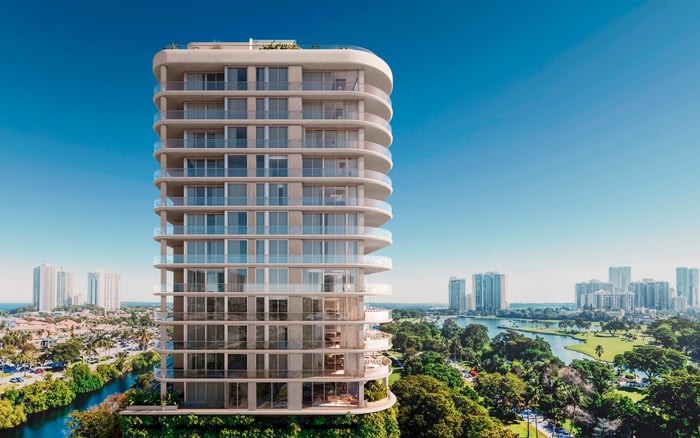
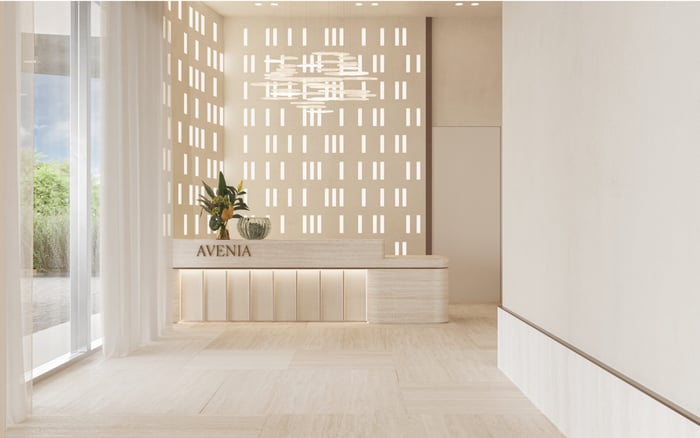
A document-led guide to evaluating service promises, warranty rights, turnover timing, complaint channels, and potential owner recourse at Avenia Aventura.

At Avenia Aventura, the central question for a serious buyer is not whether the service vision is compelling, but whether each element of that vision appears in a document that defines an obligation, allocates its cost, and provides a path to enforcement. The condominium is marketed as a development of Aventura Harbor Property, LLC, with the offering made only through the developer’s offering documents.
That distinction should guide the entire review. Renderings, presentations, and promotional descriptions may communicate an intended experience, but the declaration, purchase agreement, prospectus, bylaws, rules, and related offering documents control the purchaser’s rights. For buyers studying Aventura, this is the first filter through which every service representation should pass.
The strength of a complaint depends less on disappointment than on the obligation that can be identified.
Not every lapse falls into the same legal category. Inconsistent concierge coverage, delayed valet service, reduced housekeeping, inadequate staffing, or uneven amenity operations may constitute an association-service concern. That does not automatically make the issue a construction defect. The appropriate response ordinarily depends on the declaration, bylaws, adopted budget, board decisions, rules, and applicable service contracts.
A malfunctioning building system requires a different analysis. Defective mechanical, electrical, or plumbing work; problems involving a roof or structural component; and defects in specified common elements may implicate statutory warranty protections. A problem confined to a residence may support an individual claim, while a condition affecting shared infrastructure or common areas may make the condominium association the appropriate claimant.
This distinction matters throughout the new-construction and pre-construction market. A buyer comparing Avenia’s governance structure with One Park Tower by Turnberry North Miami and Bentley Residences Sunny Isles should ask the same disciplined question: Is the concern about hospitality execution, a breached governing obligation, or a physical defect?
Create a written matrix of every service that materially influences the purchase decision. For each item, identify where it appears, who is responsible for delivering it, how it is funded, whether a third party is involved, and what rights exist if performance falls short. This exercise turns an appealing but general promise into a reviewable operating commitment.
A marketed service may be a binding obligation, an association-funded offering, a third-party arrangement, or an illustrative representation. Those categories are not interchangeable. Determine whether concierge hours, valet operations, housekeeping scope, amenity access, staffing levels, and service charges are fixed in controlling documents or left to future budgets and board discretion. Also confirm how common expenses may be assessed. An owner’s liability for those expenses is limited to amounts assessed in accordance with Florida condominium law, the declaration, and the bylaws.
Investment discipline requires testing both the quality of a promised service and the durability of its funding. A sophisticated buyer should understand whether a service can be revised, rebid, reduced, or discontinued-and which body has authority to make that decision.
Before purchasing, request the declaration, bylaws, rules, current and proposed budgets, purchase agreement, prospectus, and all other offering documents. Add available service agreements, written warranties, turnover records, and recent board minutes. Review these materials together rather than in isolation, because responsibility may be divided among the developer, association, manager, vendor, contractor, and manufacturer.
The budget can reveal whether the lifestyle being presented has a defined financial foundation. Service agreements can establish scope, renewal terms, and responsibility. Board minutes may show recurring operational issues or decisions affecting staffing and amenities. Warranties may provide a separate route for addressing defective installed equipment.
This approach is equally useful when considering service-led residences elsewhere in South Florida, including St. Regis® Residences Sunny Isles. The objective is not to assume that documents are identical across projects, but to compare each property based on the precision of its commitments, governance, and remedy structure.
Florida condominium law provides purchasers with an implied developer warranty of fitness and merchantability for the unit’s intended uses. For an individual unit, the statutory warranty generally extends for three years from completion of the building containing the unit or one year from transfer of the unit to the purchaser, whichever occurs later, subject to the statutory outside limit.
Specified common elements, structural components, roofs, and mechanical, electrical, and plumbing systems also receive warranty protection. Their coverage periods can vary, however. A buyer should never assume that the deadline for a unit condition also governs a common-element or equipment claim.
Warranty duration and the deadline for filing litigation are separate timing questions. Completion, transfer, and turnover dates can each matter, so a potential defect should be reviewed promptly. When shared systems are involved, owners should also determine whether the association, rather than an individual unit owner, has the authority to pursue the matter.
Turnover changes who controls association operations and who receives required property and records. At that stage, the developer must deliver still-effective written warranties from contractors, subcontractors, suppliers, and manufacturers. Those materials may be important to claims involving installed equipment or building systems.
Ask for the anticipated turnover schedule, the current control structure, and the process for transferring records. An owner-controlled board is generally better positioned to examine vendor performance, review association records, retain appropriate advisers, and coordinate claims affecting multiple owners. Turnover does not itself establish that a claim exists, but it can materially improve the association’s ability to investigate one.
If a service standard falls short, begin with precise written notice to management. Identify the date, location, people involved, recurring nature of the issue, and the exact declaration provision, rule, budget item, contract term, or warranty believed to apply. Preserve photographs, communications, invoices, meeting records, and responses.
For association-controlled services, the practical escalation path typically proceeds through management, the board, association meetings, and rights established by the governing documents and Florida condominium law. Ask that the issue be acknowledged, investigated, and addressed within a stated period. If the concern is widespread, coordinated owner participation may help the board determine whether the matter is operational, contractual, or physical.
Avoid framing the case solely as a failure to deliver luxury. Luxury is a market position, not a self-executing remedy. The stronger position identifies the specific obligation, the responsible party, the evidence of nonperformance, and the relief requested.
Before committing, have current project materials reviewed by qualified Florida condominium counsel. Confirm which promises survive in the controlling documents, who pays for each service, what the board can alter, which warranties apply, when they expire, and whether the association or owner must assert a claim. The result is not merely defensive due diligence, but a clearer understanding of how the residential experience will be governed after closing.
For private guidance on evaluating Avenia Aventura and other South Florida residences, connect with MILLION.
If branded residences are on your mind — as a home or as an allocation — we would be glad to share what we are seeing, privately.
Begin a quiet conversationThe declaration, purchase agreement, prospectus, bylaws, rules, and other offering documents should be treated as controlling rather than promotional materials.
Not automatically. Recourse usually depends on the governing documents, adopted budget, board decisions, rules, and relevant service contracts.
A stronger complaint identifies a specific obligation, the responsible party, evidence of nonperformance, and the requested remedy.
Request the offering documents, declaration, bylaws, rules, budgets, available service agreements, warranties, turnover records, and recent board minutes.
Yes. Developers are deemed to provide purchasers an implied warranty of fitness and merchantability for the unit’s intended uses.
It generally runs for three years from building completion or one year from transfer to the purchaser, whichever occurs later, subject to the statutory outside limit.
No. Warranty periods vary by the property, component, or system involved, and litigation deadlines are a separate timing issue.
When a defect affects common elements or shared infrastructure, the condominium association may be the appropriate claimant rather than one owner acting alone.
Turnover shifts operational control and required records to the owner-controlled board, which can improve oversight of vendors, warranties, and association-wide claims.
Keep dated written complaints, photographs, communications, invoices, meeting records, responses, and the governing provisions believed to apply.