A disciplined buyer’s guide to Arbor Coconut Grove, separating advertised association fees from verified capital obligations and aligning cash-flow planning with a future resale.
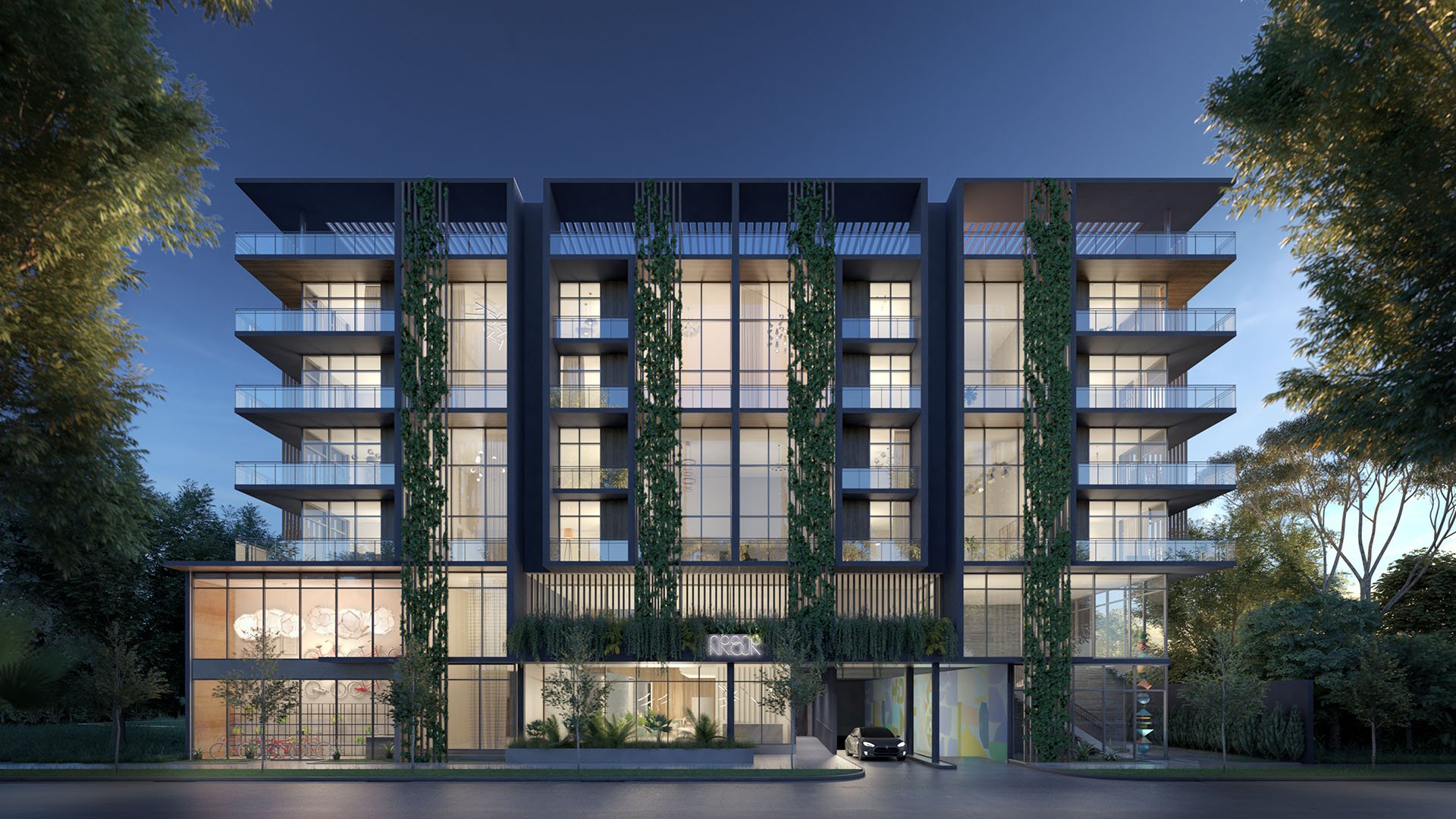
At Arbor Coconut Grove, the purchase decision begins with a boutique address: 3034 Oak Avenue, Miami, FL 33133, and a condominium of 45 residences. For a serious buyer, however, the financial questions extend beyond the asking price. What capital commitments could accompany ownership, when might payments fall due, and what would a future purchaser need to understand?
Arbor received its Certificate of Occupancy in 2026, with move-ins underway. The building’s reported 80%-sold figure refers to that milestone, not a current inventory count. Neither completion nor sales momentum establishes whether future capital needs are fully funded.
The essential distinction is between a residence ready for occupancy and an ownership budget ready for scrutiny. A capital-project funding plan should connect scope, cost, funding sources and payment dates. Its implications for cash flow and resale depend on those details-not a general assurance that the building is new.
Begin with the exact residence under consideration. Unit 508 was advertised at $1,918,000, with a listed monthly association fee of $1,472. That fee annualizes to $17,664 before taxes, insurance, financing or separate assessments. Its listed tax amount was unavailable, so the advertised figures do not establish a complete ownership budget.
A fifth-floor four-bedroom residence had an advertised monthly association fee of $3,676, equivalent to $44,112 annually. These are separate unit examples, not interchangeable estimates or a verified building-wide fee range.
An advertised project average of $1.04 per square foot monthly provides preliminary context, not a verified association budget. Do not substitute it for the amount applicable to a particular residence.
Request written confirmation of the current fee, its effective date, what it includes and any approved changes. Then add property-specific tax guidance, insurance quotations and financing terms. Keep recurring charges separate from one-time obligations: a manageable monthly figure should not obscure a larger cash requirement.
Arbor’s 45-residence scale makes the allocation of shared expenses an important diligence question. Do not divide a hypothetical building expense equally by 45 unless the governing documents establish that approach. Ask which allocation applies to the residence and whether different expense categories receive different treatment.
The central document request should cover:
The adopted operating budget and current financial statements.
Reserve balances, contribution schedules and any available reserve study.
Any approved capital-project scope, budget and payment schedule.
Relevant meeting minutes, assessment notices and borrowing documents, if applicable.
Written confirmation of obligations associated with the specific unit.
These are matters to investigate, not indications that Arbor has inadequate reserves, a pending assessment or an approved capital project. Nor should a completion milestone be treated as proof of a fully funded plan.
Ask the association’s representatives to distinguish adopted commitments from proposals. Have counsel review the governing documents and explain applicable requirements without assuming that a particular reserve rule or deadline applies.
If a capital project is identified, look beyond its total budget. Request the proposed start and completion dates, payment milestones, contingency allowance and basis for the cost estimate. An approved contract and a preliminary estimate should not carry the same weight in a purchase decision.
Then trace each funding source. How much would come from existing reserves? How much would require future contributions, an assessment or borrowing? If reserves would be used, what balance would remain, and what replenishment is contemplated?
If borrowing is proposed, ask about interest, repayment terms, fees and how payments would be passed on to owners. Spreading an obligation over time may change liquidity needs without reducing total cost.
For buyers also considering Park Grove Coconut Grove, apply the same document-based comparison. Compare verified obligations and payment timing rather than assuming that a lower advertised association fee means lower ownership costs.
A useful stress test separates affordability from payment timing. The following illustration is entirely hypothetical; it does not describe an Arbor assessment or funding proposal.
Assume a buyer faces a $24,000 capital obligation. Paid upfront, it requires $24,000 of immediate liquidity. Spread evenly over 24 months without interest or fees, it requires $1,000 monthly. Using unit 508’s advertised fee solely as an illustrative baseline, combined association and hypothetical capital payments would total $2,472 monthly during that period, or $29,664 annually.
This remains a partial ownership calculation. Taxes, insurance, financing and other costs are excluded. Installments are not assumed to be available at Arbor, and actual allocation or financing terms could produce a different result.
The practical question is whether an unexpected payment would require selling investments, changing financing or postponing another commitment. Set a liquidity cushion based on personal circumstances, not an unsupported estimate of total monthly ownership costs.
No Arbor-specific resale discount, premium or optimal exit date is established here. Instead, evaluate how a potential sale would intersect with any documented obligation.
Before approval, a proposed project may leave scope and cost unresolved. After approval, the payment schedule may become clearer, while construction timing remains relevant. After completion, buyers can evaluate the finished work, but outstanding payments or reserve replenishment may still require attention. These are decision scenarios, not Arbor’s confirmed project sequence.
Ask counsel to establish how any outstanding obligation would be addressed in the sale contract and closing documentation. Compare the cost of waiting with the value of presenting a clearer financial picture. Clarity can support an informed negotiation; it does not guarantee a higher price.
If Four Seasons Residences Coconut Grove is also on the shortlist, apply the same holding-period analysis without presuming equivalent fees, funding structures or resale outcomes.
Keep pricing context tied to its date. Arbor’s remaining inventory was advertised from $1.7 million in March 2026 and from $1.8 million in an August 2026 snapshot. Those figures do not establish appreciation or today’s availability. Likewise, the advertised project average of $1,294 per square foot represents asking prices, not completed sales.
Before committing, reconcile the residence’s asking price with verified recurring charges, any documented capital obligations and the intended holding period. Request updated figures before closing, and have advisers address unresolved payment responsibilities in the transaction documents.
The objective is not to avoid every future expense. It is to understand which obligations are known, which remain conditional and how each could affect the freedom to hold or sell.
For a discreet conversation about evaluating Arbor within your Coconut Grove search, connect with MILLION.
If branded residences are on your mind — as a home or as an allocation — we would be glad to share what we are seeing, privately.
Begin a quiet conversationArbor Coconut Grove is located at 3034 Oak Avenue, Miami, FL 33133, in Coconut Grove.
Arbor contains 45 residences. Project marketing describes two- and three-bedroom homes.
Arbor received its Certificate of Occupancy in 2026, with move-ins underway. That milestone does not establish the status of capital-project funding.
An Arbor-specific special assessment is not established here. Buyers should request current association documents and written confirmation of unit-specific obligations.
Unit 508’s advertised association fee was $1,472 monthly, or $17,664 annually. This excludes taxes, insurance, financing and any separate assessments.
No. The advertised average of $1.04 per square foot monthly is preliminary context, not a verified association budget or confirmation of a particular unit’s charges.
Request the adopted budget, financial statements, reserve information and any available reserve study. Also request applicable project approvals, assessment notices, borrowing terms and unit-specific payment details.
A hypothetical $24,000 obligation requires either that amount upfront or $1,000 monthly over 24 months without interest or fees. Neither the assessment nor installment availability is established for Arbor.
No. The $1.7 million March and $1.8 million August starting prices are dated advertising snapshots, not evidence of completed-sale appreciation or current availability.
There is no established Arbor-specific optimal exit date. Compare any documented payment obligations and completion schedule with the cost of holding, without assuming completion guarantees a resale premium.