For South Beach buyers who entertain during Miami's busiest event weeks, residential luxury depends on more than a dining room. Written catering permissions, discreet service routes, confirmed staffing, and transparent event charges deserve a place in acquisition due diligence.
A South Beach residence can provide a beautiful setting for dinner while leaving the practical questions unanswered. During Miami's global event calendar, the real test is whether a chef, service team, deliveries, and guests can arrive on an approved schedule without compromising the household's privacy or neighboring residents' comfort.
For buyers considering Apogee South Beach, the useful exercise is to present management with a realistic hosting scenario before purchase: the intended date, guest count, catering arrangement, and setup requirements. This is a diligence recommendation, not a statement about the property's rules. Apply the same discipline to every candidate residence.
The strongest hosting plan is one management can approve in writing. An assurance that entertaining is possible matters less than confirmation of who authorizes it, what it costs, and how service reaches the apartment.
At 1 Hotel & Homes South Beach, advertised residential hospitality services include 24-hour in-home dining with signature menus, catering, private-chef services, and event planning for private meetings, events, or functions. This is a concrete example of residential hospitality support. Some services are offered à la carte, so availability should not be confused with inclusion in regular residential charges.
Nor does an advertised catering service establish unrestricted access for an owner's outside chef. Ask whether management distinguishes among in-home dining, an independently engaged caterer, and a private function involving additional staff or shared spaces.
When evaluating Setai Residences Miami Beach, request the same written distinctions rather than assuming another property's advertised services or permissions apply. The questions are specific: Is outside catering permitted? Who approves vendors? What documentation is required? Does approval cover one occasion or remain valid for future bookings?
Also ask who will coordinate the evening. A concierge introduction, an event-planning engagement, and an operational commitment to deliver service are different arrangements. Establish the responsible contact and the scope of that person's authority.
The service corridor deserves as much attention as the reception room. Ask management to walk through a proposed delivery from vehicle arrival to kitchen, then trace the return route for equipment and waste. Do not assume that a service entrance or freight-elevator reservation will be available on the desired date.
A useful review covers four practical points:
Confirm where vendors check in and where deliveries may wait.
Ask which corridors and elevators may be used, and during what hours.
Establish whether equipment staging and temporary storage are permitted.
Confirm the approved timing for cleanup and collection after guests leave.
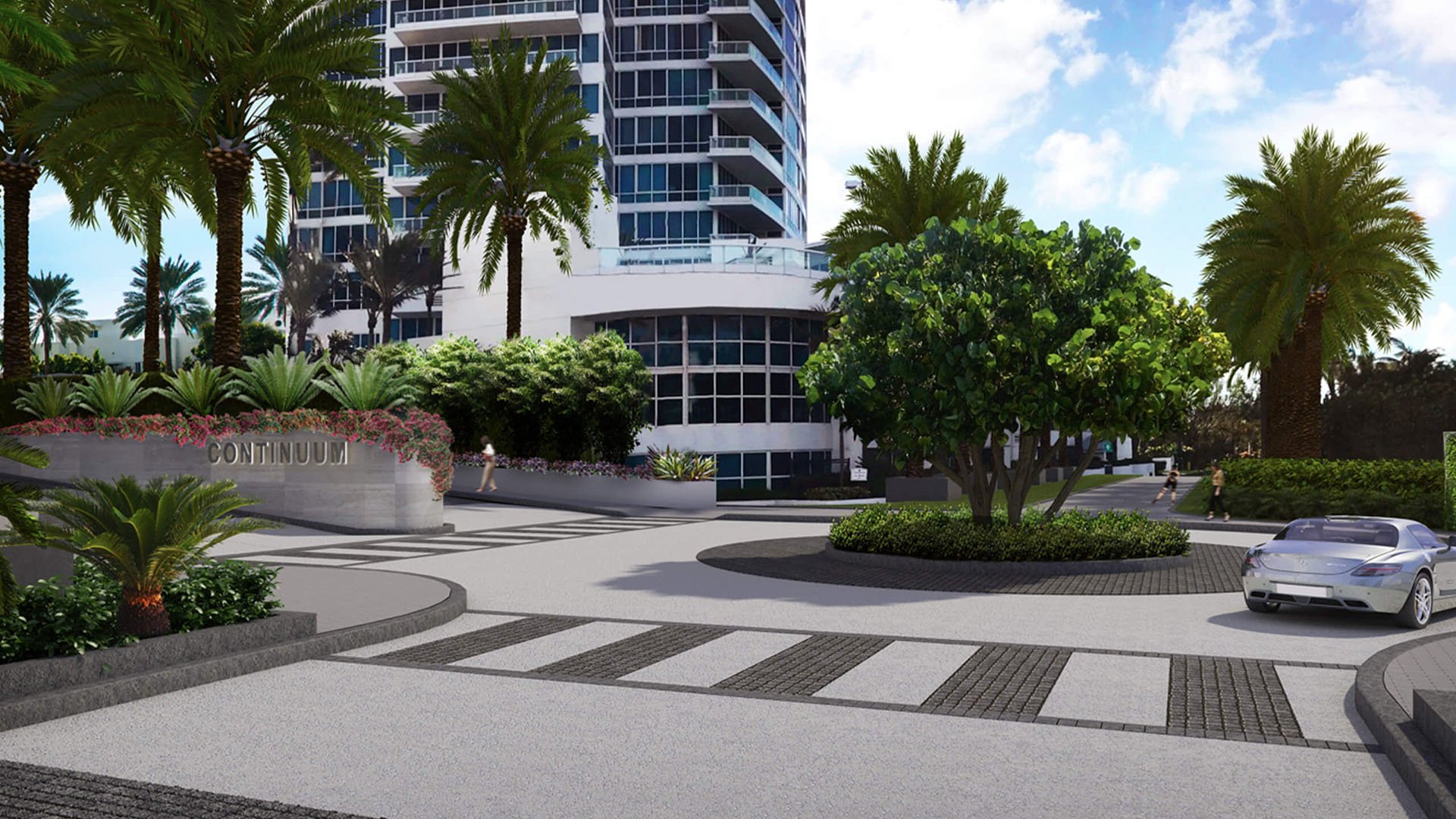
For a buyer considering Continuum on South Beach, request this walkthrough as a diligence exercise; do not treat it as an inferred amenity. Management must confirm building-specific routes, freight access, and reservation terms.
Ask the caterer to review the proposed route as well. The goal is to identify operational conflicts before committing to a menu or equipment order. A polished evening begins with a workable arrival and departure plan.
Planning estimates for Miami hospitality staffing place baseline service at $24-$35 an hour, inclusive of W-2 employment costs, insurance, and payroll taxes. Estimated peak-demand premiums run approximately 30-50% above baseline during November-March periods, including Art Basel and boat shows, and June event clusters.
These figures are planning estimates, not binding quotes or condominium charges. They cover different roles and pricing contexts; the ranges should not be treated as interchangeable or automatically combined.
For setup and logistics, planning figures place general labor, registration, warehouse/logistics, and crowd-control roles at $33.50-$39.50 an hour, with four-hour minimum shifts. Estimates for team leads and supervisors are $43.50-$49.50 an hour with the same minimum. Separate estimates place specialized hospitality/bar and event roles at approximately $50-$70 an hour, also with four-hour minimums.
As a hypothetical illustration, four specialized staff booked for the four-hour minimum at $50-$70 an hour would cost $800-$1,120 in staffing alone. That calculation is neither a complete event budget nor a peak-week quote.
Request a date-specific proposal showing each role, headcount, minimum shift, setup and breakdown time, and any overtime or cancellation terms. Confirm whether quoted rates already reflect peak demand before adding a contingency. Worker wages and client-facing staffing charges are different measures; do not use the former as an event-budget benchmark.
There is no basis here for assuming a standard South Beach private-event surcharge. Ask management and the hospitality vendor to identify every proposed charge separately and explain what triggers it.
The request should distinguish catering and labor from any applicable building administration, security, cleaning, elevator supervision, space reservation, or refundable deposit. These are categories to investigate, not established charges at the residences discussed. Ask which amounts are fixed, which depend on time or attendance, and which can change after approval.
Service charges deserve their own question. Service charges were specified for all checks at one Miami Beach Art Basel event. That does not establish a policy for other Art Basel functions or residential gatherings. Obtain written clarification of the proposed service charge, what it covers, and whether gratuity is separate.
Keep municipal requirements distinct, too. The City of Miami's $500 special-event application fee for events exceeding 1,000 attendees is neither a Miami Beach permit fee nor a residential private-party threshold. Confirm any applicable requirements with the correct jurisdiction rather than importing a neighboring city's schedule.
For buyers comparing Five Park Miami Beach with other residences, ask management to assess the actual occasion envisioned, not a generic dinner. A quiet evening with an in-home chef and a larger gathering with rentals may require different operational answers. Obtain those answers rather than presuming a policy.
Request confirmation of any date restrictions, approval deadlines, guest procedures, and vendor booking windows. Ask what happens if a preferred caterer cannot be accommodated or a delivery misses its assigned time. Advertised hospitality availability does not guarantee staffing during a peak event week.
Before committing to a residence, assemble a concise hosting file: written permissions, the agreed service route, a role-based staffing proposal, and an itemized schedule of applicable charges. Have management and the event team identify unresolved items before deposits become nonrefundable.
For the owner who entertains, the most valuable answer is not simply yes. It is a clear account of how the evening will work, who is responsible, and what the commitment includes.
Explore South Florida residences with your hosting priorities in mind at MILLION.
If branded residences are on your mind — as a home or as an allocation — we would be glad to share what we are seeing, privately.
Begin a quiet conversationPresent the date, guest count, catering arrangement, and setup needs. Request written confirmation of permissions, service access, responsible contacts, and applicable charges.
No. Advertised catering availability does not establish unrestricted outside-vendor access; obtain property-specific approval.
Advertised services include 24-hour in-home dining, catering, private-chef services, and private-event planning. Some services are à la carte rather than included in regular residential charges.
Ask about vendor check-in, delivery waiting areas, permitted corridors and elevators, equipment staging, and cleanup access. Confirm availability for the intended date rather than assuming access.
The planning range is $24–$35 an hour, including W-2 employment costs, insurance, and payroll taxes. It is not a binding quote or a condominium charge.
Planning estimates indicate approximately 30–50% above baseline during November–March demand periods and June event clusters. Ask whether a date-specific quote already includes the premium.
The setup/logistics, supervisory, and specialized-role estimates discussed carry four-hour minimums. Confirm the actual minimum and billable setup and breakdown time in the proposal.
The stated figures do not establish one. Request an itemized schedule from management and the vendor, distinguishing service charges, any applicable building fees, and refundable deposits.
That fee concerns City of Miami special-event applications for events exceeding 1,000 attendees. It is not a Miami Beach fee or a residential private-party threshold.
No. Confirm the event date, staffing commitment, vendor approval, and any restrictions in writing before making nonrefundable commitments.