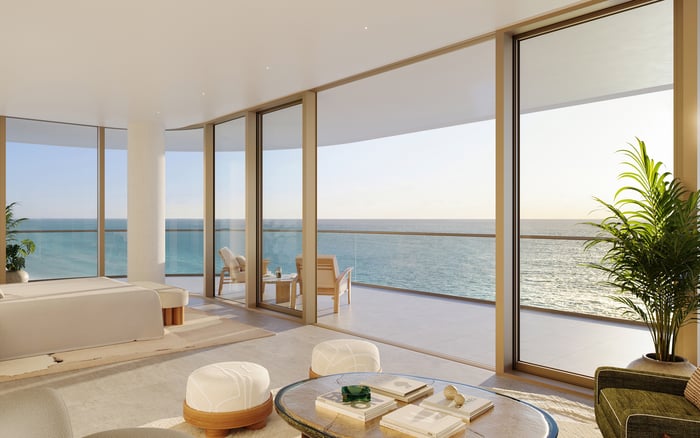
At W Pompano Beach Hotel & Residences, purchase decisions begin with the distinction between condo-hotel suites and luxury residences. Rental eligibility, reported owner-use limits, and à la carte housekeeping warrant separate, written confirmation before a buyer commits.

The appeal of a serviced coastal property is straightforward: arrive with less to arrange, enjoy the residence, and leave without managing every operational detail. At W Pompano Beach Hotel & Residences, however, that convenience calls for a precise understanding of what you are purchasing. Rental participation, personal occupancy, and housekeeping should be evaluated separately-not treated as a single package.
At 20 North Ocean Boulevard, Pompano Beach, FL 33062, the development comprises two distinct ownership categories: 296 furnished condo-hotel suites and 74 luxury residences. The rental-program descriptions concern the suites. They should not automatically be extended to the luxury residences, even where both categories offer access to hotel-style services.
For a serious buyer, the first request is simple: identify the category of the property under consideration and obtain the documents governing it. A shared brand does not establish identical ownership rights.
Suite ownership is described as offering an opportunity to participate in a rental program. That wording does not establish a universal enrollment requirement. Nor does it prove that every owner can opt in or out without conditions.
Request written confirmation of whether enrollment for the selected suite is optional, mandatory, or subject to approval. Ask separately whether any rental-program eligibility extends to the 74 luxury residences. The suite descriptions do not answer that question.
For participating suites, the hotel is described as handling bookings, guest services, housekeeping, and marketing through its reservation system. Those functions outline the operational support, not the full financial or contractual arrangement. A buyer should distinguish between a service being managed and its cost being absorbed.
Independent rental permissions also remain unresolved. Do not assume an owner may arrange short-term rentals outside the hotel program. Minimum rental terms, annual rental-frequency limits, and restrictions on outside booking channels each require written answers.
The described suite owner-use terms allow up to 180 days annually, with no more than 30 consecutive days. These are not verified contractual provisions. Their scope is also unclear: it is not established whether they govern every condo-hotel suite owner or only rental-program participants. They should not be applied to the luxury residences.
If applicable as described, the consecutive-use cap matters as much as the annual allowance. A buyer may see 180 days and envision an extended winter season. Yet a 30-day consecutive limit would prevent an uninterrupted stay beyond that duration, regardless of unused annual days.
Ask how days are counted, how consecutive stays are calculated, and what rules govern departures and returns. Obtain the reservation-priority schedule, booking notice requirements, and any blackout dates. Clarify how stays by family or invited guests would be treated; do not assume they fall outside the owner's allowance.
The practical test is to submit your intended calendar. Whether the plan involves several short visits or one seasonal stay, request confirmation that those dates and durations are permitted under the controlling documents.
The rental arrangement is described as using a predetermined owner-operator revenue split. No percentage or expense-deduction formula is established in the available terms. Neither a projected owner payout nor a net return can therefore be responsibly inferred from the service description alone.
Request the rental-management agreement and a worked example showing how rental receipts become owner proceeds. The review should address the revenue share, deductions, reserves, furniture replacement, taxes, insurance allocations, and termination provisions. These are questions to resolve-not charges to assume will apply in any particular amount.
Housekeeping deserves a separate line in that exercise. Confirm whether rental-stay cleaning is paid by the guest, owner, hotel program, or some combination, and where it appears in the accounting. Having the hotel manage the cleaning does not establish who ultimately pays for it.
Keep the purchase decision independent of an assumed rental outcome. Operational support may be valuable, but it is not evidence of guaranteed income, occupancy, or returns.
The residence service offering includes access to valet parking, housekeeping, and in-residence dining. The suites also list housekeeping among available hotel services, alongside personal chefs, grocery shopping, and in-suite dining. Those descriptions establish availability, not the financial terms of each service.
Housekeeping is explicitly designated à la carte. Listed tasks range from vacuuming or mopping, cleaning mirrors, dusting, and changing bedding to washing dishes and cleaning the oven or cooktop, refrigerator, and balcony. That scope can help a buyer frame a service request; it does not establish a standard package or included frequency.
No fixed housekeeping prices or rate card are established in the available information. Routine cleaning should therefore not be treated as included in the purchase price, monthly common charges, or rental-program fees.
Request an itemized schedule distinguishing standard visits, rental turnovers, and deep cleaning. Ask about linen and supply charges, cancellation fees, and any owner-stay discounts. Specify the services and frequency you expect, then request an estimated cost for that routine.
For buyers also considering The Ritz-Carlton Residences® Pompano Beach, the useful comparison begins with permitted occupancy and documented service charges-not an assumption that branded properties operate alike. W's suite rental descriptions should never become shorthand for another property's rules.
The same discipline applies when evaluating Waldorf Astoria Residences Pompano Beach. Place each property's ownership documents, rental permissions, and service schedule side by side. Compare what each agreement actually grants rather than filling gaps with expectations attached to a hotel name.
This approach does not diminish the appeal of service-led ownership. It makes the comparison more personal: which documented arrangement accommodates your calendar, your tolerance for administration, and your preferred level of paid assistance?
Before committing, assemble a category-specific document package: the governing ownership provisions, any applicable rental-management agreement, the owner-use schedule, and the housekeeping rate card. Have your advisers reconcile those documents with the proposed purchase and your intended use.
Three answers should be unmistakable: whether the rental program applies to your property, whether your preferred stays are permitted, and what services cost beyond the ownership expenses. Where a term remains unresolved, request clarification in writing rather than treating a service description as a contractual commitment.
For a discreet conversation about matching South Florida ownership to your priorities, connect with MILLION.
If branded residences are on your mind — as a home or as an allocation — we would be glad to share what we are seeing, privately.
Begin a quiet conversationThe marketed address is 20 North Ocean Boulevard, Pompano Beach, FL 33062.
The development comprises 296 furnished condo-hotel suites and 74 luxury residences. Rental-program descriptions concerning the suites should not automatically be applied to the residences.
Participation is described as an opportunity, which does not establish a universal requirement. Obtain written confirmation of whether enrollment for the selected suite is optional, mandatory, or subject to approval.
The available rental descriptions do not establish that it does. Eligibility for a luxury residence requires separate confirmation.
Reported terms describe up to 180 days annually and no more than 30 consecutive days. These are not verified contractual provisions, and their applicability to all suite owners versus program participants remains unclear.
If the reported 30-day consecutive-use cap applies, an uninterrupted stay exceeding 30 days would not be permitted. Confirm the controlling rules for the specific property before planning a seasonal stay.
A predetermined owner–operator split is described, but no percentage or expense-deduction formula is established. Request the rental-management agreement before estimating net proceeds.
Housekeeping is listed à la carte, and its inclusion in purchase costs, common charges, or rental-program fees is not established. No fixed service prices are established in the available information.
The available terms do not establish whether the owner, guest, hotel program, or a combination pays. Request written confirmation of both responsibility and accounting treatment.
Independent rental permissions, minimum rental terms, and annual rental-frequency limits remain unresolved. Confirm these provisions before assuming outside rentals are permitted.