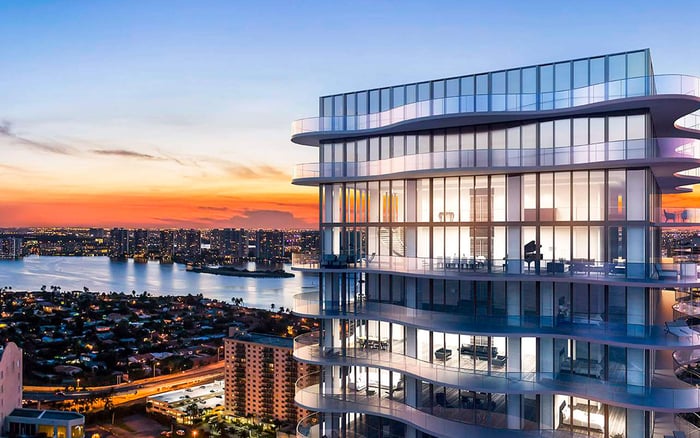
A discreet buyer’s guide to evaluating façade maintenance, balcony waterproofing, and water-intrusion allegations at The Estates at Acqualina, with an emphasis on tower-specific records, repair evidence, and financial responsibility.
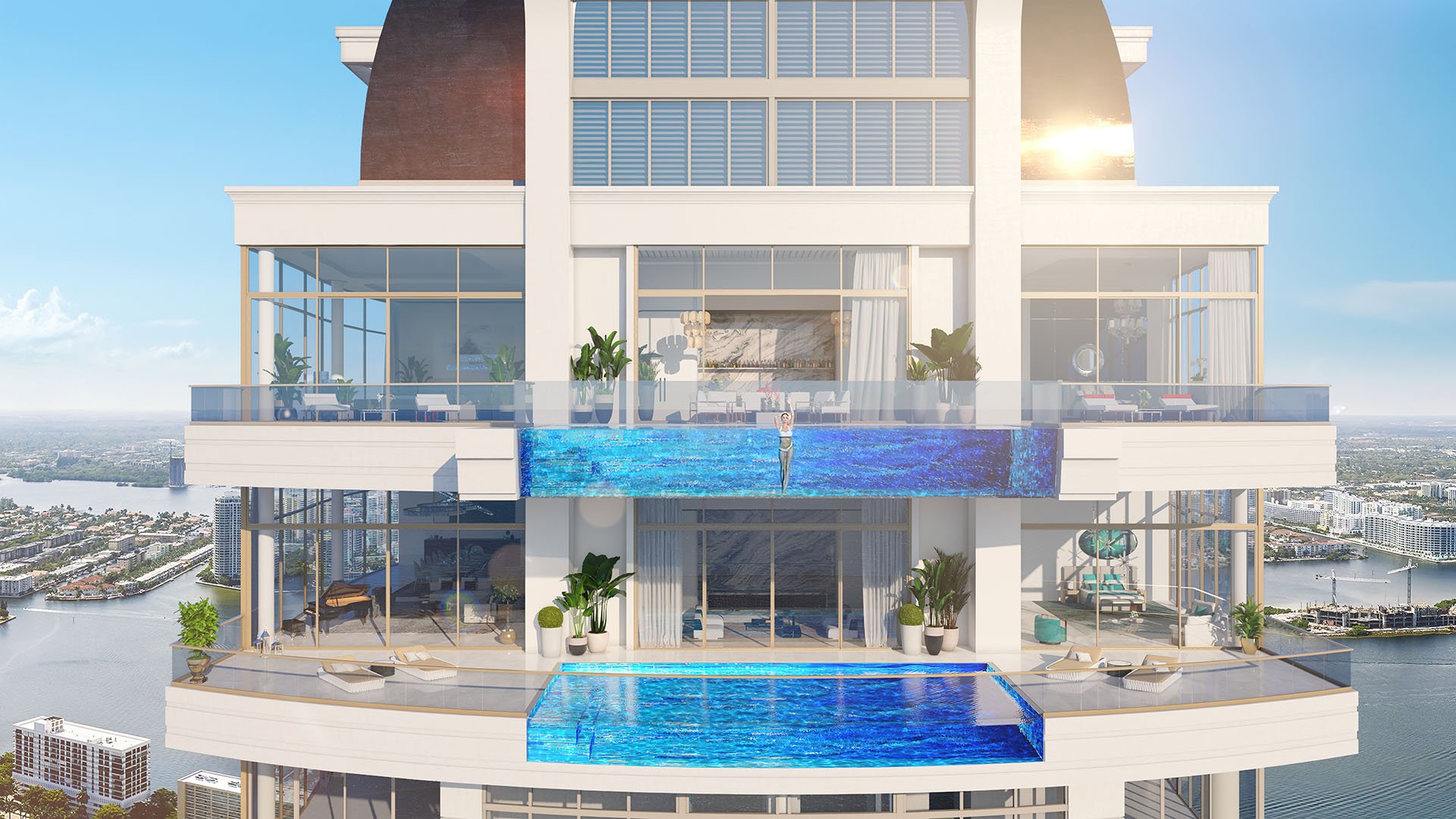
At The Estates at Acqualina Sunny Isles, the Sunny Isles Beach oceanfront sets the scene. For a serious buyer, however, confidence should rest on more than the view. It should extend to the records behind the residence: what has been inspected, what has been repaired, who is responsible, and how unresolved matters will be handled.
Façade sealants, balcony waterproofing, and wind-driven-rain claims each warrant separate questions. They should not be compressed into a single assurance that a building is “waterproof.” Nor should an allegation concerning one residence become a conclusion about the entire property.
The standard is documented condition, not generalized reassurance. Seek a coherent account of the specific residence and its condominium, supported by maintenance records, technical findings where available, and a clear allocation of obligations.
The South Tower is identified as 777 Via Acqualina, at 17901 Collins Avenue. The North/Boutique Tower is identified as 888 Via Acqualina, at 17975 Collins Avenue, and is a separate condominium from the South Tower. That distinction should guide document requests from the outset.
Ask counsel to confirm the legal condominium name associated with the purchase. Then match the association records, governing documents, financial information, and maintenance correspondence to that entity. An answer about one tower should not be assumed to resolve a question about the other.
The same precision applies to a comparison with Jade Signature Sunny Isles Beach. Use a consistent diligence framework for each candidate, but evaluate each property on its own documentation. This is not a comparison of building condition; it is a way to keep the purchasing decision disciplined.
A fixed façade-sealant replacement interval should not be treated as an established fact for The Estates. Rather than asking whether the building follows an assumed cycle, ask which written maintenance requirements apply to the installed systems and how their current condition is assessed.
Request the applicable specifications and warranty terms, available inspection findings, maintenance logs, and completed work orders. Ask whether the records distinguish window perimeters, sliding-door interfaces, expansion joints, and other façade joints, rather than grouping them under “caulking.”
The most revealing follow-up is practical: if deterioration was identified, what was done, where, and how was completion checked? A dated invoice can help establish that work occurred. Before treating it as evidence that a concern was resolved, request the associated scope and any acceptance documentation.
For future planning, request the association’s documented approach to inspection and renewal, along with any related budget provision. A generic service-life estimate is no substitute for the actual materials, written requirements, and professional assessment relevant to the property.
Evaluate balcony maintenance separately from façade sealants. General South Florida balcony-waterproofing guidance includes inspecting and replacing expansion-joint sealants and perimeter caulking during waterproofing work. It does not establish a property-specific maintenance schedule or confirm that any particular work has occurred here.
Ask for available details of the balcony waterproofing system, its warranty, any repair history, and any testing performed. Where work has taken place, request a scope identifying the affected area and components. A broad description such as “balcony repaired” is not enough.
For the residence under consideration, ask whether there have been complaints involving water entry, standing water, door thresholds, or adjacent interior finishes. These are questions to investigate, not assertions about existing conditions. If an issue is disclosed, seek the original complaint, diagnosis, repair documentation, and any follow-up findings.
Ask your technical adviser whether the available records support closure or warrant further investigation. The goal is not an unrealistic promise that maintenance will never be needed. It is a defensible understanding of present condition and future obligations.
The project’s below-grade construction included approximately 130,000 square feet of soil-cement bottom seal and a 2,300-linear-foot secant-pile wall. The excavation extended approximately 34 feet below existing grade and 30 feet below the water table.
Deep soil mixing combined existing soil with cement slurry to create a low-permeability material known as soilcrete. This construction history concerns below-grade water control. It does not establish the condition or performance of balcony membranes, window perimeters, sliding doors, or above-grade façade sealants.
For a buyer, the distinction matters: substantial excavation engineering is no substitute for residence-specific envelope diligence. Separately, ask whether any balcony or terrace access restrictions affect the contemplated purchase, what documentation explains them, and what conditions govern their removal.
Where outdoor living influences the decision, including a comparison with Turnberry Ocean Club Sunny Isles, apply the same questions about access, maintenance responsibility, and repair documentation. Do not presume that conditions are shared between properties.
Allegations involving unit-related matters and balcony restrictions have been discussed publicly. The developer has disputed certain allegations, maintained that it acted in good faith and addressed unit-related matters professionally, and questioned whether some outstanding concerns reached the proper channels. These competing positions should not be treated as adjudicated findings.
Those allegations establish neither a building-wide balcony-waterproofing failure nor a systemic wind-driven-rain defect. That is not an assurance that an individual residence has no problem. It is a reason to examine the particular issue rather than infer a universal conclusion.
When someone uses the word “claim,” ask whether they mean an owner complaint, a warranty demand, a legal allegation, or an insurance submission. Request the corresponding documents and current status, where available. An allegation of water intrusion does not, by itself, establish that an insurance claim exists.
For any disclosed event, ask what was observed, what cause was identified, what testing was performed, and what happened after repair. Have the appropriate technical, legal, and insurance advisers interpret their respective documents rather than relying on a single verbal summary.
Before committing, bring the technical and financial questions together. Ask counsel to review which obligations fall to the association and which to the owner, including access for work, restoration of finishes, warranty procedures, and responsibility for any disclosed repair.
Request relevant budgets, reserve information, approved or proposed work scopes, and notices of assessments where applicable. These requests do not imply that an assessment or repair program exists. They establish what the buyer needs to understand before accepting ownership obligations.
The strongest purchase file connects the legal condominium, the residence’s history, documented repairs, and the funding approach for any identified work. Where an answer remains unresolved, discuss its contractual treatment with counsel. An informal assurance should not stand in for resolution.
For a considered approach to South Florida’s exceptional residences, explore MILLION.
If branded residences are on your mind — as a home or as an allocation — we would be glad to share what we are seeing, privately.
Begin a quiet conversationThe Estates at Acqualina is an oceanfront condominium development in Sunny Isles Beach.
The North/Boutique Tower is a separate condominium from the South Tower. Buyers should match their document requests to the legal entity associated with the residence.
The South Tower is identified as 777 Via Acqualina, at 17901 Collins Avenue. The North/Boutique Tower is identified as 888 Via Acqualina, at 17975 Collins Avenue.
A project-specific replacement interval is not established here. Buyers should request applicable maintenance requirements, inspection records, and the association’s documented renewal approach.
Request available system details, warranty terms, repair scopes, and testing documentation. For a disclosed issue, also seek the diagnosis and any follow-up findings.
No. The approximately 130,000-square-foot soil-cement bottom seal concerns below-grade construction, not the condition of balcony membranes or façade interfaces.
No systemic wind-driven-rain defect is established by the allegations discussed in the article. That does not rule out an individual residence-specific issue.
The developer has disputed certain allegations and maintained that it acted in good faith and addressed unit-related matters professionally. Those positions are not adjudicated findings.
No. Buyers should clarify whether a claim refers to a complaint, warranty demand, legal allegation, or insurance submission and request the relevant documentation.
Responsibility should be determined through the applicable governing documents and circumstances of the work. Buyers should have counsel review the allocation rather than assume either the owner or association must pay.