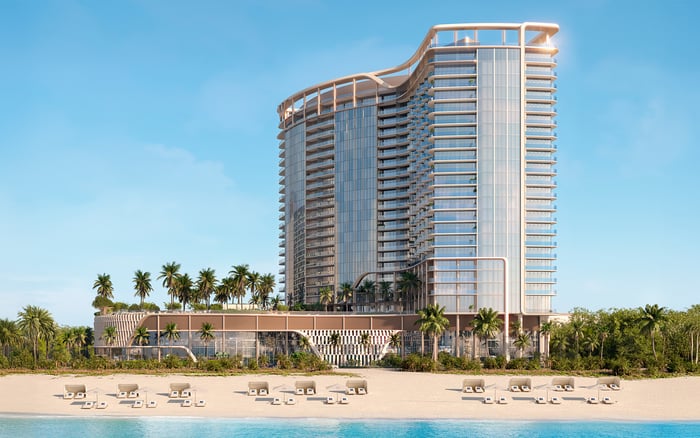
A discreet buyer’s framework for connecting Pompano Beach flood-zone records with garage equipment, evacuation logistics, renovation decisions, and a privately funded temporary-housing plan.

A Pompano Beach purchase warrants two parallel reviews: one for the residence, another for the systems and logistics that make ownership dependable. A beautifully considered interior does not establish where vulnerable equipment sits, how the household will leave during an evacuation, or where it will stay if the property becomes inaccessible.
More than 32% of buildings in Pompano Beach are within a Special Flood Hazard Area, or SFHA. That citywide figure is a reason to investigate, not a verdict on a particular address. A useful private-client briefing connects parcel records with physical equipment, access planning, and a realistic displacement budget.
For a buyer considering Armani Casa Residences Pompano Beach, the question is not whether the name signals resilience. It is which property-specific documents and operating arrangements support the intended ownership experience. Neither flood classification nor equipment protection should be inferred from branding.
Begin with the exact property, not a neighborhood description. The municipal Flood Criteria Map supports parcel-level review. Ask the Building Division to confirm whether the property lies in an SFHA, whether an elevation certificate is on file, and what information is available about drainage problems and areas with repeated flood-insurance claims.
The applicable flood-map date is July 31, 2024, and an interactive viewer is available for checking SFHA status. Because designations can change, recheck the applicable designation during due diligence rather than relying on an older transaction file. The 2024 city flood-zone map is for reference only, not a legal document or survey instrument.
Request the available elevation certificate and supporting property records before treating a map result as a complete assessment. Keep the responses with the acquisition documents so advisers work from the same information.
The next step is physical, not cartographic. Inventory garage-stored valuables and equipment, distinguishing what can be relocated from what requires professional assessment. General flood precautions include elevating furniture, valuables, electrical appliances, and equipment, or moving them to higher floors.
Those precautions are not installation specifications. They do not establish a universal mounting height for an EV charger, battery, generator, or electrical panel. Ask qualified professionals to assess the actual arrangement, and consult the Building Division before commissioning modifications that may require permits. Do not convert a flood-zone label into an assumed equipment elevation.
When reviewing Ocean 580 Pompano Beach, take the same document-led approach: request information about the intended parking and equipment arrangements rather than assuming their configuration. For a condominium purchase, establish which items belong to the owner and which are managed collectively. The objective is to identify who can authorize changes and who will execute the preparedness plan.
Evaluate a resilience upgrade alongside the broader renovation budget. Repairs or alterations exceeding 49% of a building’s market value can trigger National Flood Insurance Program and Florida Building Code requirements. This is not a threshold to calculate casually from a purchase price or an interior-design allowance.
Before combining garage work with a substantial renovation, ask the Building Division how the proposed scope will be evaluated. Higher finished-floor elevation standards apply to new construction and substantial improvements in some circumstances. Flood-mitigation alterations may also require permits, even when the intention is simply to protect existing assets.
Potential compliance-funding avenues include grants, loans, rebates, and Increased Cost of Compliance coverage under the flood-insurance program, depending on the property and policy. Treat these as possibilities to investigate, not secured offsets. A disciplined purchase budget distinguishes confirmed obligations from assistance contingent on eligibility or policy terms.
A flood-zone designation and an evacuation instruction answer different questions. Evacuation orders address imminent storm surge, not wind. The household therefore needs an evacuation plan independent of its parcel’s flood-map classification.
Category 1-2 evacuation guidance covers areas east of the Intracoastal Waterway and all mobile-home parks. For Category 3 or higher hurricanes, that guidance expands to areas east of U.S. 1/Federal Highway and all mobile-home parks. People in low-lying areas or near tidal waters may also need to evacuate, depending on conditions and official instructions. These geographic guidelines do not replace an actual order.
A buyer evaluating The Ritz-Carlton Residences® Pompano Beach should establish the applicable evacuation arrangements without presuming that a particular residential setting changes the obligation to leave. Know the evacuation zone, route, and shelter locations in advance, and follow official orders.
An access plan should identify intended routes and a destination while acknowledging that conditions can change. No particular road can be represented here as a verified dry route for a specific property. A route drawn on a map is a planning choice, not a guarantee of passage.
For a household with several vehicles, visiting family, or an intermittently occupied residence, assign responsibility for departure decisions and essential belongings before an emergency. Keep the plan accessible to those who will use it. These are organizational recommendations, not assurances about travel conditions.
The same discipline applies when considering Waldorf Astoria Residences Pompano Beach. Ask how property communications will reach an absent owner and how the household’s departure plan fits with building procedures. Do not mistake an address’s appeal for an established access strategy.
Temporary housing belongs in the ownership plan, not merely the emergency checklist. Choose a workable fallback arrangement and budget for it independently of potential disaster assistance. A second residence or seasonal address should not be treated as automatically eligible for benefits intended for a primary residence.
Potential assistance associated with the 2023 flooding included lodging reimbursement when applicants verified that their primary residence was uninhabitable or inaccessible because of the storm, as well as possible help with rent and a security deposit, subject to eligibility. These are historical eligibility concepts, not guaranteed benefits or confirmation of an open application period for a future event.
Retain relevant records if displacement occurs, and evaluate any later assistance against the requirements then in force. The strongest acquisition briefing ends with four connected decisions: verified parcel information, an equipment-review plan, evacuation arrangements, and a funded temporary-housing option.
For a discreet perspective on Pompano Beach ownership and property selection, explore MILLION.
If branded residences are on your mind — as a home or as an allocation — we would be glad to share what we are seeing, privately.
Begin a quiet conversationMore than 32% of buildings are in an SFHA. That citywide figure does not establish the classification of an individual property.
Review the parcel through the Flood Criteria Map and seek confirmation from the Building Division. Recheck the designation during due diligence because flood zones can change.
The Building Division can confirm whether an elevation certificate is on file for the property. It can also provide information about drainage problems and areas with repeated flood-insurance claims.
No. It is for reference only, not a legal document or survey instrument.
General precautions include elevating vulnerable equipment and valuables or moving them to higher floors. These do not establish equipment-specific installation heights or requirements.
Flood-mitigation alterations may require permits. Repairs or alterations exceeding 49% of a building’s market value can trigger flood-insurance program and Florida Building Code requirements.
No. Flood classification and storm-surge evacuation planning serve different purposes, and official evacuation orders must be followed.
Category 1–2 guidance covers areas east of the Intracoastal Waterway and all mobile-home parks. Category 3 or higher guidance expands to areas east of U.S. 1/Federal Highway and all mobile-home parks; conditions may require others to evacuate.
No verified dry route for a particular property is established here. Know the evacuation route and shelter locations in advance, but do not treat a planned route as a guarantee of passage.
No; budget for temporary housing independently of assistance. Any available benefits depend on eligibility and the requirements in force after an event.