A discreet buyer’s guide to evaluating balcony waterproofing, wind-driven-rain protection, reserve planning, and façade-access arrangements when considering a residence in Miami’s Design District.
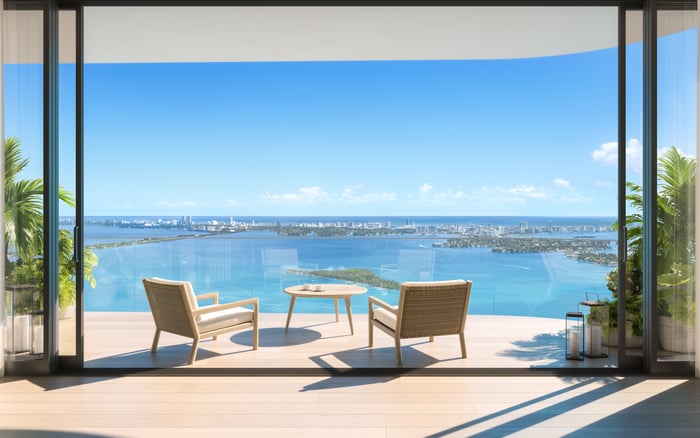
For a private client considering a residence in Miami’s Design District, the balcony deserves the same scrutiny as the interior plan. Its appeal is immediate: outdoor space, daylight, and a more generous relationship between rooms and sky. Its technical performance is less visible. Waterproofing, drainage, door thresholds, and future maintenance access belong in the acquisition conversation before finishes become the deciding factor.
A buyer considering Kempinski Residences Miami Design District should approach these matters through requests for project-specific documentation, not assumptions about performance. The same discipline applies across the market. Regional technical principles do not establish the condition, compliance, or maintenance history of an individual property.
The objective is not to eliminate every uncertainty. It is to understand what supports the outdoor living experience, what evidence is available, and what still requires professional review.
Begin beneath the visible surface. Ask for the balcony membrane specification, applicable approved-product records, manufacturer installation instructions, and warranty. Have a qualified professional reconcile those documents with the relevant construction details. A product name alone is not proof that the entire assembly performs as intended.
The finish and the waterproofing warrant separate questions. Where available, request documentation showing how watertight integrity was established before above-membrane components or wearing surfaces were installed. This is a diligence principle, not a claim that a particular test or historical procedure governs every purchase today.
Warranty review should be equally precise. Ask what is covered, who issued the warranty, what maintenance it requires, and whether any conditions affect a subsequent owner. The existence of a warranty is only the beginning of that conversation.
For a client also evaluating Miami Tropic Residences, use the same document checklist. Compare the clarity and scope of the evidence supplied, without drawing conclusions about either property from its presentation alone.
Ask the reviewing professional to distinguish the documentation for wind-load performance from the evidence for water resistance. Neither discussion should replace a detailed review of water management at openings and transitions.
Impact resistance alone does not establish resistance to wind-driven rain. For a buyer, that distinction matters: a description focused on impact performance should not close the discussion about water intrusion.
Ask the reviewing professional to examine the relationship among glazing, frames, door sills, adjacent walls, and balcony waterproofing. The purpose is to evaluate the assembled interface, not simply collect separate product descriptions. A visually seamless transition can still require a careful technical explanation.
Ask how the balcony slope and drainage design address water buildup at doors and floor-to-ceiling windows. During diligence, request the relevant drawings and, where the residence is completed, ask whether the installed condition has been evaluated.
Ask the reviewing professional whether slab offsets at sliding-glass-door sills or back dams at door and window sills form part of the water-management design. Request an explanation of how the chosen details address both water resistance and accessibility. Treat these as project-specific questions, not universal prescriptions for every residence.
Door and window flashing details deserve equal attention. Ask a qualified professional which installation standards apply to the specific assembly and how the flashing transitions have been documented.
For the buyer who values an elegant indoor-outdoor connection, the right question is not simply whether a threshold appears low. It is how the design reconciles water management, accessibility, and the intended use of the balcony.
Façade maintenance belongs in the lifestyle review as well as the technical review. Before relying on uninterrupted outdoor use, request the current written plan for any proposed or pending exterior work. Treat a preliminary calendar as provisional until management explains its status and dependencies.
Ask whether work would restrict balcony access, require contractor entry into the residence, or involve façade-access equipment outside the windows. Request anticipated work hours, resident-notification procedures, and arrangements for protecting or relocating outdoor furnishings. These are diligence questions, not statements that any particular building has such work planned.
A useful schedule should distinguish anticipated mobilization, work affecting the relevant residence, and the conditions for restoring access. Ask how weather contingencies would be handled and who would communicate changes. A broad completion estimate is less useful to an owner than a clear account of when the home may be affected.
No general neighborhood calendar can answer those questions for a specific address. Obtain the relevant information directly for the property under consideration.
For a seasonal owner, an exterior project should be reviewed against intended occupancy dates. Ask management to identify possible conflicts with planned stays and clarify whether contractor access would require an owner representative. Absence from the residence does not remove the need to ask how coordination will be handled.
Request the latest applicable Structural Integrity Reserve Study, milestone and façade inspection documentation, open permit history, and pending restoration schedule. Waterproofing and exterior finishes belong in the reserve-planning discussion. Have the association’s advisers clarify the study’s applicability and current legal requirements rather than relying on a generalized deadline or funding rule.
Connect the technical scope to the financial documents. Ask whether proposed exterior work appears in reserve planning, what approvals remain outstanding, and whether any related assessment has been adopted or remains under discussion. Keep confirmed obligations separate from estimates and proposals.
The same approach applies in Edgewater. If Villa Miami is also on the shortlist, request documentation appropriate to that purchase and its stage. Do not presume that identical records will exist for every property.
Before committing, organize the review around three questions: how the assembly manages water, what documentation supports its condition or proposed design, and how future work could affect use and ownership costs. Ask the relevant technical, legal, and management professionals to resolve inconsistencies in writing.
A polished residence and a well-documented envelope are different attributes. A considered acquisition gives both their proper weight, preserving the pleasure of outdoor living without overlooking the practical obligations behind it.
For a discreet conversation about your Design District residential search, connect with MILLION.
If branded residences are on your mind — as a home or as an allocation — we would be glad to share what we are seeing, privately.
Begin a quiet conversationRequest the membrane specification, applicable product approvals, installation instructions, warranty, and relevant construction details. Have a qualified professional review how those documents relate to the assembly.
Impact resistance alone does not establish water-intrusion performance. Request a separate review of openings, drainage, and surrounding transitions.
Ask how the slope and drainage design address water buildup near doors and windows. For a completed residence, request any available evaluation of the installed condition.
Ask whether slab offsets form part of the water-management design and request an explanation of their role. Have a qualified professional assess the project-specific details.
Do not treat taller back dams as a universal prescription. Ask a qualified professional how the selected sill details address water resistance and accessibility.
Ask whether documentation establishes watertight integrity before finishes or other above-membrane components were installed. Do not assume the visible finish demonstrates membrane performance.
Ask about anticipated balcony restrictions, contractor entry, access equipment, work hours, resident notifications, and weather contingencies. Request information specific to the residence.
This briefing does not establish a work calendar for any named property. Obtain the current written schedule and its status directly from the relevant management or project team.
Review waterproofing and exterior finishes alongside the applicable reserve study and proposed maintenance scope. Ask association advisers to confirm current requirements and distinguish adopted obligations from proposals.
The diligence questions do not establish any individual property’s condition, compliance, maintenance history, or water-intrusion performance. Obtain project-specific documentation and professional review.