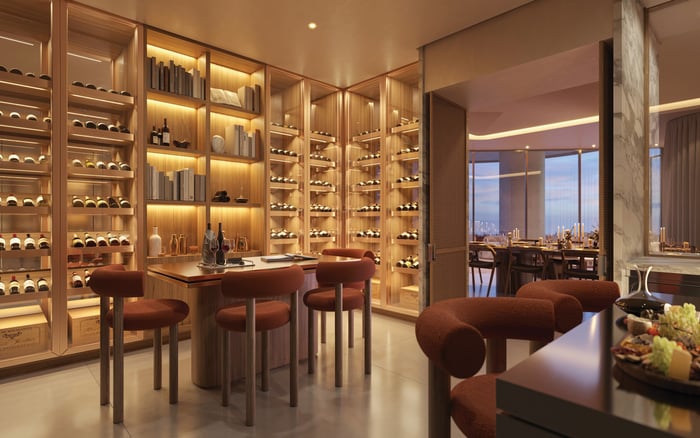
Villa Miami’s culinary proposition is compelling for a primary residence. The buyer’s task is to establish how kitchen ventilation, catering access, elevator reservations, and service costs support everyday living and private entertaining.

For a primary-residence buyer, the appeal of Villa Miami is not simply a memorable dinner. It is the possibility of making culinary hospitality part of everyday life. The Edgewater project brings together Major Food Group, Terra, and One Thousand Group, with a residential offering centered on food and service.
That proposition merits a practical review. A well-specified kitchen, access to chefs, and discreet household coordination serve different needs. None alone establishes how smoke is exhausted, how catering equipment reaches the residence, or who reserves the elevator for collection after guests leave.
The primary-residence test is whether these elements work together without making the owner the event coordinator. Unspecified operating details are diligence items-not evidence that the building lacks the relevant systems or services.
The residences feature chef’s kitchens designed by Major Food Group’s Mario Carbone. Kitchen specifications include La Cornue CornuFé ovens and stovetops, Wolf appliances, and pasta sinks. Additional kitchen details include Sub-Zero appliances, Italian cabinetry, wine refrigerators, pasta tanks, and convection-steam ovens.
These details establish a culinary emphasis, not exhaust capacity, makeup-air design, filtration, grease management, or suitability for commercial-scale event production. Buyers should request specifications for their selected residence rather than treat the broader equipment descriptions as a complete technical schedule.
Ask for exhaust and makeup-air plans, hood capacity and noise data, duct routing, and discharge location. Have a qualified mechanical professional assess whether the design supports the intended simultaneous appliance use. A private chef should also review the proposed workflow, from preparation and cooking to plating and washing up.
For someone also considering EDITION Edgewater, the useful comparison is the documentation obtained for each residence-not the assumption that kitchen branding predicts ventilation performance.
At-home private-chef services and cooking lessons are advertised at Villa Miami. For an owner expecting regular use, the first question is not the menu for a special occasion. It is whether the kitchen supports the household’s recurring cooking style while preserving comfort in adjacent living spaces.
Give the design team and chef a realistic brief: dishes typically prepared, appliances expected to run together, and whether family members will be dining or working nearby. Request confirmation of performance under those conditions, including noise, rather than relying solely on an appliance inventory.
Obtain written restrictions on high-output burners, portable induction units, warming cabinets, supplemental ventilation, and temporary event equipment. Do not assume a chef may introduce equipment simply because private-chef service is advertised.
Grocery stocking is an available option, not an explicitly complimentary service. Confirm ordering responsibilities, delivery access, storage arrangements, charges, and who receives provisions when the owner is away.
Private and on-site catering by MFG chefs is advertised, along with kitchens and dining rooms available on demand. Those descriptions do not establish booking terms, maximum guest counts, event hours, or a residence-specific catering workflow.
Ask management to map a representative gathering from delivery through final collection. Clarify what is prepared elsewhere, what is finished inside the residence, where staff stage equipment, and which spaces may be used. Establish whether an outside caterer is permitted and whether MFG has any priority or exclusivity.
Then resolve the less visible details: loading access, refrigerated-food handling, rental storage, setup and breakdown windows, and waste removal. Ask how empty cases, used serviceware, and equipment leave without disrupting the household.
A useful written event plan assigns responsibility at every handoff. The aim is not to prescribe an elaborate production for every dinner, but to establish that a larger gathering can be accommodated within approved rules before invitations are sent.
Private elevator foyers are advertised, but a private arrival experience does not establish a separate catering or freight route. Nor does it establish service-elevator dimensions, load ratings, availability, or reservation procedures.
Request a route plan from the approved delivery entrance to the residence. Obtain car and door dimensions, weight limits, and any restrictions affecting carts, warming cabinets, or event rentals. Ask whether the route uses shared areas and what protection is required along the way.
Scheduling deserves equal attention. Confirm delivery windows, reservation lead times, weekend restrictions, vendor insurance requirements, and how competing requests are resolved. Clarify whether setup and breakdown require separate reservations and what happens if a delivery arrives late.
Treat an elevator booking as part of the event plan, not an administrative detail left to the caterer. Ask who confirms the reservation and who can authorize changes when the agreed timetable slips.
An on-site estate manager and in-house curator are advertised as overseeing household, leisure, and personal needs. For a primary residence, the critical distinction is between assistance that can be requested and coordination for which someone accepts explicit responsibility.
Ask who books chefs, approves vendors, reserves delivery access, monitors setup, and closes out an event. Obtain service pricing, booking lead times, cancellation terms, and overtime charges. Clarify what is included in ownership costs and what is billed separately. Advertised availability should not be read as complimentary access.
Menu tastings, wine pourings, and VIP access to MFG restaurants, events, and openings add another dimension to the offering. Evaluate them separately from the practical requirements of feeding and entertaining at home.
In a branded-residences comparison that includes Cipriani Residences Brickell, apply the same questions to each candidate. Compare written service scope and operating terms rather than treating hospitality identities as interchangeable promises.
Before making the purchase decision, bring the technical and service reviews together. The file should contain residence-specific kitchen specifications, ventilation information, equipment restrictions, catering policies, elevator rules, and an itemized explanation of service costs.
Check advertised services against developer specifications, condominium documents, and written operating policies. Ask which terms are established, which remain subject to approval, and who will provide outstanding confirmations. Have the buyer’s advisers review important representations before relying on them.
Villa Miami offers a distinctive culinary proposition. Its suitability as a primary residence depends on how well that proposition matches the owner’s actual routines: everyday cooking, recurring chef visits, private dinners, and occasional larger gatherings. The strongest purchase case combines a compelling kitchen with documented logistics and clearly assigned responsibility.
For a discreet perspective on selecting a South Florida primary residence, connect with MILLION.
If branded residences are on your mind — as a home or as an allocation — we would be glad to share what we are seeing, privately.
Begin a quiet conversationThe Edgewater project centers on Major Food Group’s culinary and hospitality offering. Its residences feature chef’s kitchens designed by Mario Carbone.
Kitchen specifications include La Cornue CornuFé ovens and stovetops, Wolf and Sub-Zero appliances, wine refrigerators, and convection-steam ovens. Buyers should confirm the equipment schedule for their selected residence.
The available kitchen descriptions do not establish exhaust capacity, makeup-air design, filtration, or grease management. Request residence-specific technical documentation and professional review.
Yes, at-home private-chef services and cooking lessons are advertised. Confirm availability, pricing, booking requirements, and equipment restrictions in writing.
Grocery stocking is described as an available option, not an explicitly complimentary service. Confirm charges and the arrangements for ordering and receiving provisions.
The advertised catering offering does not establish outside-caterer access or MFG exclusivity. Obtain written vendor rules before making arrangements.
The advertised catering descriptions do not establish maximum guest counts or event hours. Buyers should request approved limits and setup and breakdown windows.
No. Private foyers are advertised, but they do not establish a separate catering or freight route, elevator specifications, or reservation procedures.
Request reservation rules, delivery windows, weekend restrictions, vendor insurance requirements, and procedures for late arrivals. Confirm dimensions and weight limits for the intended equipment.
Ask which chef, vendor, delivery, and event tasks the estate manager will coordinate. Obtain written clarity on responsibilities, service charges, cancellation terms, and overtime.