A primary residence should remain well managed even when its owner is away. For buyers at The Village at Coral Gables, that means distinguishing zoned cooling from humidity control, verifying moisture performance, and establishing a remote-monitoring plan with a local responder.

A primary residence still needs attention when its owner leaves for the summer, an extended business trip, or a family holiday. For a buyer considering The Village at Coral Gables, the vacancy review deserves the same care as the assessment of daily comfort: what controls moisture, what measures it, and who intervenes when conditions change?
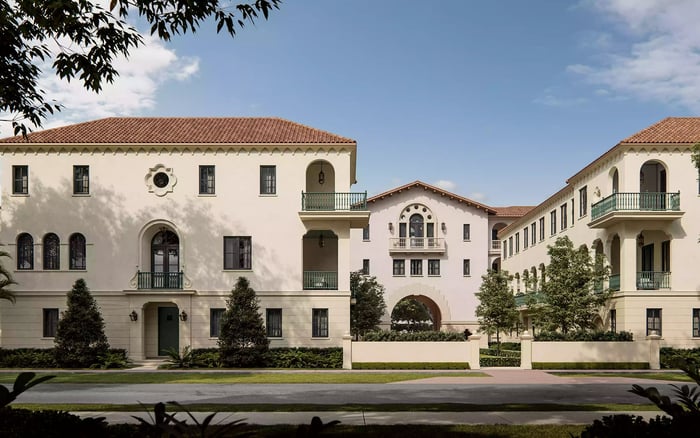
The development is at 535 Santander Avenue, Coral Gables. Its specifications include an energy-efficient air-conditioning system divided into zones-a useful starting point, but not confirmation of independent humidity control. The purchase review should distinguish a stated equipment feature from demonstrated performance in the particular residence.
These are preventive ownership questions, not evidence of a known mold problem at the property. The objective is continuity: a home that remains carefully managed even when no one is there to notice a leak or a change in indoor conditions.
Begin with the controls, not the terminology. Ask whether each zone displays relative humidity, whether those readings are accessible remotely, and whether the system can actively manage humidity independently of its temperature setting. Request a demonstration; do not assume a sophisticated thermostat provides all three functions.
Ask the seller or development representative to identify the installed equipment and explain its operating modes. Then have an HVAC professional assess the proposed vacancy settings for that residence. A thermostat temperature alone does not prove that indoor moisture is controlled.
The same distinction applies when comparing Ponce Park Coral Gables: compare documented capabilities and responsibilities, not assumptions based on a project's positioning. This is a due-diligence framework, not a claim that the properties share equipment or services.
Before agreeing to a vacancy plan, request measured humidity performance under the proposed settings. Do not treat 76-78°F as an established recommendation for The Village. A project-specific temperature prescription should be confirmed in writing, not inferred.
Indoor relative humidity, or RH, should generally remain within 30-50% where possible. Below 50% is preferable for controlling both mold growth and dust mites. Keeping RH below 60% is a prevention boundary, not an invitation to operate routinely just beneath it.
Use a humidity gauge to measure conditions. Ask your HVAC professional to help select an operating target within the recommended range and verify that the residence can maintain it. Keep that target distinct from the point at which a monitoring system sends an alarm.
For an owner-designed monitoring plan, an early warning around 55% RH and escalation at 60% RH are reasonable proposed precautions. They are neither statutory thresholds nor published standards for The Village. Agree with the professional and designated responder on how alerts will be assessed, acknowledged, and acted upon.
An alarm is not the entire strategy. A humidity reading within range does not resolve an active water leak, and an alert setting does not guarantee mold prevention. The plan must address both ambient moisture and direct water intrusion.
If a separate dehumidifier is needed to bring indoor RH below 60%, the central air-conditioning system should be examined for problems. Adding equipment should not replace assessing whether the existing system can achieve suitable conditions.
Where supplemental dehumidification is appropriate, confirm installation permission, drainage arrangements, servicing responsibilities, and unattended operation with the relevant professionals. Dehumidifiers work effectively in closed indoor conditions. Opening windows is a humidity-reduction measure only when outdoor conditions are not humid-not a default vacancy practice.
For a buyer also evaluating Cora Merrick Park, the comparison question is practical: what moisture-control measures are permitted, and who maintains them? Obtain property-specific answers without presuming that either development includes a dedicated dehumidifier or a monitoring package.
A useful remote setup should track RH, temperature, water leaks, and HVAC or power interruptions. Ask an installer to distinguish events the proposed equipment actually detects from those it merely allows an owner to infer. A temperature display alone is not a complete vacancy-monitoring plan.
Before departure, test alert delivery to both the owner and a designated local responder. Test offline notifications as well, so silence is not mistaken for confirmation that everything is operating normally. Verify the responder's access and agree on a backup contact if the first person cannot attend.
Keep response instructions concise: who receives each alert, who acknowledges it, who can enter, and who can authorize professional assistance. Confirm how the system behaves during connectivity or power loss rather than assuming uninterrupted visibility.
Treat leak alerts separately from humidity alerts. Common molds can take hold when water stands for even 24 hours. After a water event, drying the home and wet contents as quickly as possible, ideally within 24-48 hours, is important. That timing is a prompt for action, not a guaranteed safe waiting period.
Request HVAC service records and available documentation of prior leaks, condensate overflows, or mold remediation. These are ordinary preventive-diligence requests, not allegations about the residence. If records identify corrective work, ask for documentation of what was addressed and have the appropriate professional review unresolved questions.
Obtain written answers from the association about emergency entry, vacancy inspections, and response responsibilities. Clarify permission to install sensors, automatic water shutoffs, or dedicated dehumidifiers. Do not assume a guaranteed vacancy-check service or project-wide remote-monitoring provision.
Permission and service are distinct. Approval to install a sensor does not establish who receives its alerts or responds after hours. Ask for explicit responsibilities, including any owner obligations and limits on association involvement.
Before the first extended absence, rehearse the plan while someone can still attend to the home. Confirm the agreed settings, review humidity readings, test notifications, and verify access. Keep equipment instructions and service contacts available to the responder.
The strongest purchase review connects three elements: demonstrated moisture control, reliable visibility, and authorized action. None substitutes for the others, and humidity management never replaces repairing a leak. For a primary-residence buyer, these practical details help preserve everyday comfort-not merely prepare for an occasional trip.
For a considered approach to South Florida primary-residence ownership, explore MILLION.
If branded residences are on your mind — as a home or as an allocation — we would be glad to share what we are seeing, privately.
Begin a quiet conversationThe development is listed at 535 Santander Avenue, Coral Gables.
No. The zoned air-conditioning specification does not establish independent humidity control; buyers should verify the installed system's capabilities.
Aim for 30–50% relative humidity where possible. Below 50% is preferable for controlling both mold growth and dust mites.
No. Keep indoor RH below 60%, rather than treating that level as a routine operating target.
No. An early warning around 55% and escalation at 60% are proposed operating precautions, not statutory thresholds or published project standards.
Have an HVAC professional establish suitable settings based on the residence's measured moisture performance. Do not treat 76–78°F as a verified recommendation for The Village.
If a separate dehumidifier is needed to bring indoor RH below 60%, the central air-conditioning system should be examined for problems.
A proposed plan should track humidity, temperature, leaks, and HVAC or power interruptions. Test alert delivery, offline notifications, and the designated responder's access before leaving.
Dry the home and wet contents as quickly as possible, ideally within 24–48 hours. Common molds can take hold when water stands for even 24 hours, so that window is not a reason to delay.
Obtain written answers about emergency entry, vacancy inspections, response responsibilities, and permission for sensors, automatic water shutoffs, or dedicated dehumidifiers. Do not assume a guaranteed vacancy-check service.