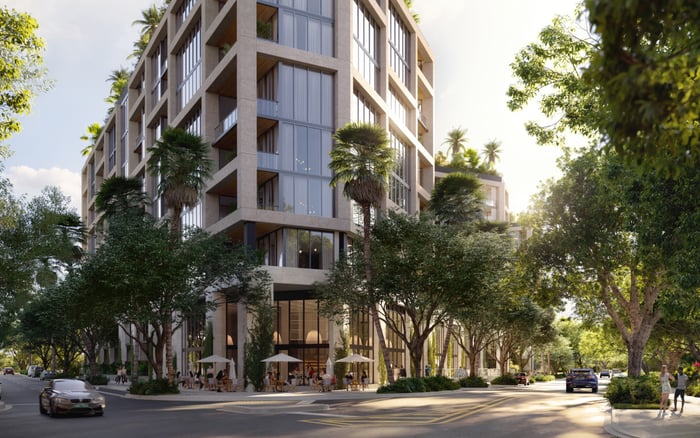
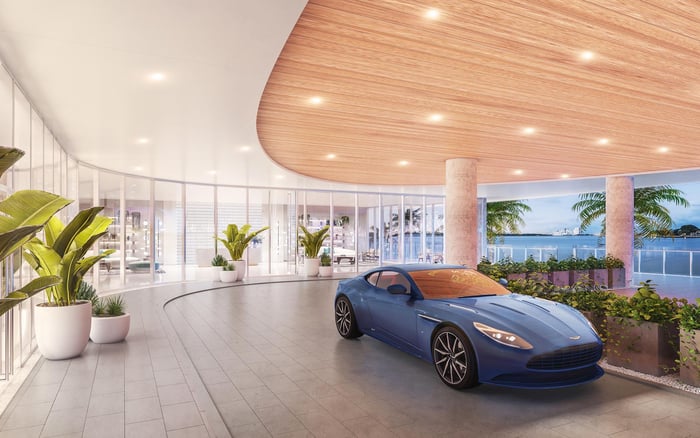
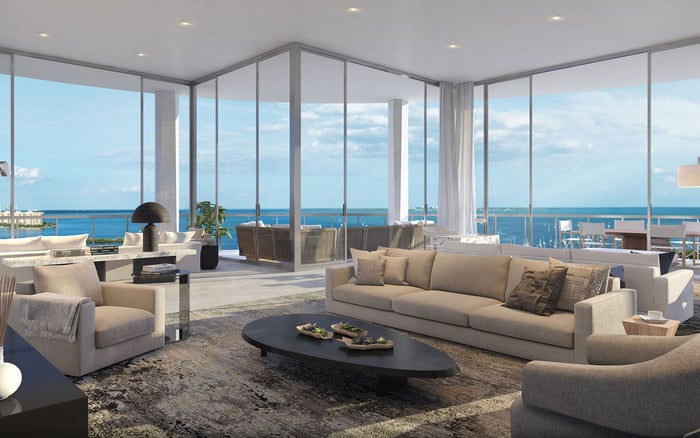
THE WELL Coconut Grove advertises concierge, valet, and 24-hour security. For owners managing household staff and visiting providers, the next step is confirming circulation plans, entry permissions, and written vendor-access rules.
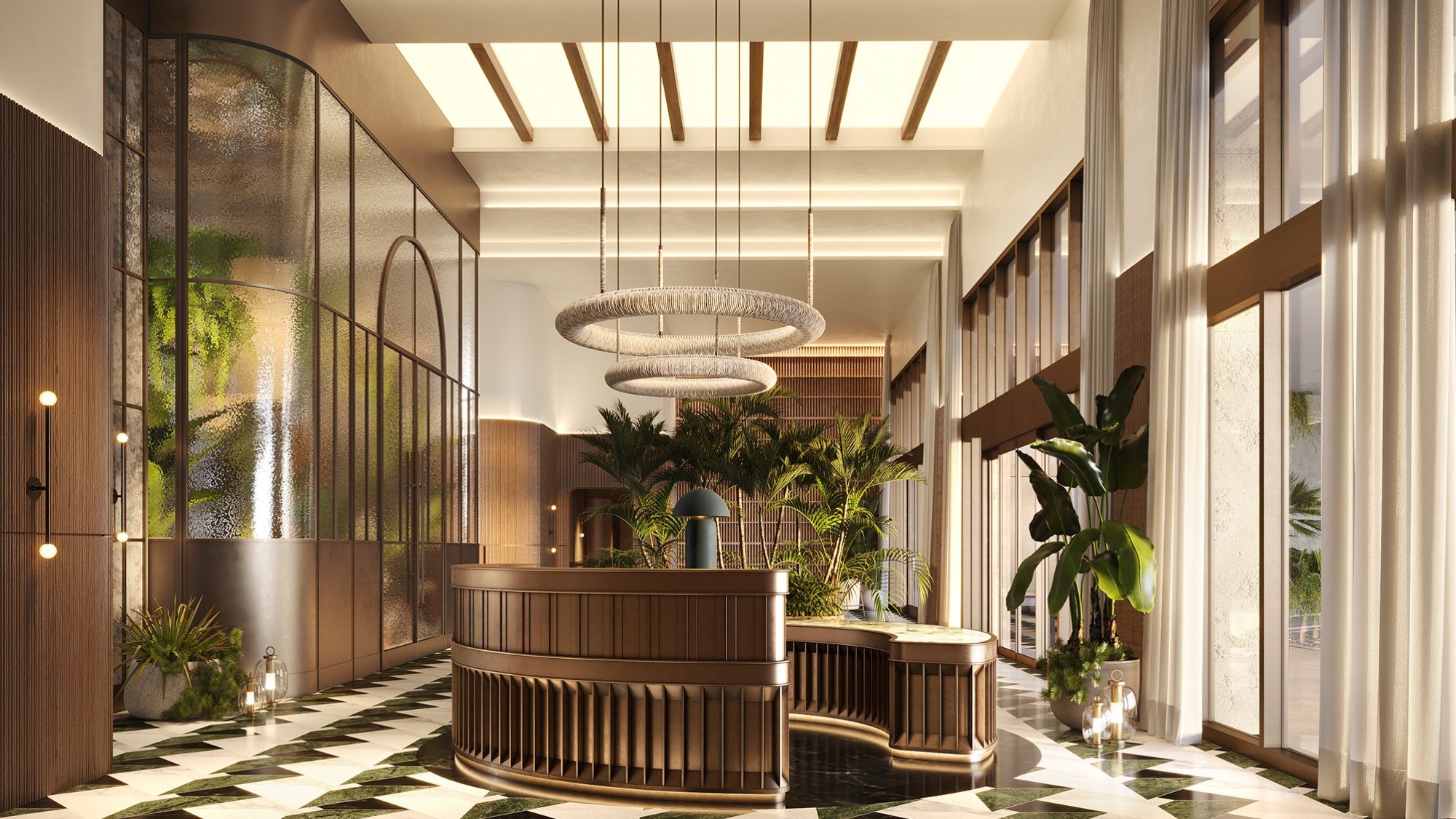
For an owner with a housekeeper, a visiting therapist, and regular deliveries, residential privacy depends on more than a gracious arrival. It depends on how those people reach the residence, who authorizes their access, and where their movements intersect with the household's routines. At The Well Coconut Grove, those operational questions deserve a place beside the floor plan.
The Terra development in Coconut Grove, Miami, is marketed with 194 residences across eight stories. Full-service concierge support, valet parking, and 24-hour security are advertised. What remains unverified is the operational layer beneath those offerings: separate service circulation, a designated household-staff entrance, and procedures governing recurring employees and visiting vendors.
That distinction is not evidence that a feature is absent. Buyers should treat household logistics as a documentation question, not an inference drawn from an amenity list. Discretion is best evaluated through a route, a permission, and an accountable point of contact.
The advertised wellness offering includes resident pools, hot and cold plunges, and cabanas. Shared spaces include a fitness center, movement studios, a conservatory, a tea garden, and a private dining room. A THE WELL clubhouse with a hammam, movement studio, and IV therapy lounge is also advertised.
These spaces define the advertised lifestyle offering. They do not establish how a household employee, outside practitioner, or delivery team moves through the building. In-home wellness services are also advertised, but provider insurance, scheduling, access, and elevator procedures remain unspecified.
Distinguish between the building's own personnel, recurring household employees, and independently retained vendors. Request written confirmation of whether each category carries different registration, escort, or scheduling requirements. An owner's invitation should not be assumed to confer unrestricted access to residential floors or shared amenities.
Separate resident and service circulation remains unverified, as does a separate service, freight, or vendor-exclusive elevator. Neither uncertainty supports a positive or negative conclusion about the design.
Request a site and circulation plan tracing the journey from arrival to the residence door. It should identify resident entrances, any designated staff entrances, garage access, loading areas, elevator assignments, and corridor connections. If a service elevator is proposed, ask whether it is dedicated to service use or shared under operating rules.
The critical question is where routes converge. A secondary entrance alone does not demonstrate separation through an elevator lobby, upper-floor corridor, or residence threshold. Ask for the route serving the specific home under consideration rather than relying on a general building diagram.
For a buyer also considering Park Grove Coconut Grove, the same route-by-route review provides a consistent basis for comparison. It does not presume that either property's service circulation is equivalent or documented to the same degree.
Advertised concierge and valet services do not establish whether household employees arrive through the principal lobby, valet area, secondary entrance, or garage. The advertised 24-hour security also leaves staffing arrangements, access-control technology, camera coverage, and employee registration unspecified.
Ask for a written recurring-employee protocol covering identity verification, owner sponsorship, permitted days and hours, entry credentials, and withdrawal of authorization. Clarify whether an employee may enter while the owner is away, whether substitutes require separate approval, and who handles an unexpected arrival. These are requested provisions, not confirmed project rules.
Responsibility matters as much as permission. It remains unverified whether concierge staff administer employee credentials, recurring access lists, vendor insurance, package intake, or after-hours authorization. Request the designated role for each task, including an escalation contact when the usual person is unavailable.
A useful test is a hypothetical morning: the housekeeper arrives before the owner wakes, a wellness provider follows, and a delivery needs a signature. Ask the sales or management team to explain each step. A general promise of concierge assistance is not a substitute for a procedure.
Loading operations remain undisclosed. No schedule for loading-dock use, vehicle-size limits, delivery staging, or dock-to-service-lift route has been established. Owners arranging furniture installation or maintenance should request these details before committing to a delivery schedule.
The vendor-access file should address advance booking, credentials, insurance documentation, permitted work hours, vehicle staging, and elevator reservations. Ask whether requirements differ for a short appointment, a bulky delivery, and work inside the residence. Where fees, deposits, or protective measures may apply, request the written schedule rather than assuming a particular charge or requirement exists.
After-hours access warrants a separate answer. Clarify who can authorize an urgent repair, how identity is checked, and whether owner approval alone is sufficient. For in-home wellness appointments, ask how provider access is coordinated and whether permissions differ for owner-retained practitioners. The advertised service does not resolve those distinctions.
Select townhomes are advertised with walk-up street access and private garden entry. For a household seeking a more direct arrival, that design feature merits attention. It does not, by itself, establish permission for staff, deliveries, or contractors to use the entrance.
Request a residence-specific answer addressing who may enter there, any screening requirements, and whether deliveries must first pass through a building-controlled arrival point. Ask whether access is treated differently when the owner is absent. A garden door can change the physical journey without changing the authorization process.
Buyers comparing THE WELL with Four Seasons Residences Coconut Grove should apply the same documentary standard to each. A brand or concierge offering should not stand in for property-specific access rules, and no operational equivalence should be inferred.
Request the declaration, bylaws, house rules, and operating budget, together with available circulation plans and written employee and vendor protocols. Review the security, concierge, elevator, and vendor-management provisions with appropriate advisers. Where an answer remains provisional, ask which document will ultimately govern it and when that document will be available.
The decision is not whether an amenity list sounds complete. It is whether the residence can support the buyer's actual household with clear permissions and predictable movement. Keep advertised services, verified design details, and unresolved operating questions separate in the ownership file. That discipline allows buyers to evaluate the wellness offering without mistaking it for a fully specified household-access plan.
For a considered approach to South Florida ownership, explore MILLION.
If branded residences are on your mind — as a home or as an allocation — we would be glad to share what we are seeing, privately.
Begin a quiet conversationThe Terra development in Coconut Grove, Miami, is marketed with 194 residences across eight stories.
Full-service concierge support, valet parking, and 24-hour security are advertised. Their presence does not establish specific household-staff or vendor-access procedures.
The reviewed public descriptions do not provide circulation diagrams establishing separate resident and service routes. That does not mean separation is absent.
A separate service, freight, or vendor-exclusive elevator is not identified in the reviewed public descriptions. Buyers should request elevator assignments and circulation plans.
The reviewed materials do not establish whether household employees use the main lobby, valet arrival, a secondary entrance, or the garage. A written arrival protocol should resolve this.
Those responsibilities are not established in the reviewed materials. Buyers should request the designated role for credentials, insurance review, recurring access, and after-hours authorization.
Select townhomes are described as having private garden entry and walk-up street access. Permission for staff, deliveries, or contractors to use those entrances is not specified.
In-home wellness services are advertised, but provider access, insurance, scheduling, and elevator procedures are not explained in the reviewed descriptions.
Request loading hours, vehicle-size limits, staging rules, and the route from the loading area to the residence. These operational details remain undisclosed in the reviewed official materials.
Request the declaration, bylaws, house rules, operating budget, circulation plans, and written employee and vendor protocols. Review provisions addressing security, concierge responsibilities, elevators, and access authorization.